Browse / Austria / Styria / Graz
Graz
Styriacity

Graz
Total population
331,359
Air quality index
Demographic figures from Statistik Austria. Overview below cites Wikipedia and may reference a different year.
City facts
Facts from Wikidata (CC0).
Overview
Graz is the capital of the Austrian state of Styria and the second-largest city in Austria, after Vienna. On 1 January 2026, Graz had a population of around 307,912 to 345,391 including residents with a secondary residence. In 2023, the population of the Graz functional urban area was 660,238. The city is an important centre of higher education, with four universities and four other higher education institutions; together, they had more than 63,000 students as of 10 June 2023. Its historic centre (Altstadt) is considered one of the best-preserved urban centres in Central Europe.
Read more on WikipediaHistory & geography
History
The oldest settlement on the ground of the modern city of Graz dates back to the Copper Age. However, no historical continuity exists of a settlement before the Middle Ages. The city was originally called "Bayrischgraz" or "Bavarian Graz" (i.e. German Graz) by the German founders to distinguish it from the elder "Windischgraz" or "Slovenian Graz". Bavarian Graz, however, soon eclipsed its Slovenian counterpart and henceforth Graz always referred to the German one. During the 12th century, dukes under Babenberg rule made the town into an important commercial center. Later, Graz came under the rule of the Habsburgs and, in 1281, gained special privileges from King Rudolph I. In the 14th century, Graz became the city of residence of the Inner Austrian line of the Habsburgs. The royalty lived in the Schlossberg castle and from there ruled Styria, Carinthia, most of today's Slovenia, and parts of Italy (Carniola, Gorizia and Gradisca, Trieste). In the 16th century, the city's design and planning were primarily controlled by Italian Renaissance architects and artists. One of the most famous buildings representative of this style is the Landhaus, designed by Domenico dell'Allio, and used by the local rulers as a governmental headquarters. The University of Graz was founded by Archduke Karl II in 1585, it is the city's oldest university. For most of its existence, it was controlled by the Catholic Church, and was closed in 1782 by Joseph II in an attempt to gain state control over educational institutions. Joseph II transformed it into a lyceum where civil servants and medical personnel were trained. In 1827 it was re-established as a university by Emperor Franz I, and was named 'Karl-Franzens Universität' or 'Charles-Francis University' in English. Almost 30,000 students are…
Geography
Graz is situated on both sides of the river Mur in southeast Austria. It is about southwest of Vienna (Wien). The nearest larger urban centre is Maribor (Marburg) in Slovenia, which is about to the south. Graz is the capital of Styria and the largest city in the federal state, a green and heavily forested region on the eastern edge of the Alps. It is located in the Graz Basin and surrounded by mountains and hills to the north, east and west. The city centre sits at an elevation of , the highest point is Plabutsch mountain with at the western border. The mountain Schöckl is just a few kilometres to the north and surmounts the city by . According to the Köppen climate classification, Graz has an oceanic climate (Cfb) or humid continental climate (Dfb) depending on the isotherm and station used. Wladimir Köppen himself was in town and conducted studies to see how the climate of the past influenced the Continental Drift theory. Due to its position southeast of the Alps, Graz is shielded from the prevailing westerly winds that bring weather fronts in from the North Atlantic to northwestern and central Europe. The weather in Graz is thus influenced by the Mediterranean, and it has more hours of sunshine per year than Vienna or Salzburg and also less wind or rain. Graz lies in a basin that is only open to the south, causing the climate to be warmer than would be expected at that latitude. Plants are found in Graz that normally grow much further south. * average temperatures: Graz Airport / Karl-Franzens University * average rainfall: with on average 92 days of rain (Karl Franzens University) * average hours of sunshine: 1,989 (Karl Franzens University) These towns and villages border Graz: * to the north: Gratkorn, Stattegg, Weinitzen * to the east: Kainbach bei…
Excerpted from the corresponding Wikipedia article (CC BY-SA).
Geography
Coordinates & boundaries from the US Census TIGER/Line shapefiles.
Climate
10-year averages from ERA5 reanalysis (Open-Meteo).
Air quality
Current readings from Open-Meteo Air Quality API (Copernicus CAMS European reanalysis).
Walkability
Amenities nearby
Wildlife & biodiversity
Most-observed species
- Asian tiger mosquito, Forest day mosquitoAedes albopictus (Skuse, 1894) · Insecta2,883
- Asian bush mosquitoAedes japonicus (Theobald, 1901) · Insecta2,393
- Tree Hole MosquitoAedes geniculatus (Olivier, 1791) · Insecta2,309
- Korean bush mosquitoAedes koreicus (Edwards, 1917) · Insecta2,229
- MallardAnas platyrhynchos Linnaeus, 1758 · Aves2,226
- Roman SnailHelix pomatia Linnaeus, 1758 · Gastropoda2,062
- Common wall lizardPodarcis muralis (Laurenti, 1768) · Squamata2,047
- Harlequin ladybird, Asian ladybird, Asian ladybeetleHarmonia axyridis (Pallas, 1773) · Insecta2,018
Citizen-science & research observations from the Global Biodiversity Information Facility (GBIF).
Earthquake history
Most recent
- M 4.2 — 2026-07-231 km E of Schottwien, Austria
- M 4 — 2024-02-010 km NNE of Semmering, Austria
- M 4 — 2023-03-301 km WNW of Buchbach, Austria
- M 3.9 — 2021-04-193 km SW of Wiener Neustadt, Austria
- M 4 — 2021-03-303 km NW of Lanzenkirchen, Austria
- M 4 — 2013-02-026 km S of Sittersdorf, Austria
Events from the USGS Earthquake Catalog (global) (FDSN Event Web Service).
Photos
Sights & places nearby
Notable people from here


People born within ~10 km, from Wikidata (CC0). Click any name for their Wikipedia article.
Nearby places in Styria
- Raaba4 mi away · pop. 4,983
- Thal4 mi away · pop. 55
- Thondorf4.5 mi away · pop. 480
- Dürwagersbach5.2 mi away · pop. 276
- Niederschöckl5.8 mi away · pop. 1,085
- Hönigtal6.1 mi away
- Haselsdorfberg6.6 mi away · pop. 351
- Oberpremstätten6.7 mi away · pop. 1,127
- Haselsdorf-Tobelbad6.9 mi away · pop. 1,238
- Södingberg7.6 mi away · pop. 50
- Kleinsöding8.6 mi away
- Enzelsdorf9 mi away · pop. 273
Geography & sun
Elevation, sunrise/sunset and daylight from Open-Meteo. Solar climatology from NASA POWER.
Nearby airports
Public attention
Pageview totals from the Wikimedia Pageviews API.
Books about Graz

Search results from Open Library.
Recent natural events nearby
Ground air-quality sensors
Recently spotted species
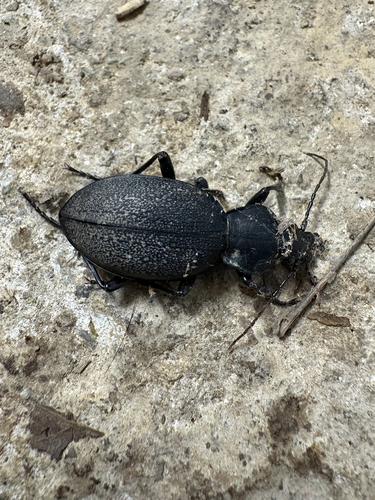
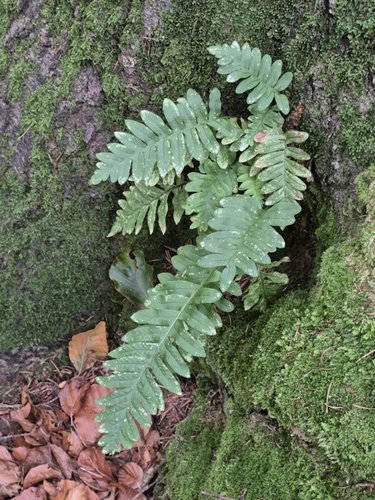
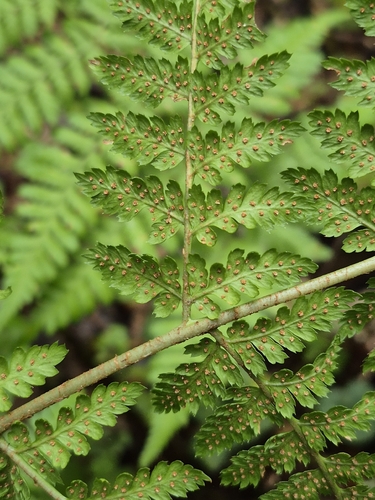
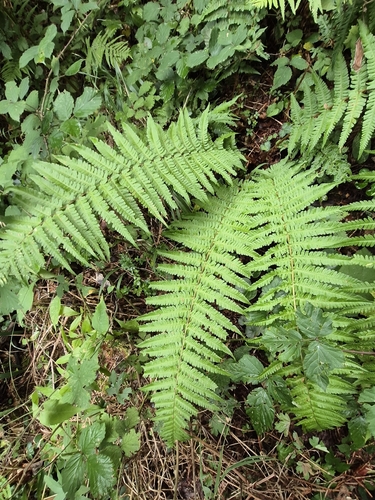
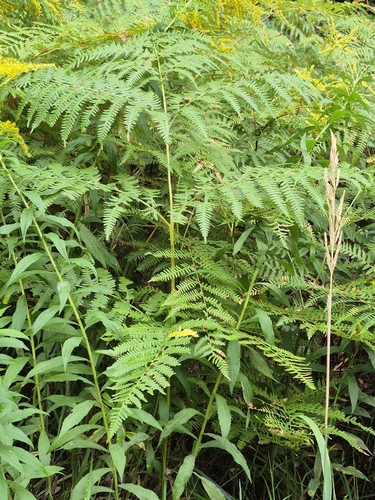
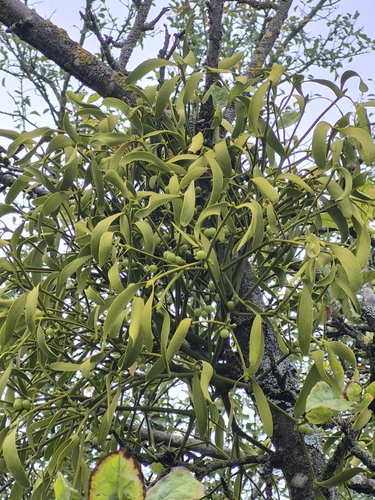
Research-grade observations from iNaturalist (within ~15 mi).
Events
Notable, recurring, and historical events associated with Graz, sourced from Wikidata.
- 2020 European Figure Skating Championships - ladies' singlesJan 24, 2020sporting event
part of a figure skating competition
- 2020 European Figure Skating Championships - ice dancingJan 23, 2020sporting event
part of a figure skating competition
- 2020 European Figure Skating Championships - men's singlesJan 22, 2020sporting event
part of a figure skating competition
- 2020 European Figure Skating Championships - pair skatingJan 22, 2020sporting event
part of a figure skating competition
- Q130635735festival
- Q133092187Sep 4, 1911recurring event edition
Source: Wikidata (CC0).
Gallery
Geotagged photos within ~6 miles of Graz, from Wikimedia Commons contributors.


Photos via Wikimedia Commons — see each image page for license & attribution.
Official Identifiers
Statistik Austria
- GKZ
- 60101
- Population (Wikidata)
- 292,630
- Wikidata
- Q13298
Gemeindekennziffer via Wikidata P964
Sources
- • Wikipedia
- • Open-Meteo (ERA5 reanalysis)
- • Wikimedia Commons
- • Wikidata
- • Open-Meteo Air Quality (CAMS)
- • USGS Earthquake Catalog (global feed)
- • GBIF (Global Biodiversity Information Facility)
- • iNaturalist
- • Open-Meteo / sunrise-sunset.org
- • Wikipedia Pageviews API
- • Open Library
- • Statistik Austria — Gemeindekennziffer via Wikidata P964