Browse / Belize / Belize / Orange Walk
Orange Walk
Belizetown

Orange Walk
Total population
14,553
Demographic figures from Statistical Institute of Belize. Overview below cites Wikipedia and may reference a different year.
City facts
Facts from Wikidata (CC0).
Overview
Orange Walk is the fourth largest town in Belize, with a population of about 13,400. It is the capital of the Orange Walk District. Orange Walk Town is located on the west bank of the New River, 53 miles (85 km) north of Belize City and 30 miles (48 km) south of Corozal Town. Despite the English name of the city, its residents are primarily Spanish-speaking mestizos.
Read more on WikipediaHistory & geography
History
In the days of the Maya civilization, the area was known as Holpatin. The district is home to the largest Maya temple of the pre-classic period. The Maya of the area came in contact with the Europeans in the 1530s, after which the two groups fought over land. In 1848, there was a massive influx of Maya and Mestizos from Mexico, fleeing the Caste War of Yucatán (1847–1901). This caused a rapid growth of population. In 1872, it was the site of the Battle of Orange Walk. Lamanai (meaning "submerged crocodile" in Mayan dialect) and Cuello ("neck" in Spanish) are two very early Mayan ruins located in Orange Walk. Cuello is in fact the oldest Mayan settlement in Belize, dating back to around 2000 BC. In the nineteenth century, Orange Walk was a small township located mostly on the western banks of the New River, consisting mainly of thatched and wooden dwellings. The town had grown from a stop on the New River by logwood, mahogany and chicle workers who used the New River as a transport system and stopped on their way to the sea with their products at the logging camp known as Orange Walk. With time the settlement continued growing, especially after the Caste War in neighbouring Mexico brought many migrants escaping the war and who settled in town or in villages around the town. In 1963 a sugar mill was started that brought another influx of migrant workers from other districts and surrounding countries, looking for work and land. Population in Orange Walk Town grew as a result.
Excerpted from the corresponding Wikipedia article (CC BY-SA).
Geography
Coordinates & boundaries from the US Census TIGER/Line shapefiles.
Climate
Air quality
Walkability
Amenities nearby
Wildlife & biodiversity
Most-observed species
- Great-tailed GrackleQuiscalus mexicanus (Gmelin, 1788) · Aves999
- Social FlycatcherMyiozetetes similis (Spix, 1825) · Aves938
- White-winged DoveZenaida asiatica (Linnaeus, 1758) · Aves820
- Tropical KingbirdTyrannus melancholicus Vieillot, 1819 · Aves816
- Black VultureCoragyps atratus (Bechstein, 1793) · Aves815
- Turkey VultureCathartes aura (Linnaeus, 1758) · Aves766
- Great KiskadeePitangus sulphuratus (Linnaeus, 1766) · Aves750
- Morelet's SeedeaterSporophila morelleti (Bonaparte, 1850) · Aves701
Citizen-science & research observations from the Global Biodiversity Information Facility (GBIF).
Earthquake history
Events from the USGS Earthquake Catalog (global) (FDSN Event Web Service).
Photos
Sights & places nearby
Notable people from here
Geography & sun
Elevation, sunrise/sunset and daylight from Open-Meteo. Solar climatology from NASA POWER.
Nearby airports
Public attention
Pageview totals from the Wikimedia Pageviews API.
Books about Orange Walk


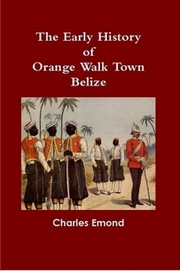

Search results from Open Library.
Recent natural events nearby
Ground air-quality sensors
Recently spotted species
Events
Gallery
Sources
- • Wikipedia
- • Wikidata
- • USGS Earthquake Catalog (global feed)
- • GBIF (Global Biodiversity Information Facility)
- • Open-Meteo / sunrise-sunset.org
- • Wikipedia Pageviews API
- • Open Library