Browse / Canada / Ontario / Sarnia
Sarnia
Ontariocity

Sarnia
Total population
72,366
Demographic figures from Statistics Canada. Overview below cites Wikipedia and may reference a different year.
City facts
Facts from Wikidata (CC0).
Overview
Sarnia is a city in Lambton County, Ontario, Canada. It had a 2021 population of 72,047, and is the largest city on Lake Huron. Sarnia is located on the eastern bank of the junction between the Upper and Lower Great Lakes, where Lake Huron flows into the St. Clair River in the Southwestern Ontario region, which forms the Canada–United States border, directly across from Port Huron, Michigan.
Read more on WikipediaHistory & geography
History
The word "Sarnia" is Latin for Guernsey, a British Channel Island. In 1829 Sir John Colborne, a former governor of Guernsey, was appointed Lieutenant Governor of Upper Canada. In this capacity, he visited two small settlements in 1835 that had been laid out on the shores of Lake Huron. One of these, named "The Rapids", consisted then of 44 taxpayers, nine frame houses, four log houses, two brick dwellings, two taverns and three stores. The villagers wanted to change its name but were unable to agree on an alternative. The English settlers favoured the name "Buenos Aires", and the ethnic Scottish favoured "New Glasgow". Sir John Colborne suggested Port Sarnia. On 4 January 1836, the name was formally adopted by a vote of 26 to 16, and Colborne also named the nearby village Moore after British military hero Sir John Moore. Sarnia adopted the nickname "The Imperial City" on 7 May 1914 because of the visit of Canada's Governor General, the Duke of Connaught, and his daughter Princess Patricia. Ethnic French colonists, who came from Detroit, were the first European colonizers of what became Sarnia in about 1807–1810; their role is marked by a historic plaque installed by the Ontario Heritage Society. They were fur traders with the Huron and Three Fires Confederacy. At this time, the French Jesuits also established a mission near the Huron village on the river's east bank. Later, the men established farms, attracted other settlers, and stimulated growth in the area. The township was surveyed in 1829, and in the early 1830s, a wave of Scottish immigrants settled in the area. They became dominant as English speakers and, for decades, claimed to have founded the city. Port Sarnia expanded throughout the 19th century; on 19 June 1856, Parliament passed An Act to Incorporate…
Geography
Sarnia is located on the eastern shore of Lake Huron at its extreme southern point, where it flows into the St. Clair River. Most of the surrounding area is flat, and the elevation ranges from above sea level. The soil mainly comprises clay. Despite this high percentage of clay, the soil is remarkably rich for cultivation. Wiltshire Park, Woodland, Oak Acres, Wees Beach, Oakwood Corners, Woodrow Shores, and Blackwell are part of the North End of Sarnia, which begins immediately north of Ontario Highway 402 and terminates at the shore of Lake Huron. Blackwell, Bright's Grove, and the western part of Huron Heights are in the northeast part along the shores of Lake Huron. Coronation Park, Fourth Line Heritage Park, College Park, Lucasville, Bunyan, Froomfield, The Tree Streets, Mitton Village, and Sherwood Village are some of the neighbourhoods south of the highway. The village of Blue Water was built to house workers and their families in Chemical Valley during the construction of Polymer Corporation; at one point, it had nearly 3,000 residents. In 1961, all the residents were relocated, mostly to the North End, to make way for the expansion of the chemical industry. The village was demolished, and all that remains is a historical marker at the corner of Vidal Street and Huron Boulevard. This neighbourhood was largely forgotten until historian Lorraine Williams wrote two books about it. She was instrumental in gaining approval for the historical plaque. Sarnia has a humid continental climate (Köppen climate classification Dfb), verging on the hot summer subtype Dfa. Winters are cold with a few short-lasting Arctic air masses that dip far enough south and bring with them daily high temperatures below . Conversely, cooler average daytime temperatures tend to prevail…
Excerpted from the corresponding Wikipedia article (CC BY-SA).
Geography
Coordinates & boundaries from the US Census TIGER/Line shapefiles.
Climate
Air quality
Walkability
Amenities nearby
Wildlife & biodiversity
Most-observed species
- Northern CardinalCardinalis cardinalis (Linnaeus, 1758) · Aves13,227
- Canada Goose (canadensis Group)Branta canadensis (Linnaeus, 1758) · Aves12,802
- American CrowCorvus brachyrhynchos C.L.Brehm, 1822 · Aves12,416
- Blue JayCyanocitta cristata (Linnaeus, 1758) · Aves12,350
- Mourning DoveZenaida macroura (Linnaeus, 1758) · Aves12,111
- American RobinTurdus migratorius Linnaeus, 1766 · Aves11,483
- American GoldfinchSpinus tristis (Linnaeus, 1758) · Aves9,929
- Black-capped ChickadeePoecile atricapillus (Linnaeus, 1766) · Aves9,845
Citizen-science & research observations from the Global Biodiversity Information Facility (GBIF).
Earthquake history
Most recent
- M 2.5 — 2022-05-232 km NNW of Corunna, Canada
- M 2.6 — 2017-05-1418 km ENE of Leamington, Canada
- M 3 — 2011-02-2318 km NE of Leamington, Canada
Events from the USGS Earthquake Catalog (global) (FDSN Event Web Service).
Photos
Sights & places nearby
Notable people from here


People born within ~10 km, from Wikidata (CC0). Click any name for their Wikipedia article.
Nearby places in Ontario
Geography & sun
Nearby airports
Public attention
Books about this place
Recent natural events nearby
- Wells Rd Unit 1 RX Prescribed Fire, Iosco, MichiganWildfires · 2026-04-22 · 114 mi
- River Road 16 RX Prescribed Fire, Iosco, MichiganWildfires · 2026-04-19 · 116 mi
- KALKASKA-RX 61150021 Fletcher Unit 2 Prescribed Fire, Kalkaska, MichiganWildfires · 2026-05-28 · 165 mi
- Barren Plains Units 1 & 3 RX Prescribed Fire, Lake, MichiganWildfires · 2026-04-19 · 181 mi
- Baldwin Fuels 6 RX Prescribed Fire, Lake, MichiganWildfires · 2026-04-23 · 186 mi
- Peacock 545 and 159 RX Prescribed Fire, Lake, MichiganWildfires · 2026-04-20 · 190 mi
- Tyndall 469 & 143 RX Prescribed Fire, Mason, MichiganWildfires · 2026-04-26 · 199 mi
- Peterson Road RX Prescribed Fire, Benzie, MichiganWildfires · 2026-05-11 · 220 mi
Wildfires, storms and other events from NASA EONET (last 12 months, within 250 mi).
Ground air-quality sensors
Recently spotted species
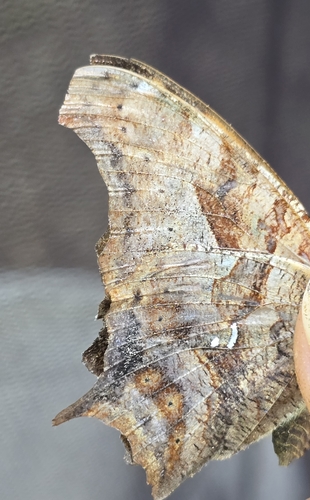
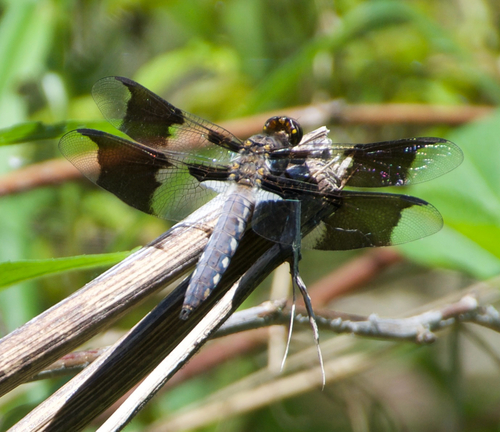
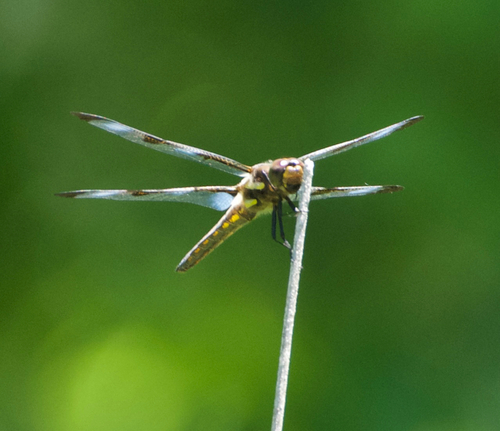
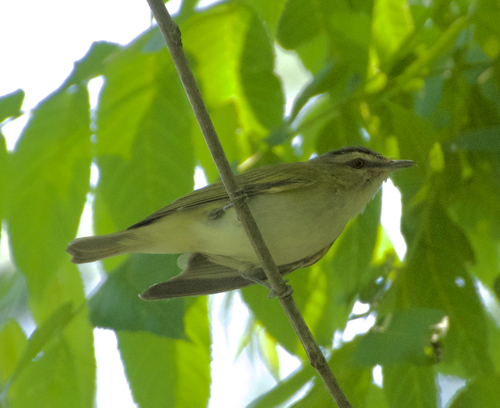
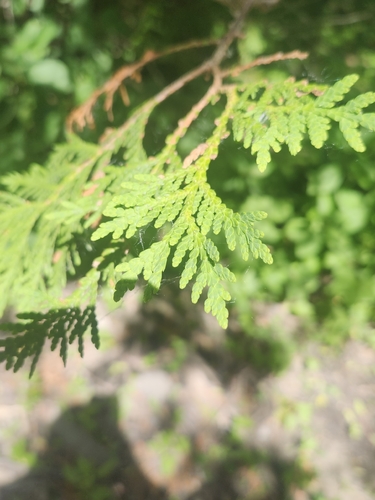

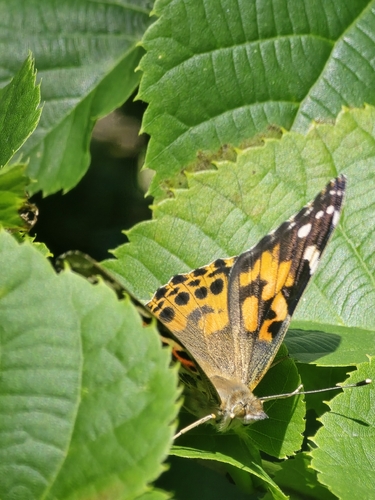
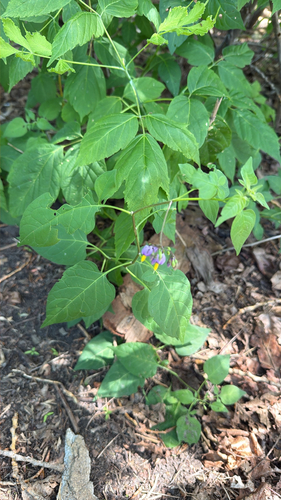

Research-grade observations from iNaturalist (within ~15 mi).
Events
Gallery
Geotagged photos within ~6 miles of Sarnia, from Wikimedia Commons contributors.
 0.2 mi
 0.3 mi
 0.3 mi
 0.3 mi
 0.3 mi
 0.3 mi
 0.3 mi
 0.3 mi
 0.3 mi
 0.3 mi
 0.3 mi
 0.3 mi
 0.3 mi
 0.3 mi
 0.3 mi
 0.3 mi
 0.3 mi
 0.3 mi
 0.3 mi
 0.3 mi
 0.3 mi
 0.3 mi
 0.3 mi
 0.3 mi
Photos via Wikimedia Commons — see each image page for license & attribution.
Official Identifiers
StatCan — Statistics Canada
- SGC code
- 3538030
- Population (Wikidata)
- 72,320
- Wikidata
- Q34106
Standard Geographical Classification (SGC) via Wikidata P3012
Sources
- • Wikipedia
- • Wikimedia Commons
- • Wikidata
- • USGS Earthquake Catalog (global feed)
- • GBIF (Global Biodiversity Information Facility)
- • iNaturalist
- • NASA EONET
- • StatCan — Statistics Canada — Standard Geographical Classification (SGC) via Wikidata P3012