Browse / Canada / Yukon / Whitehorse
Whitehorse
Yukoncity

Whitehorse
Total population
36,550
Founded
1898
Demographic figures from Statistics Canada. Overview below cites Wikipedia and may reference a different year.
City facts
Facts from Wikidata (CC0).
Overview
Whitehorse is the capital of Yukon, and the largest city in Northern Canada. It was incorporated in 1950 and is located at kilometre 1426 on the Alaska Highway in southern Yukon. Whitehorse's downtown and Riverdale areas occupy both shores of the Yukon River, which rises in British Columbia and meets the Bering Sea in Alaska. The city was named after the White Horse Rapids for their resemblance to the mane of a white horse.
Read more on WikipediaHistory & geography
History
Archaeological research south of the downtown area, at a location known as Canyon City, has revealed evidence of use by First Nations for several thousand years. The surrounding area had seasonal fish camps and Frederick Schwatka, in 1883, observed the presence of a portage trail used to bypass Miles Canyon. Before the Gold Rush, several different tribes passed through the area seasonally and their territories overlapped. The discovery of gold in the Klondike in August 1896, by Skookum Jim, Tagish Charlie, and George Washington Carmack, set off a major change in the historical patterns of the region. Early prospectors used the Chilkoot Pass, but by July 1897, crowds of neophyte prospectors had arrived via steamship and were camping at "White Horse". By June 1898, there was a bottleneck of prospectors at Canyon City, and many boats had been lost to the rapids as well as five people. Samuel Steele of the North-West Mounted Police remarked: "why more casualties have not occurred is a mystery to me." On their way to find gold, prospectors also found copper in the "copper belt" in the hills west of Whitehorse. The first copper claims were staked by Jack McIntyre on July 6, 1898, and Sam McGee on July 16, 1899. Two tram lines were built, one stretch on the east bank of the Yukon River from Canyon City to the rapids, just across from the present day downtown, and the other on the west bank of the river. The White Pass and Yukon Route narrow-gauge railway linking Skagway to Whitehorse had begun construction in May 1898. By May 1899, construction had arrived at the south end of Bennett Lake. Construction began again at the north end of Bennett lake to Whitehorse. It was only in June–July 1900 that construction finished the difficult Bennett Lake section itself, completing…
Geography
Whitehorse is located at kilometre 1,425 (Historic Mile 918) of the Alaska Highway and is framed by three nearby mountains: Grey Mountain to the east, Mount Sumanik to the northwest and Golden Horn Mountain to the south. The rapids which were the namesake of the city have disappeared under Miles Canyon and Schwatka Lake, formed by the construction of a hydroelectricity dam in 1958. Whitehorse is currently the 64th largest city in Canada by area. The city limits present a near rectangular shape orientated in a NW-SE direction. Whitehorse Bylaw 426 (1975) restricts the operation of motor vehicles to designated roadways in certain "Protected Areas" to ensure maximum conservation of the environmental quality. Most are near the downtown core (downtown and Yukon river escarpments, Mt. Mac ski trails, Riverdale, Valleyview, Hillcrest, Granger, Porter Creek, and Mountainview) and one, Pineridge, is south of downtown. In 1999, the city approved the Area Development Scheme (ADS) which reallocated the area previously known as "Whitehorse Copper" to the following uses: Country Residential, Commercial, Service Industrial, and Heavy industrial. Recent demands for growth have reignited urban planning debates in Whitehorse. In 1970 the Metropolitan Whitehorse development plan included park and greenbelt areas that were to be preserved to ensure high quality of life even within city limits. Whitehorse has a subarctic climate (Köppen climate classification: Dfc, Trewartha Eclc) and lies in the rain shadow of the Coast Mountains, causing precipitation totals to be quite low year-round. Due to the city's location in the Whitehorse valley, the climate is milder than other comparable northern communities such as Yellowknife; however, during cold snaps it is not uncommon for temperatures…
Excerpted from the corresponding Wikipedia article (CC BY-SA).
Geography
Coordinates & boundaries from the US Census TIGER/Line shapefiles.
Climate
Air quality
Walkability
Amenities nearby
Wildlife & biodiversity
Earthquake history
Photos
Sights & places nearby
Notable people from here
Nearby places in Yukon
- Mount Lorne20.1 mi away
- Carcross40.1 mi away · pop. 317
- Haines Junction82.9 mi away
- Teslin88.2 mi away
- Carmacks102.9 mi away · pop. 503
- Faro118.3 mi away · pop. 400
- Ross River122.5 mi away · pop. 382
- Pelly Crossing153.4 mi away
- Rancheria158 mi away
- Stewart Crossing190.7 mi away · pop. 25
- Tuchitua Camp197.1 mi away
- Mayo200.2 mi away
Geography & sun
Elevation, sunrise/sunset and daylight from Open-Meteo. Solar climatology from NASA POWER.
Nearby airports
Public attention
Pageview totals from the Wikimedia Pageviews API.
Books about Whitehorse


Search results from Open Library.
Recent natural events nearby
Ground air-quality sensors
Recently spotted species
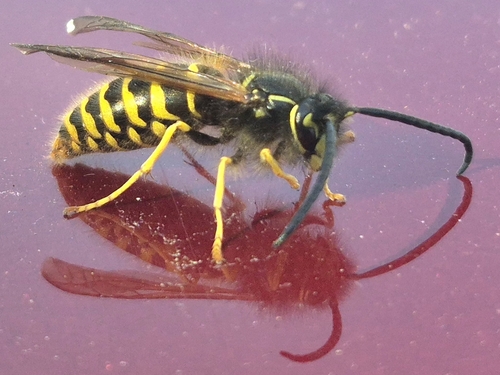
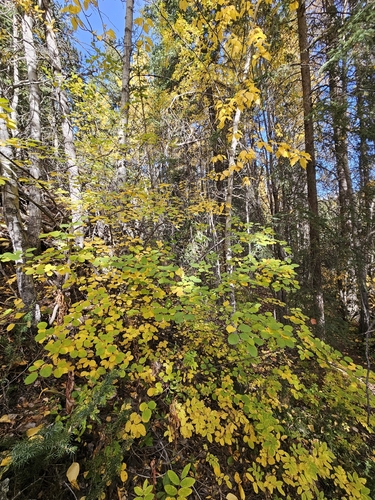
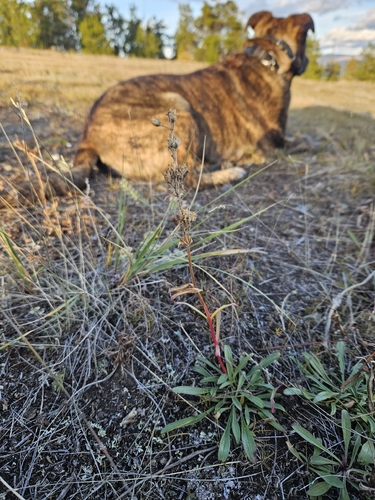
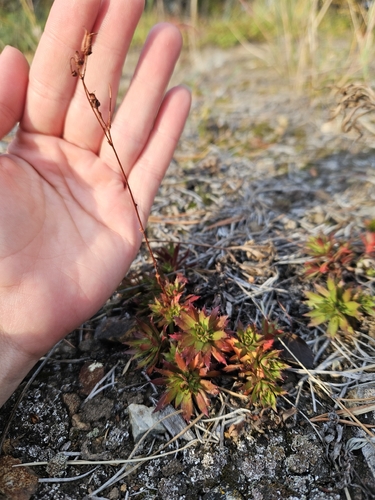
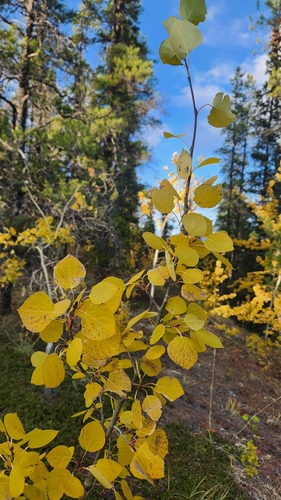
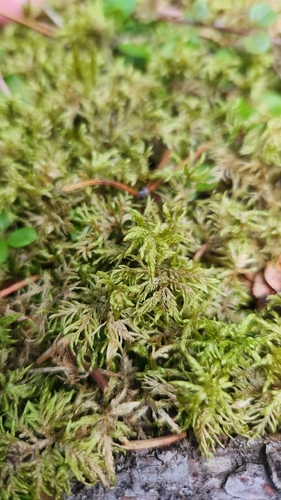
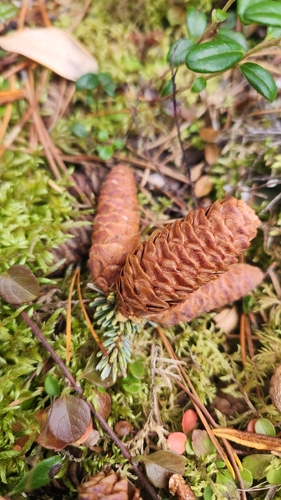
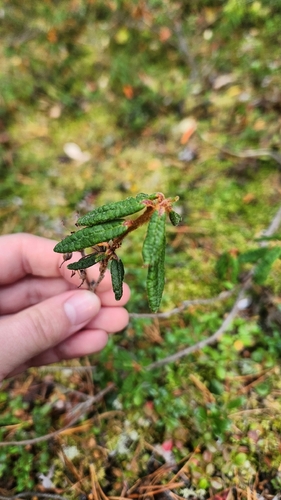
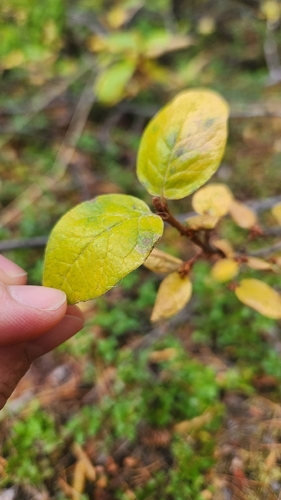
Research-grade observations from iNaturalist (within ~15 mi).
Events
Notable, recurring, and historical events associated with Whitehorse, sourced from Wikidata.
- Yukon Sourdough Rendezvousfestival
Source: Wikidata (CC0).
Gallery
Official Identifiers
StatCan — Statistics Canada
- SGC code
- 6001009
- Population (Wikidata)
- 28,201
- Wikidata
- Q2055
Standard Geographical Classification (SGC) via Wikidata P3012
Sources
- • Wikipedia
- • Wikidata
- • iNaturalist
- • Open-Meteo / sunrise-sunset.org
- • Wikipedia Pageviews API
- • Open Library
- • StatCan — Statistics Canada — Standard Geographical Classification (SGC) via Wikidata P3012