Browse / China / Heilongjiang / Harbin
Harbin
Heilongjiangcity

Harbin
Total population
3,173,692
Founded
1898
Demographic figures from National Bureau of Statistics of China. Overview below cites Wikipedia and may reference a different year.
City facts
Sister cities
Facts from Wikidata (CC0).
Overview
Harbin or Hā'ěrbīn is the capital of Heilongjiang, China, and the largest city of the province—as well as the second largest urban population and the largest metropolitan population in Northeast China. Harbin has direct jurisdiction over nine metropolitan districts, two county-level cities, and seven counties. It is the eighth most populous Chinese city according to the 2020 census. The built-up area of Harbin has 5,841,929 inhabitants, while the total metropolitan population is up to 10,009,854, making it one of the 100 largest urban areas in the world. Harbin serves as a key political, economic, scientific, cultural, and communications hub in Northeast China, as well as an important industrial base of the nation.
Read more on WikipediaHistory & geography
History
Human settlement in the Harbin area dates from at least 2200 BC during the late Stone Age. Wanyan Aguda, the founder and first emperor (reigned 1115–1123) of the Jin dynasty (1115–1234), was born of the Jurchen Wanyan tribes who resided near the Ashi River in this region. In AD 1115 Aguda established Jin's capital, Shangjing Huiningfu (Upper Capital, Huining Prefecture), in today's Acheng District of Harbin. After Aguda's death, the succeeding emperor Wanyang Sheng ordered the construction of a new city with a uniform plan. The planning and construction emulated major Chinese cities, in particular Bianjing (Kaifeng), although the Jin capital was smaller than its Northern Song prototype. Huining Prefecture served as the first superior capital of the Jin Empire until Wanyan Liang (the fourth emperor of the Jin Dynasty) moved the capital to Yanjing (now Beijing) in 1153. Liang even went to destroy all palaces in the former capital in 1157. Ruins of the Shangjing Huining Prefecture were discovered and excavated about from present-day Acheng's central urban area. Mounted statues of Aguda and of his chief commander Wanyan Zonghan (also Nianhan) stand on the grounds of the museum. Many of the artifacts found there are on display in nearby Harbin. After the Mongol conquest of the Jin Empire (1211–1234), Huining Prefecture was abandoned. In the 17th century, the Manchus used building materials from Huining Prefecture to construct their new stronghold in Alchuka. The region of Harbin remained largely rural until the 19th century, by the end of which over ten villages and about 30,000 people arrived in the city's present-day urban districts. This small village in 1898 grew into the modern city of Harbin. Polish engineer Adam Szydłowski drew plans for the city following…
Geography
Harbin, with a total land area of , is located in southern Heilongjiang province and is the provincial capital. The prefecture is also located at the southeastern edge of the Songnen Plain, a major part of China's Northeastern Plain. The city center also sits on the southern bank of the middle Songhua River. Harbin received its nickname The pearl on the swan's neck, since the shape of Heilongjiang resembles a swan. Its administrative area is rather large with latitude spanning 44° 04′−46° 40′ N, and longitude 125° 42′−130° 10' E. Neighbouring prefecture-level cities are Yichun to the north, Jiamusi and Qitaihe to the northeast, Mudanjiang to the southeast, Daqing to the west, and Suihua to the northwest. On its southwestern boundary is Jilin province. The main terrain of the city is generally flat and low lying, with an average elevation of around . The territory that comprises the 10 county-level divisions in the eastern part of the municipality consists of mountains and uplands. The easternmost part of Harbin prefecture also has extensive wetlands, mainly in Yilan County, which is located at the southwestern edge of the Sanjiang Plain. Under the Köppen climate classification, Harbin features a monsoon-influenced humid continental climate (Dwa). Due to the Siberian high and its location above 45 degrees north latitude, the city is known for its cold weather and long winter. to on which was hit most recently on 4 June 2001, though an unofficial record high temperature of was recorded in July 1907. To mitigate impacts of climate change, urban planning in Harbin has made use of sponge city concepts, including the Qunli stormwater park which collects, filters, and stores rainwater while conserving natural habitat.
Excerpted from the corresponding Wikipedia article (CC BY-SA).
Geography
Coordinates & boundaries from the US Census TIGER/Line shapefiles.
Climate
Air quality
Walkability
Amenities nearby
Wildlife & biodiversity
Earthquake history
Photos
Sights & places nearby
Notable people from here


People born within ~10 km, from Wikidata (CC0). Click any name for their Wikipedia article.
Nearby places in Heilongjiang
Geography & sun
Elevation, sunrise/sunset and daylight from Open-Meteo. Solar climatology from NASA POWER.
Nearby airports
Public attention
Pageview totals from the Wikimedia Pageviews API.
Books about Harbin

Search results from Open Library.
Recent natural events nearby
Ground air-quality sensors
Recently spotted species





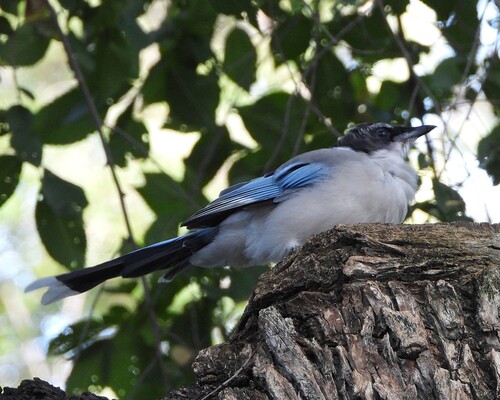
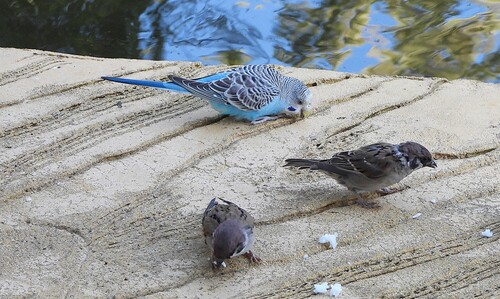
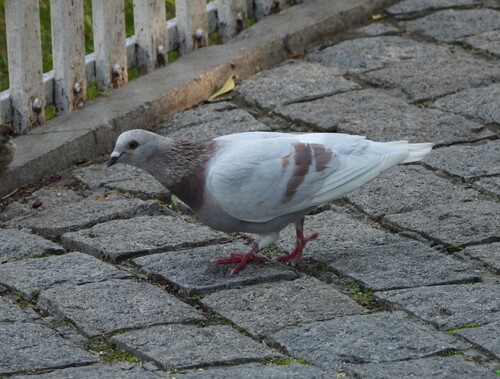
Research-grade observations from iNaturalist (within ~15 mi).
Events
Notable, recurring, and historical events associated with Harbin, sourced from Wikidata.
- Feb 9, 2025
- Feb 1, 2025
- Nov 13, 2016
- Nov 13, 2016
- Q28719250Nov 13, 2016sporting event
- Q28719251Nov 13, 2016sporting event
- Nov 12, 2016
- Nov 12, 2016
- Q28719363Nov 12, 2016sporting event
- Nov 11, 2016
- Q28719244Nov 11, 2016sporting event
- 2016–17 ISU Speed Skating World Cup – World Cup 1Nov 1, 2016sporting event
- 2012–13 ISU Speed Skating World Cup – World Cup 5Dec 16, 2012sporting event
Source: Wikidata (CC0).
Gallery
Sources
- • Wikipedia
- • Wikidata
- • iNaturalist
- • Open-Meteo / sunrise-sunset.org
- • Wikipedia Pageviews API
- • Open Library