Browse / Spain / Catalonia / Girona
Girona
Cataloniacity

Girona
Total population
104,192
Air quality index
Demographic figures from INE (Spain). Overview below cites Wikipedia and may reference a different year.
City facts
Facts from Wikidata (CC0).
Overview
Girona, historically also known as Gerona, is the capital city of the Province of Girona in the autonomous community of Catalonia, Spain, at the confluence of the Ter, Onyar, Galligants, and Güell rivers. The city had an official population of 106,476 in 2024, but the population of the Girona–Salt urban area is estimated to be about 156,400 (2020). Girona is also capital of the comarca of the Gironès and the vegueria of Girona. Since much of the old quarter of this ancient city has been preserved, Girona is a popular tourist destination. The city is located 99 km (62 mi) northeast of Barcelona.
Read more on WikipediaHistory & geography
History
The first historical inhabitants in the region were Iberians; Girona is the ancient Gerunda, a city of the Ausetani. Later, the Romans built a citadel there, which was given the name of Gerunda. The Visigoths ruled in Girona until it was conquered by the Moors in 715. Charlemagne reconquered it in 785 and made it one of the fourteen original counties of Catalonia. It was sacked by the Moors in 827, 842, 845, 935, and 982. Wilfred the Hairy incorporated Girona into the County of Barcelona in 878. In the 11th century, Alfonso II of Aragon and I of Barcelona declared Girona a city. The ancient county became a duchy within the Principality of Catalonia in 1351 when King Peter III of Aragon gave the title of Duke to his first-born son, John. In 1414, King Ferdinand I in turn gave the title of Prince of Girona to his first-born son, Alfonso. The title is currently carried by Princess Leonor of Asturias, the second since the 16th century to do so. The earliest documented evidence of a Jewish Catalan community in Girona dates to about 885. The 12th century saw the Jewish community of Girona flourish, having one of the most important Kabbalistic schools in Europe. The Rabbi of Girona, Moshe ben Nahman Gerondi (better known as Nahmanides or Ramban) was appointed Great Rabbi of Catalonia. Centred on the Jewish Call (Call Jueu), the Jewish community of Girona came to an end in 1492, when the Catholic Monarchs outlawed Judaism throughout Spain and Jews were given the choice of conversion or exile (see Alhambra Decree). For 400 years before that time, the Jewish cemetery was located beside the road to France, just north of the old city between the mountain Montjuïc, or Jewish Mountain in medieval Catalan, and the river Ter. It was besieged by the French royal armies under Charles…
Geography
Girona was founded in a strategic location along a natural corridor between the Empordà plain and the Catalan Coastal Depression, thereby connecting the Costa Brava and France to the north with Barcelona and other population centres in the south of Catalonia. This corridor is a defile formed by the Ter river between the Gavarres massif and the Catalan Transversal Range. The Ter river is the most important water course in the region. In Girona it flows through the north of the town, from southwest to northeast. It is in Girona where the Ter meets the Onyar, the second largest river in the area. The Onyar crosses the city from south to north and it has historically conditioned the city's development, as catastrophic floods have periodically affected the town since historic times. Girona is located in a seismic zone, which means it occasionally has earthquakes throughout the year. Most of them are not felt, and some are felt as a minor vibration or light shaking. The strongest earthquake recorded in Girona was the magnitude 6.7 Principality of Catalonia 1428 earthquake. According to the Köppen climate classification, Girona has a humid subtropical climate (Cfa), with hot summers and cool winters. In winter, frost occurs frequently (41.3 days per year from November to March), but snowfall is quite rare. Temperatures in winter can drop to below /, especially during days with thermal inversion. Maximum temperatures in summer above are very rare. Average annual rainfall is usually slightly above . The wettest seasons are autumn (September–November) and spring (April–early June). Thunderstorms can occur throughout the year, more frequently in summer, averaging 23.9 days per year. but usually there still is a significant arid period. This can be seen through the natural…
Excerpted from the corresponding Wikipedia article (CC BY-SA).
Geography
Coordinates & boundaries from the US Census TIGER/Line shapefiles.
Climate
Air quality
Current readings from Open-Meteo Air Quality API (Copernicus CAMS European reanalysis).
Walkability
Amenities nearby
Wildlife & biodiversity
Most-observed species
- Common Wood-PigeonColumba palumbus Linnaeus, 1758 · Aves2,706
- House SparrowPasser domesticus (Linnaeus, 1758) · Aves2,397
- European RobinErithacus rubecula (Linnaeus, 1758) · Aves2,171
- Great TitParus major Linnaeus, 1758 · Aves2,124
- Eurasian MagpiePica pica (Linnaeus, 1758) · Aves2,103
- European StarlingSturnus vulgaris Linnaeus, 1758 · Aves2,081
- White WagtailMotacilla alba Linnaeus, 1758 · Aves1,875
- Eurasian Blue TitCyanistes caeruleus (Linnaeus, 1758) · Aves1,784
Citizen-science & research observations from the Global Biodiversity Information Facility (GBIF).
Earthquake history
Most recent
- M 4.1 — 2015-10-298 km ENE of l'Escala, Spain
- M 4.1 — 2010-12-194 km W of Llagostera, Spain
- M 3.8 — 2008-08-16Spain
- M 2.5 — 2008-08-0816 km ENE of Cadaqués, Spain
- M 2.6 — 2008-08-073 km E of Susqueda, Spain
- M 2.8 — 2008-07-236 km W of Santa Coloma de Farners, Spain
Events from the USGS Earthquake Catalog (global) (FDSN Event Web Service).
Photos
Sights & places nearby
Notable people from here


People born within ~10 km, from Wikidata (CC0). Click any name for their Wikipedia article.
Nearby places in Catalonia
- Sarrià de Ter2.4 mi away · pop. 5,359
- Sant Gregori3.4 mi away · pop. 2,895
- Aiguaviva4.1 mi away · pop. 376
- Llambilles4.4 mi away · pop. 161
- Juià5.2 mi away · pop. 146
- Bonmatí8 mi away · pop. 1,292
- Anglès9.6 mi away · pop. 5,726
- Caldes de Malavella9.7 mi away · pop. 3,724
- Llagostera11 mi away · pop. 6,933
- Parlavà11.2 mi away · pop. 362
- Ultramort11.7 mi away · pop. 193
- Riudarenes12.1 mi away · pop. 1,418
Geography & sun
Nearby airports
Public attention
Books about this place
Recent natural events nearby
Ground air-quality sensors
Recently spotted species
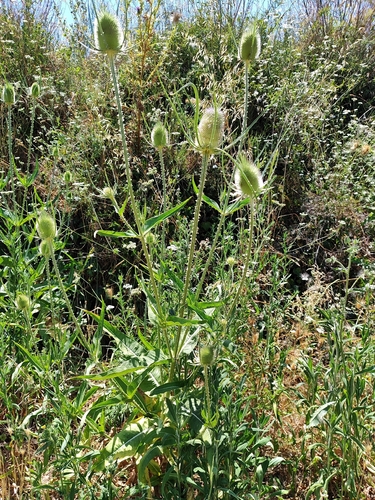
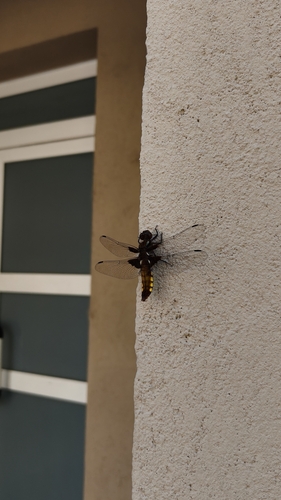
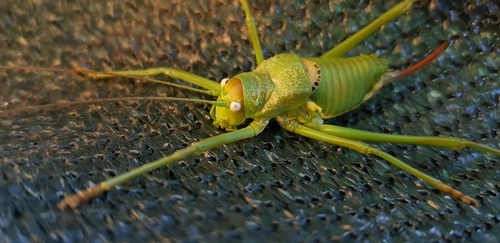
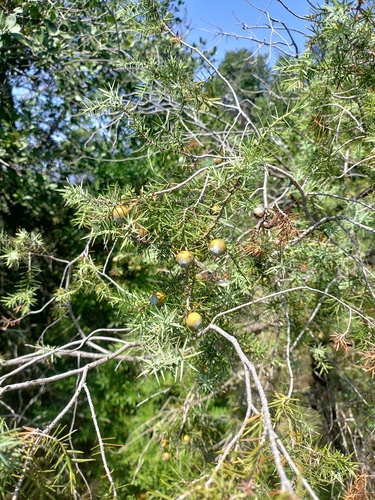
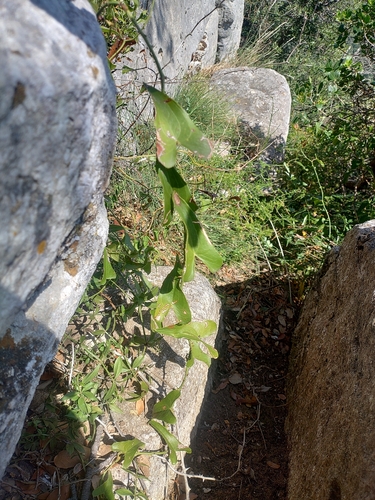
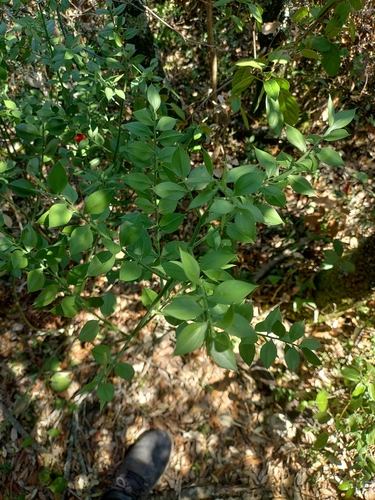
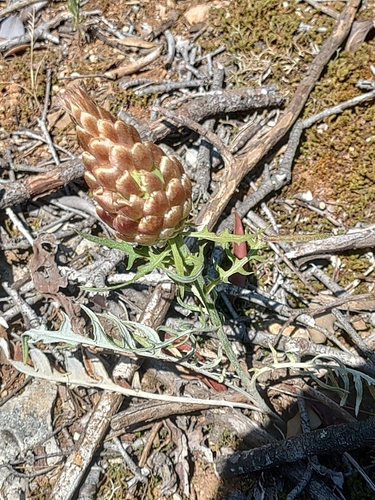
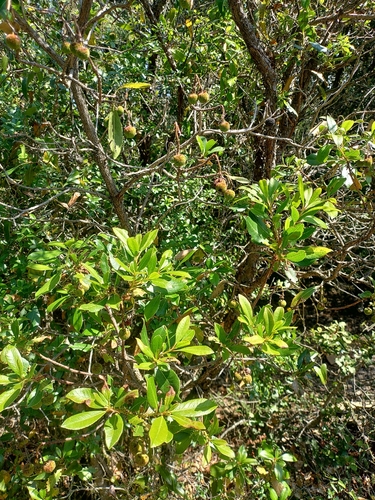
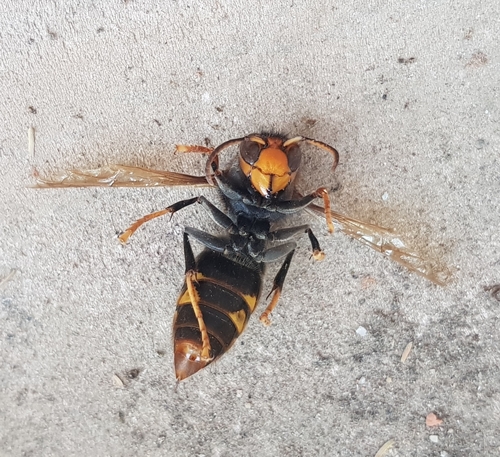
Research-grade observations from iNaturalist (within ~15 mi).
Events
Notable, recurring, and historical events associated with Girona, sourced from Wikidata.
- Temps de Florsannual event
- Q131929240festival
- Q87545465annual event
Source: Wikidata (CC0).
Gallery
Geotagged photos within ~6 miles of Girona, from Wikimedia Commons contributors.
.JPG)
.JPG)


.jpg)
.jpg)
,_tribuna.jpg)
.jpg)
.jpg)
,_portal.jpg)
.jpg)
.jpg)
,_front%C3%B3.jpg)
.jpg)
,_portal.jpg)
.jpg)
,_balcons_del_primer_pis.jpg)
,_balcons_dels_pisos_superiors.jpg)
,_front%C3%B3.jpg)
.jpg)
.jpg)
.jpg)


Photos via Wikimedia Commons — see each image page for license & attribution.
Sources
- • Wikipedia
- • Wikimedia Commons
- • Wikidata
- • Open-Meteo Air Quality (CAMS)
- • USGS Earthquake Catalog (global feed)
- • GBIF (Global Biodiversity Information Facility)
- • iNaturalist