Browse / Spain / Andalusia / Huelva
Huelva
Andalusiacity

Huelva
Total population
143,409
Air quality index
Demographic figures from INE (Spain). Overview below cites Wikipedia and may reference a different year.
City facts
Facts from Wikidata (CC0).
Overview
Huelva is a municipality of Spain and the capital of the province of Huelva, in the autonomous community of Andalusia. Located in the southwest of the Iberian Peninsula, it sits between the estuaries of the Odiel and Tinto rivers on the Atlantic coast of the Gulf of Cádiz. According to the 2010 census, the city had a population of 149,410.
Read more on WikipediaHistory & geography
History
At least up to the 1980s and 1990s, the mainstream historians' view was that Huelva began as an autochthonous Tartessian settlement (possibly the very same Tartessos mentioned in Greek sources); later opinions have held that it was a multi-ethnic enclave, mixing natives with peoples with a mainly Phoenician, and later Greek, extraction. However, following the finding of Phoenician archaeological materials in the Méndez Núñez-Las Monjas site, the chronology as to the Phoenician presence was reassessed. The evidence favours solely viewing Huelva-Onoba as a very early Phoenician colony, a development which was parallel to a certain "dismantling" of the idea of Tartessos as a mainly autochthonous archaeological culture, even though the tentative identification of Huelva with Tartessos was not discarded, but rather kept. Tartessos has also been identified with the biblical Tarshish. First contacts with the local Phoenician presence have been hypothesised to have taken place as early as 1015 to 975 BCE. However, remains such as those found in the Méndez Núñez-Las Monjas go so far as to show a likely Phoenician settlement of the 9th century BCE, especially to resemble a founding date of a Tyrian settlement from the reign of Ithobaal I between 875 and 850, although the Méndez Núñez-Las Monjas' archaeological finds have been brought forward as evidence of a 10th-century BCE founding chronology in the era of Hiram I (c. 975–950). The outpost was presumably populated mainly by continental Phoenicians, with some possible addition of the likes of Eteocypriots, Cypriot Phoenicians and Sardinian Phoenicians. As a Phoenician outpost, it facilitated local exports such as silver, copper, purple dye and salted fish, while it also served as node in the trade routes connecting the…
Geography
Huelva is in the Southwest of the Iberian Peninsula, in the Gulf of Cádiz, facing the Atlantic Ocean. The coastline straddling along the Gulf of Cádiz is known as Costa de la Luz. The city lies next to the estuary formed by the confluence of the Odiel and Tinto, sandwiched in between both rivers. A rather wide estuary in ancient times, the estuary of Huelva progressively silted up to a large extent. Huelva and its metropolitan area experience a Mediterranean climate (Köppen: Csa), characterized by mild, wet winters and long, hot, dry summers. The average annual temperature is approximately 18.1°C (64.6°F), with average highs reaching 25.5°C (77.9°F) in August and lows of 11.4°C (52.5°F) in January. Annual precipitation is around per year, typically spread across 53 rainy days, with December being the wettest month. Extreme temperatures have included a high of 43.9°C (111.0°F) recorded on 25 July 2022 and a low of -3.2°C (29°F) recorded in January. While Huelva experiences milder conditions near the coastline, its location near the river delta slightly amplifies summer warmth. Snowfall is an extremely rare phenomenon in the city of Huelva. The most significant snowfalls recorded occurred in February 1954 and January 1991, with snow depths reaching up to 10 cm (4 in) and 15 cm (6 in), respectively, causing notable disruptions due to the region's lack of preparedness for such events. Huelva's climate is further influenced by being on the Atlantic Ocean, which moderates temperatures, particularly in coastal areas. The Sierra de Huelva's unique microclimate also contributes to its occasional snowfalls yearly, making it a distinct feature compared to the otherwise temperate lowlands.
Excerpted from the corresponding Wikipedia article (CC BY-SA).
Geography
Coordinates & boundaries from the US Census TIGER/Line shapefiles.
Climate
10-year averages from ERA5 reanalysis (Open-Meteo).
Air quality
Current readings from Open-Meteo Air Quality API (Copernicus CAMS European reanalysis).
Walkability
Amenities nearby
Wildlife & biodiversity
Most-observed species
- Yellow-legged GullLarus michahellis J.F.Naumann, 1840 · Aves3,348
- Eurasian MagpiePica pica (Linnaeus, 1758) · Aves3,108
- Sardinian WarblerCurruca melanocephala (J.F.Gmelin, 1789) · Aves2,972
- Little Egret/Western Reef-HeronEgretta garzetta (Linnaeus, 1766) · Aves2,940
- House SparrowPasser domesticus (Linnaeus, 1758) · Aves2,606
- Lesser Black-backed GullLarus fuscus Linnaeus, 1758 · Aves2,436
- Common RedshankTringa totanus (Linnaeus, 1758) · Aves2,401
- Eurasian SpoonbillPlatalea leucorodia Linnaeus, 1758 · Aves2,249
Citizen-science & research observations from the Global Biodiversity Information Facility (GBIF).
Earthquake history
Photos
Sights & places nearby
Notable people from here


People born within ~10 km, from Wikidata (CC0). Click any name for their Wikipedia article.
Nearby places in Andalusia
- Bellavista3.2 mi away · pop. 3,084
- Aljaraque4.2 mi away · pop. 10,646
- El Portil6.3 mi away · pop. 1,337
- San Juan del Puerto7.1 mi away · pop. 9,650
- Trigueros10.7 mi away · pop. 7,927
- Lucena del Puerto12.5 mi away · pop. 2,566
- Beas14.4 mi away · pop. 3,729
- Bonares15.2 mi away · pop. 5,484
- Niebla16.4 mi away · pop. 4,013
- Rociana del Condado19.6 mi away · pop. 7,937
- Villarrasa20.9 mi away · pop. 1,996
- Villablanca21.9 mi away · pop. 2,606
Geography & sun
Elevation, sunrise/sunset and daylight from Open-Meteo. Solar climatology from NASA POWER.
Nearby airports
Public attention
Pageview totals from the Wikimedia Pageviews API.
Books about Huelva

Search results from Open Library.
Recent natural events nearby
Ground air-quality sensors
Recently spotted species
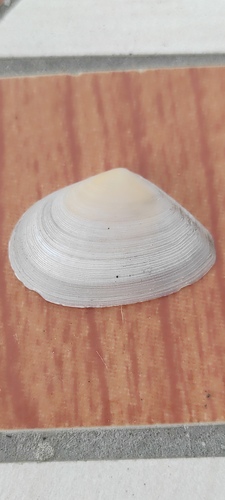
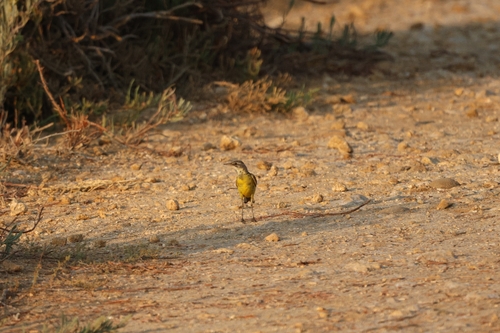
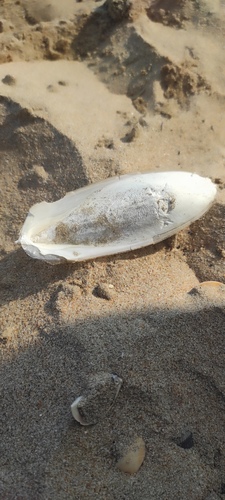
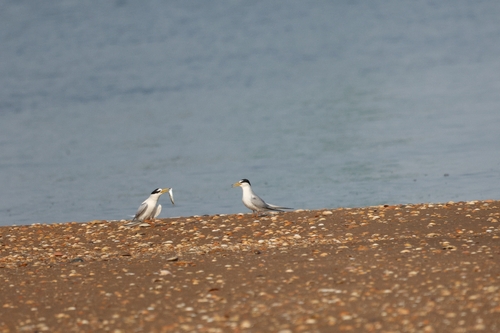
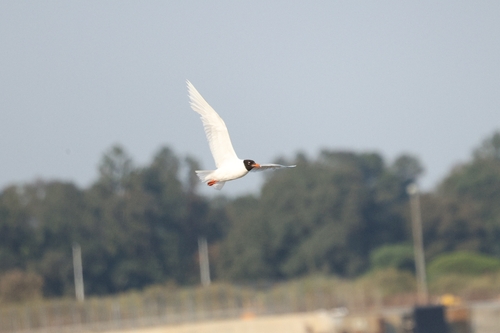
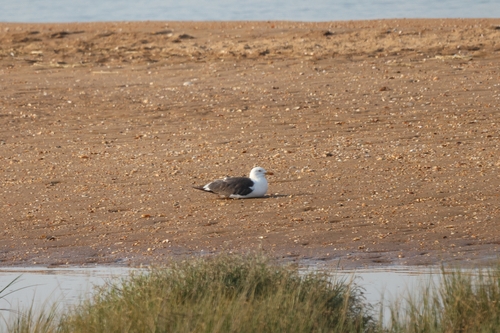
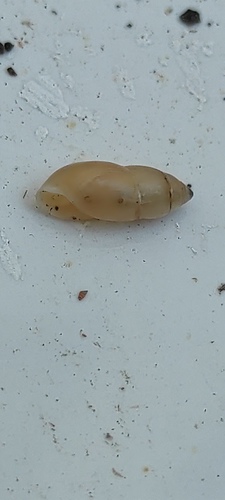
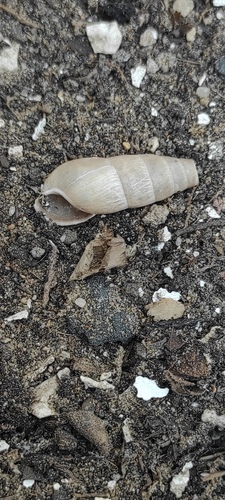
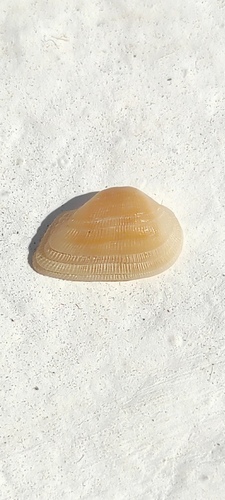
Research-grade observations from iNaturalist (within ~15 mi).
Events
Gallery
Official Identifiers
INE — Spanish National Statistics
- INE code
- 21041
- Population (Wikidata)
- 143,215
- Wikidata
- Q12246
Municipality codes via Wikidata P772
Sources
- • Wikipedia
- • Open-Meteo (ERA5 reanalysis)
- • Wikidata
- • Open-Meteo Air Quality (CAMS)
- • GBIF (Global Biodiversity Information Facility)
- • iNaturalist
- • Open-Meteo / sunrise-sunset.org
- • Wikipedia Pageviews API
- • Open Library
- • INE — Spanish national statistics, municipality code via Wikidata P772
- • INE — Spanish National Statistics — Municipality codes via Wikidata P772