Browse / Spain / Murcia / Mula
Mula
Murciatown
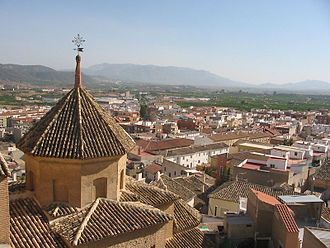
Mula
Total population
15,397
Demographic figures from INE (Spain). Overview below cites Wikipedia and may reference a different year.
City facts
Facts from Wikidata (CC0).
Overview
Mula is a municipality of Spain belonging to the Region of Murcia. It is located in southeastern Iberia. It has a total area of 633.84 km2 and, as of 1 January 2020, a registered population of 17,021.
Read more on WikipediaHistory & geography
History
There is evidence of human occupancy from the Prehistory, specifically the Neolithic. During the Calcolithic this municipality was also occupied by people of the Argaric civilization. The people that lived in the territory during the Bronze Age have left a remarkable site: El Cigarralejo, which was an Iberian settlement and included a necropolis and a shrine. Following the 1243 Treaty of Alcaraz, a Castilian army led by the then infante Alfonso of Castile laid siege and took the place by force in 1244. Located on the slopes of a hill, the place was well fortified, with a double rim of walls. Water supply was secured by the seizure of the network of located to the northeast. Most of the Muslim population was driven out of the place and Mula, following the ensuing demographic replacement, henceforth became a vanguard post and power base of the Crown of Castile in the region. Taking the former into account, the town presumably remained in possession of Castile during the 1264–66 Mudéjar revolt. The Muslim population relocated to the hamlet of La Puebla de Mula. A royal demesne town nestled in between the dominions of the military orders of Santiago, the Temple and the Hospital, as well as the Nasrid Kingdom of Granada, Mula was granted several privileges in 1296, including tax exemptions and the ratification of its fuero. In the wake of the Aragonese occupation of the Kingdom of Murcia, favoured by the substantial number of Aragonese settlers in the realm, the town of Mula rose in rebellion against the Crown of Aragon in favour of the Castilian monarch in 1298. Mula experienced a demographic boom following the Fall of Granada, increasing its population threefold in barely three decades. During the 17th century Mula was scenery of epidemics and starvation. The plague…
Geography
The neighborhoods of Mula include Fuente Librilla, Yechar, Los Baños De Mula, Puebla De Mula, and Casas Nuevas. The municipality of Mula has the following neighboring municipalities: *Calasparra, Cieza and Ricote to the North *Ricote, Campos del Río, Albudeite, Alcantarilla and Murcia to the East *Librilla, Alhama de Murcia and Totana to the South *Bullas, Cehegín and Lorca to the West *Pliego is completely surrounded by Mula. Part of Sierra Espuña mountain range occupies part of the municipality. Another remarkable geographical element is Mula river and a stretch of it traverses Mula. There are also some arroyos (creeks) or ramblas.
Excerpted from the corresponding Wikipedia article (CC BY-SA).
Geography
Coordinates & boundaries from the US Census TIGER/Line shapefiles.
Climate
Air quality
Walkability
Amenities nearby
Wildlife & biodiversity
Earthquake history
Photos
Sights & places nearby
Notable people from here


People born within ~10 km, from Wikidata (CC0). Click any name for their Wikipedia article.
Geography & sun
Elevation, sunrise/sunset and daylight from Open-Meteo. Solar climatology from NASA POWER.
Nearby airports
Public attention
Pageview totals from the Wikimedia Pageviews API.
Books about Mula
Search results from Open Library.
Recent natural events nearby
Ground air-quality sensors
Recently spotted species
Events
Gallery
Sources
- • Wikipedia
- • Wikidata
- • Open-Meteo / sunrise-sunset.org
- • Wikipedia Pageviews API
- • Open Library