Browse / Spain / Castile and León / Salamanca
Salamanca
Castile and Leóncity

Salamanca
Total population
145,583
Air quality index
Demographic figures from INE (Spain). Overview below cites Wikipedia and may reference a different year.
City facts
Facts from Wikidata (CC0).
Overview
Salamanca is a municipality and city in the autonomous community of Castile and León in Spain, and the capital of the Province of Salamanca. Attached to the comarca of Campo Charro, the city lies on the northern half of the Meseta Central, in the western-central part of the Iberian Peninsula, straddling the Tormes river. Its population in 2024 was 144,458, making Salamanca the 46th-largest municipality in Spain. The University of Salamanca, founded in 1218, is one of the oldest in Western Europe, and the Old City of Salamanca is a UNESCO World Heritage Site, which every year attracts a significant number of students and cultural tourists.
Read more on WikipediaHistory & geography
History
Salamanca has been linked to Universal History by a series of events and personalities that came to mark the evolution of Western society: * The creation of the first grammar of Spanish language in 1492 by Antonio de Nebrija, the famous Gramática de la lengua castellana. It was the first study of the rules of a Western European language other than Latin and this fact marks the beginning of the Spanish Golden Age. * The preparations of Christopher Columbus for his first voyage in the European discovery of the Americas. The Cloister of the University of Salamanca met in council to discuss his project. During these years, Columbus obtained the support of the Dominicans, staying at the Convento de San Esteban. The Salamanca astronomer Abraham Zacuto was his great scientific support for the trip. * The years of study of Hernán Cortés before leaving for the Americas and conquering the Aztec Empire. * The defense of the rights of the natives of the New World by the School of Salamanca, which, with Francisco de Vitoria at its head, reformulated the concept of natural law, renewed theology, laid the foundations of modern law of nations, international law and modern economic science, and actively participated in the Council of Trent. * At this council, mathematicians from the University of Salamanca proposed to Pope Gregory XIII the calendar that came to be known as the Gregorian calendar and is currently used all over the world. The germ was two studies carried out in 1515 and 1578 by scientists at the university, which were submitted to the church. * The partial translation of the Bible into Spanish, made by Friar Luis de León. * The oldest preserved printed book on modern chess, Repetición de amores y arte de ajedrez, by the religious Luis Ramírez de Lucena, published in…
Geography
Integrated in the comarca of Campo Charro, the capital of Salamanca is located 64 kilometers from Zamora, 109 kilometers from Ávila, 121 kilometers from Valladolid, 123 kilometers from Portugal and 202 kilometers from Cáceres. The relief of the municipality is characterized by the confluence of two geological and environmental units of the southwest of the Castilian-Leonese plateau on the banks of the Tormes river. On the one hand, to the north and east, the Tertiary sedimentary basin, characterized by extensive plains dedicated to dry farming; on the other, the peneplain of the Paleozoic socket to the south and west, where an ecosystem of oak groves and pastures known as Campo Charro predominates, mostly dedicated to livestock. The city is located at an altitude of 800 meters above sea level. The altitude of the municipality varies from 911 meters (Los Montalvos), in the southwest, and 763 meters in the last stretch in the municipality of the Tormes river. The municipality of Salamanca is crossed by two surface watercourses: the Tormes river and the Zurguén stream, the latter a tributary of the river on its left bank. The valleys of the two watercourses are characterized by alluvial type materials, considered as permeable. The water table is very high, which sometimes gives rise to waterlogged areas. The Tormes river articulates the entire provincial territory and has had a decisive influence on the historical development of the city. Its middle course is regulated by the Santa Teresa Reservoir which also fulfills the function of supplying drinking water and irrigation. Its regulation was also intended to prevent its numerous floods, such as the historic ones that occurred in 1256 and 1626, although it did not succeed, in that they have been reiterated…
Excerpted from the corresponding Wikipedia article (CC BY-SA).
Geography
Coordinates & boundaries from the US Census TIGER/Line shapefiles.
Climate
Air quality
Current readings from Open-Meteo Air Quality API (Copernicus CAMS European reanalysis).
Walkability
Amenities nearby
Wildlife & biodiversity
Most-observed species
- Common Wood-PigeonColumba palumbus Linnaeus, 1758 · Aves5,483
- House SparrowPasser domesticus (Linnaeus, 1758) · Aves5,076
- Eurasian MagpiePica pica (Linnaeus, 1758) · Aves4,468
- Spotless StarlingSturnus unicolor Temminck, 1820 · Aves4,207
- Eurasian BlackbirdTurdus merula Linnaeus, 1758 · Aves4,002
- Rock PigeonColumba livia J.F.Gmelin, 1789 · Aves3,927
- MallardAnas platyrhynchos Linnaeus, 1758 · Aves3,195
- Black RedstartPhoenicurus ochruros (S.G.Gmelin, 1774) · Aves2,946
Citizen-science & research observations from the Global Biodiversity Information Facility (GBIF).
Earthquake history
Most recent
- M 2.9 — 2005-10-161 km SW of Carbellino, Spain
- M 3.5 — 2004-06-142 km ESE of Villaseco de los Reyes, Spain
- M 3.4 — 2004-01-305 km NE of Villalcampo, Spain
- M 3.1 — 2003-09-212 km E of Villalcampo, Spain
- M 3.2 — 2003-07-273 km NE of Villalcampo, Spain
- M 3.7 — 2003-07-274 km NE of Villalcampo, Spain
Events from the USGS Earthquake Catalog (global) (FDSN Event Web Service).
Photos
Sights & places nearby
Notable people from here


People born within ~10 km, from Wikidata (CC0). Click any name for their Wikipedia article.
Nearby places in Castile and León
- Calvarrasa de Arriba5.5 mi away · pop. 533
- Alba de Tormes12.4 mi away · pop. 4,756
- Navales15.6 mi away · pop. 312
- Valdecarros18.5 mi away · pop. 296
- Alaraz24.7 mi away · pop. 419
- Torrecilla de la Orden28.9 mi away · pop. 227
- Fresno el Viejo31.3 mi away · pop. 816
- Castrejón de Trabancos32.5 mi away · pop. 173
- Bermillo de Sayago36.1 mi away · pop. 520
- Siete Iglesias de Trabancos36.5 mi away · pop. 408
- Fresnedoso36.6 mi away · pop. 92
- El Cabaco36.8 mi away · pop. 216
Geography & sun
Elevation, sunrise/sunset and daylight from Open-Meteo. Solar climatology from NASA POWER.
Nearby airports
Public attention
Pageview totals from the Wikimedia Pageviews API.
Books about Salamanca
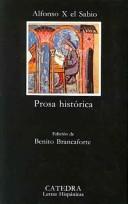
Search results from Open Library.
Recent natural events nearby
Ground air-quality sensors
Recently spotted species
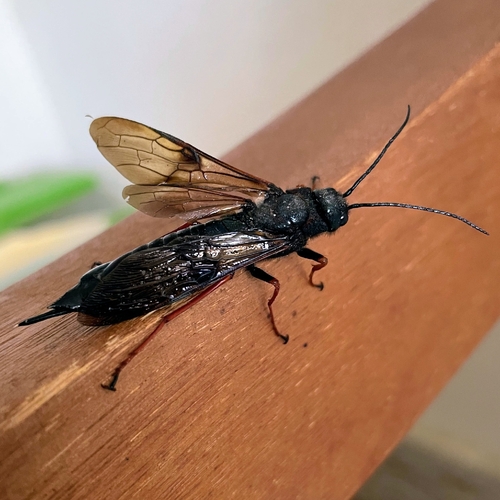
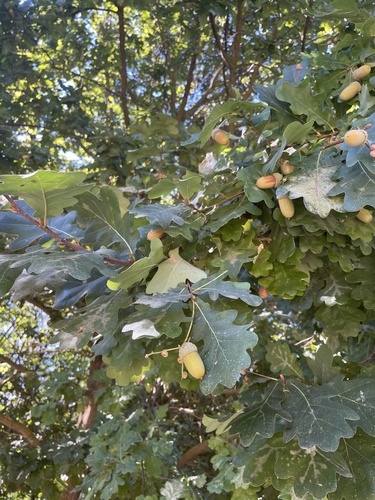
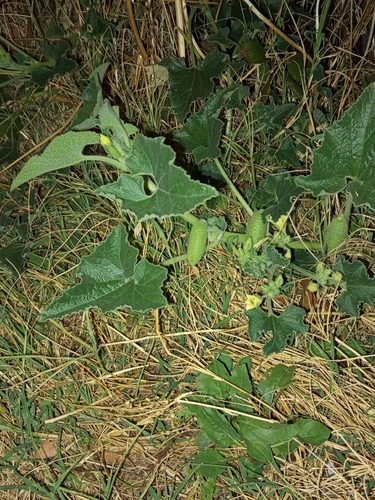
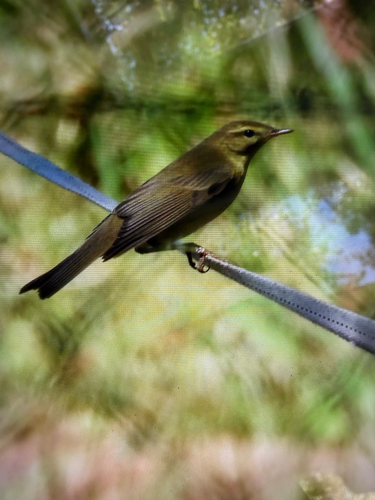
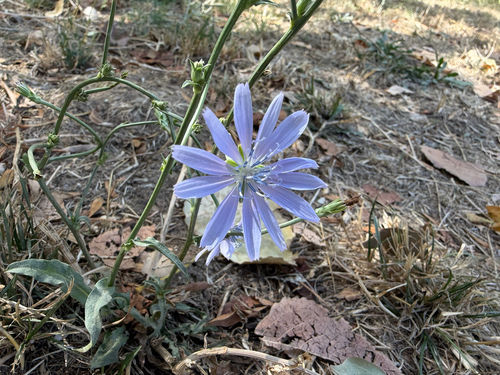
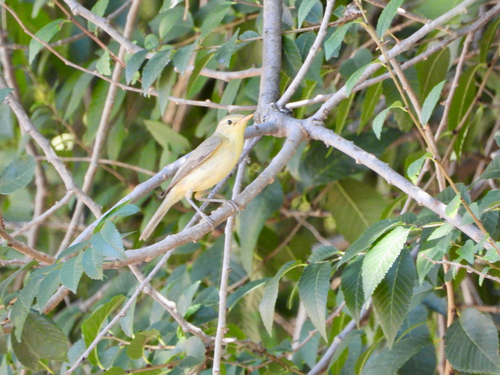
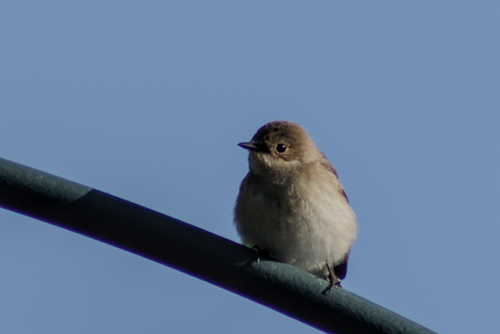
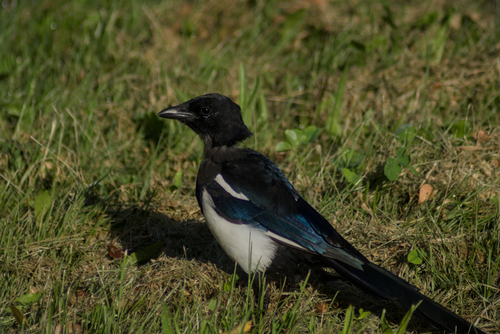
Research-grade observations from iNaturalist (within ~15 mi).
Events
Notable, recurring, and historical events associated with Salamanca, sourced from Wikidata.
- Water Mondayholiday
Holy Monday or the Monday a week later, when the penitentiary period ends; a popular holiday in Salamanca (Spain), often spent with one's family in an atmosphere of rest, recreation and fun
- Q5786144May 14, 1955meeting
Source: Wikidata (CC0).
Gallery
Official Identifiers
INE — Spanish National Statistics
- INE code
- 37274
- Population (Wikidata)
- 146,110
- Wikidata
- Q15695
Municipality codes via Wikidata P772
Sources
- • Wikipedia
- • Wikidata
- • Open-Meteo Air Quality (CAMS)
- • USGS Earthquake Catalog (global feed)
- • GBIF (Global Biodiversity Information Facility)
- • iNaturalist
- • Open-Meteo / sunrise-sunset.org
- • Wikipedia Pageviews API
- • Open Library
- • INE — Spanish national statistics, municipality code via Wikidata P772
- • INE — Spanish National Statistics — Municipality codes via Wikidata P772