Browse / Croatia / Karlovac / Latin
Latin
Karlovacvillage

Latin
Total population
196
Demographic figures from Croatian Bureau of Statistics. Overview below cites Wikipedia and may reference a different year.
City facts
Overview
Latin is a classical language belonging to the Italic branch of the Indo-European languages. Latin was originally spoken by the Latins in Latium, the lower Tiber area around Rome, Italy. Through the expansion of the Roman Republic, it became the dominant language in the Italian Peninsula and subsequently throughout the Roman Empire. It has greatly influenced many languages, including English, having contributed many words to the English lexicon, particularly after the Christianisation of the Anglo-Saxons and the Norman Conquest. Latin roots appear frequently in the technical vocabulary used by fields such as theology, the sciences, medicine, and law.
Read more on WikipediaHistory & geography
History
A number of phases of the language have been recognised, each distinguished by subtle differences in vocabulary, usage, spelling, and syntax. There are no hard and fast rules of classification; different scholars emphasise different features. As a result, the list has variants, as well as alternative names. In addition to the historical phases, Ecclesiastical Latin refers to the styles used by the writers of the Roman Catholic Church from late antiquity onward, as well as by Protestant scholars. The earliest known form of Latin is Old Latin, also called Archaic or Early Latin, which was spoken from the Roman Kingdom, traditionally founded in 753 BC, through the later part of the Roman Republic, up to 75 BC, i.e. before the age of Classical Latin. It is attested both in inscriptions and in some of the earliest extant Latin literary works, such as the comedies of Plautus and Terence. The Latin alphabet was devised from the Etruscan alphabet. The writing later changed from what was initially either a right-to-left or a boustrophedon script to what ultimately became a strictly left-to-right script. During the late republic and into the first years of the empire, from about 75 BC to AD 200, a new Classical Latin arose, a conscious creation of the orators, poets, historians and other literate men, who wrote the great works of classical literature, which were taught in grammar and rhetoric schools. Today's instructional grammars trace their roots to such schools, which served as a sort of informal language academy dedicated to maintaining and perpetuating educated speech. Philological analysis of Archaic Latin works, such as those of Plautus, which contain fragments of everyday speech, gives evidence of an informal register of the language, Vulgar Latin (termed 'the…
Excerpted from the corresponding Wikipedia article (CC BY-SA).
Geography
Coordinates & boundaries from the US Census TIGER/Line shapefiles.
Climate
Air quality
Walkability
Amenities nearby
Wildlife & biodiversity
Earthquake history
Photos
Sights & places nearby
Notable people from here


People born within ~10 km, from Wikidata (CC0). Click any name for their Wikipedia article.
Nearby places in Karlovac
- Pothum Plaščanski0.7 mi away · pop. 77
- Istočni Trojvrh1.5 mi away
- Trojvrh2.4 mi away · pop. 32
- Vojnovac2.6 mi away · pop. 94
- Lapat3.4 mi away · pop. 215
- Cerovnik3.9 mi away · pop. 144
- Janja Gora4 mi away · pop. 112
- Sabljaki Modruški4 mi away · pop. 50
- Jezero I Dio4.7 mi away · pop. 77
- Munjava Modruška4.8 mi away · pop. 63
- Munjava5.2 mi away · pop. 237
- Salopeki Modruški5.7 mi away · pop. 69
Geography & sun
Elevation, sunrise/sunset and daylight from Open-Meteo. Solar climatology from NASA POWER.
Nearby airports
Public attention
Pageview totals from the Wikimedia Pageviews API.
Books about Latin
Search results from Open Library.
Recent natural events nearby
Ground air-quality sensors
Recently spotted species


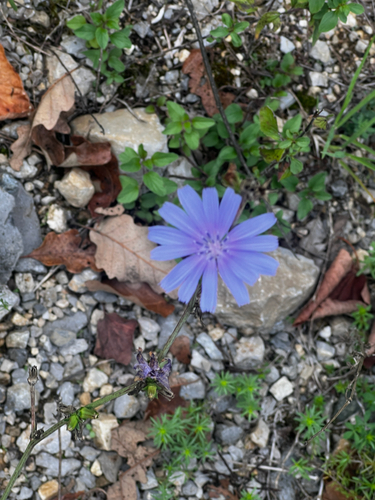
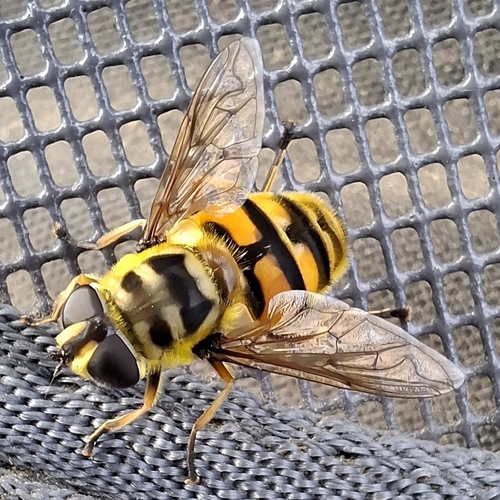
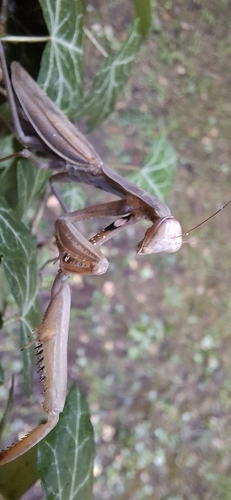
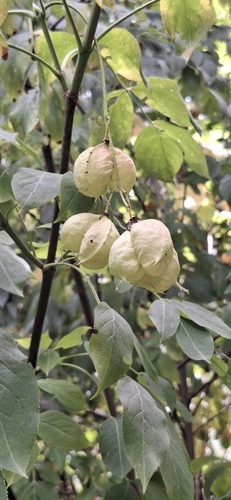
Research-grade observations from iNaturalist (within ~15 mi).
Events
Gallery
Sources
- • Wikipedia
- • Wikidata
- • iNaturalist
- • Open-Meteo / sunrise-sunset.org
- • Wikipedia Pageviews API
- • Open Library