Browse / Croatia / Istria / Pula
Pula
Istriacity

Pula
Total population
52,220
Demographic figures from Croatian Bureau of Statistics. Overview below cites Wikipedia and may reference a different year.
City facts
Sister cities
Facts from Wikidata (CC0).
Overview
Pula, also known as Pola, its Italian name, is the largest city in Istria County, western Croatia, and the seventh-largest city in the country, situated at the southern tip of the Istrian peninsula in western Croatia, with a population of 52,220 in 2021. It is known for its multitude of ancient Roman buildings, the most famous of which is the Pula Arena, one of the best preserved Roman amphitheaters. The city has a long tradition of wine making, fishing, shipbuilding, and tourism. It was the administrative centre of Istria from ancient Roman times until superseded by Pazin in 1991.
Read more on WikipediaHistory & geography
History
Evidence of the presence of Homo erectus one million years ago has been found in the cave of Šandalja near Pula. Pottery from the Neolithic period (6000–2000 BC), indicating human settlement, has been found around Pula. In the Bronze Age (1800–1000 BC), a new type of settlement appeared in Istria, called 'gradine', or hill-top fortifications. Many late Bronze Age bone objects, such as tools for smoothing and drilling, sewing needles, as well as spiral bronze pendants, have been found in the area around Pula. The type of materials found in Bronze Age sites in Istria connects these with sites along the Danube. Greek tradition attributed the foundation of Polai to the Colchians, mentioned in the context of the story of Jason and Medea, who had stolen the Golden Fleece. The Colchians, who had chased Jason into the northern Adriatic, were unable to catch him and ended up settling in a place they called Polai, signifying "city of refuge". In classical antiquity, it was inhabited by the Histri, a Venetic or Illyrian tribe. Callimachus, Strabo, Pomponius Mela and Lycophron wrote that it was inhabited by Colchians. Ancient Greek authors wrote that the Greeks called it Phygadon (Φυγάδων, "Town of Fugitives") and that the Colchian inhabitants called it Pola (Πόλα) in their own language. During that time the town grew and had at its zenith a population of about 30,000. It became a significant Roman port with a large surrounding area under its jurisdiction. During the civil war of 42 BC of the triumvirate of Octavian, Mark Antony and Lepidus against Caesar's assassins Brutus and Cassius, the town took the side of Cassius, since the town had been founded by Cassius Longinus, brother of Cassius. After Octavian's victory, the town was demolished. It was soon rebuilt at the request…
Geography
The city lies on and beneath seven hills (Monte Zaro, Monte Serpente, Monte Ghiro, Monte Magno, Monte Paradiso, Monte Rizzi and Monte Vidal) on the inner part of a wide gulf and a naturally well-protected port (depth up to ) open to the northwest with two entrances: from the sea and through Fažana channel. Today, Pula's geographical area amounts to , on land and at sea, bounded from the north by islands Sv. Jerolim and Kozada, city areas Štinjan/Stignano, Veli Vrh/Monte Grande and Sianna with its 'Kaiserwald' forest; from the east area Monteserpo, Valmade, Busoler and Valdebek; from the south with the old gas works, commercial port Veruda and island Veruda; and from the west Verudela, Lungomare and Musil. Protected from the north by the mountain chain of Alps as well the inner highland, the climate is humid subtropical (Köppen climate classification: Cfa), with the highest air temperature averaging during July and August and lowest averaging , in January and February. Summers are usually quite hot, although some unusual heat wave patterns are also common. Normally, it is humid. Temperatures above last for more than 240 days a year. There are two different kinds of winds here – the bora brings cold and clear weather from the north in winter, and the southern Sirocco bringing rain in summer. The 'Maestral' is a summer breeze blowing from the inland to the sea. Like the rest of the region Pula is known for its mild climate and tame sea with an average of sunny days of 2,316 hours per year or 6.3 hours a day, with an average air temperature of ( in February to in July and August) and sea temperature from to . Since records began in 1963, the highest temperature recorded at the local weather station was , on 5 August 2017. The coldest temperature was , on both 3…
Excerpted from the corresponding Wikipedia article (CC BY-SA).
Geography
Coordinates & boundaries from the US Census TIGER/Line shapefiles.
Climate
10-year averages from ERA5 reanalysis (Open-Meteo).
Air quality
Walkability
Amenities nearby
Wildlife & biodiversity
Most-observed species
- Yellow-legged GullLarus michahellis J.F.Naumann, 1840 · Aves849
- Eurasian JayGarrulus glandarius (Linnaeus, 1758) · Aves485
- Eurasian BlackbirdTurdus merula Linnaeus, 1758 · Aves425
- Great TitParus major Linnaeus, 1758 · Aves403
- European ShagPhalacrocorax aristotelis (Linnaeus, 1761) · Aves393
- Eurasian MagpiePica pica (Linnaeus, 1758) · Aves377
- Barn SwallowHirundo rustica Linnaeus, 1758 · Aves370
- Hooded CrowCorvus cornix Linnaeus, 1758 · Aves350
Citizen-science & research observations from the Global Biodiversity Information Facility (GBIF).
Earthquake history
Most recent
- M 3.9 — 2023-07-298 km ENE of Klana, Croatia
- M 4.7 — 2023-02-163 km W of Baška, Croatia
- M 3.5 — 2020-05-133 km NE of Crikvenica, Croatia
- M 4 — 2017-08-083 km SSW of Jadranovo, Croatia
- M 4.5 — 2014-04-227 km SE of Pivka, Slovenia
- M 4.4 — 2013-07-3011 km NW of Brinje, Croatia
Events from the USGS Earthquake Catalog (global) (FDSN Event Web Service).
Photos
Sights & places nearby
Notable people from here


People born within ~10 km, from Wikidata (CC0). Click any name for their Wikipedia article.
Nearby places in Istria
- Vintijan1.8 mi away · pop. 172
- Pješčana Uvala2.3 mi away · pop. 606
- Valbonaša2.3 mi away · pop. 41
- Vinkuran2.7 mi away · pop. 672
- Banjole3.3 mi away · pop. 983
- Valbandon3.3 mi away · pop. 1,626
- Fažana4.4 mi away · pop. 2,009
- Loborika4.4 mi away · pop. 844
- Galižana4.5 mi away · pop. 1,501
- Šišan4.9 mi away · pop. 849
- Medulin5.6 mi away · pop. 2,777
- Premantura5.7 mi away · pop. 768
Geography & sun
Elevation, sunrise/sunset and daylight from Open-Meteo. Solar climatology from NASA POWER.
Nearby airports
Public attention
Pageview totals from the Wikimedia Pageviews API.
Books about Pula

Search results from Open Library.
Recent natural events nearby
Ground air-quality sensors
Recently spotted species
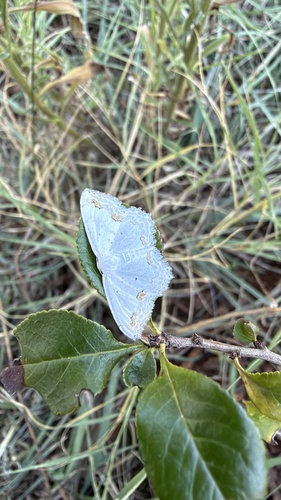
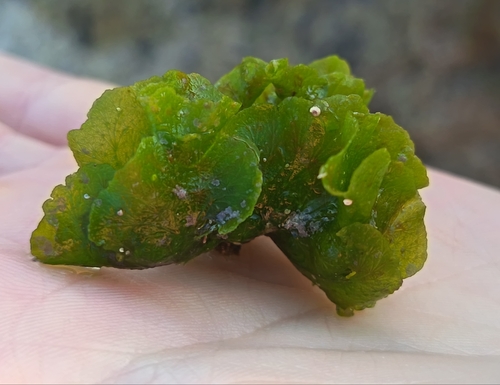
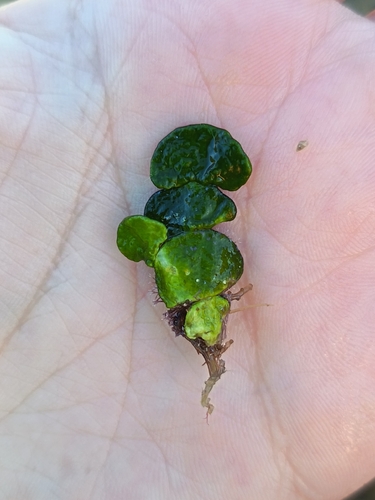
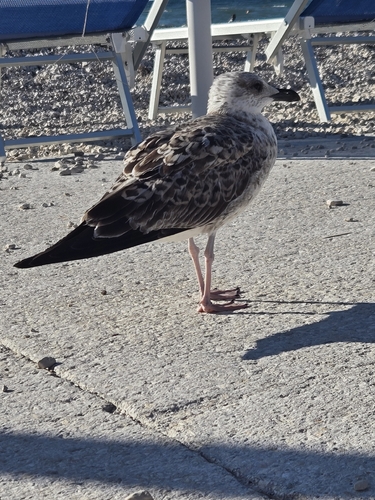
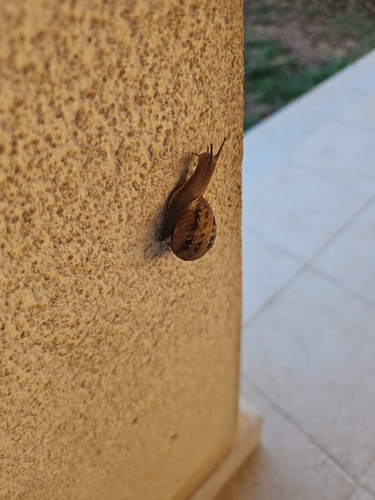
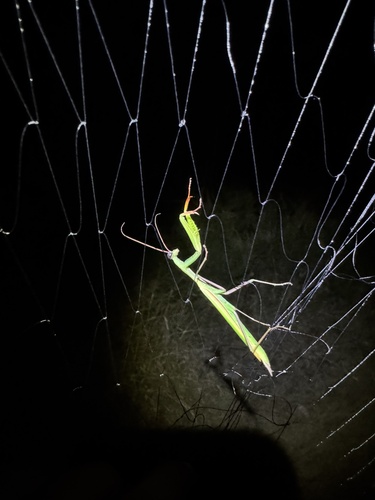
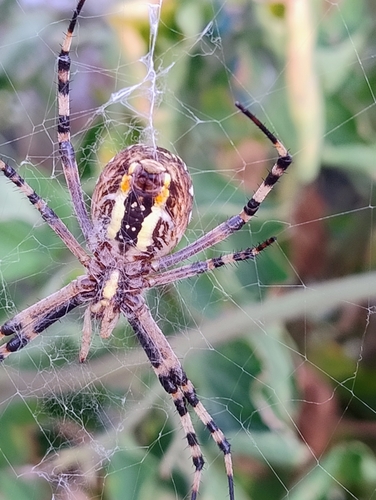
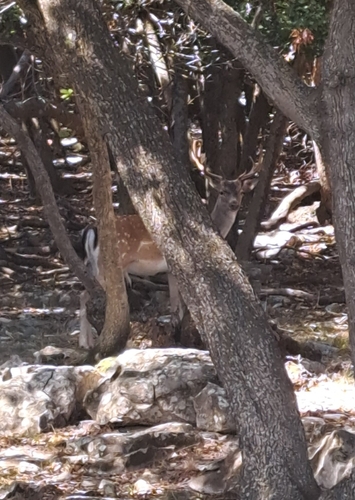
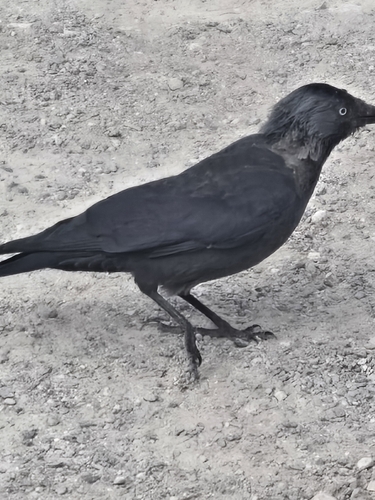
Research-grade observations from iNaturalist (within ~15 mi).
Events
Gallery
Sources
- • Wikipedia
- • Open-Meteo (ERA5 reanalysis)
- • Wikidata
- • USGS Earthquake Catalog (global feed)
- • GBIF (Global Biodiversity Information Facility)
- • iNaturalist
- • Open-Meteo / sunrise-sunset.org
- • Wikipedia Pageviews API
- • Open Library