Browse / Croatia / Zadar / Zadar
Zadar
Zadarcity

Zadar
Total population
67,309
Air quality index
Demographic figures from Croatian Bureau of Statistics. Overview below cites Wikipedia and may reference a different year.
City facts
Sister cities
Facts from Wikidata (CC0).
Overview
Zadar, historically known as Zara, is the oldest continuously inhabited city in Croatia. It is situated on the Adriatic Sea, at the northwestern part of Ravni Kotari region. Zadar serves as the seat of Zadar County and of the wider northern Dalmatian region. The city proper covers 25 km2 (9.7 sq mi) with a population of 75,082 in 2011, making it the second-largest city in Dalmatia and the fifth-largest in the country.
Read more on WikipediaHistory & geography
History
The district of present-day Zadar has been populated since prehistoric times. The earliest evidence of human life comes from the Late Stone Age, while numerous settlements have been dated as early as the Neolithic. Before the Illyrians, the area was inhabited by an ancient Mediterranean people of a pre-Indo-European culture. They assimilated with the Indo-Europeans who settled between the 4th and 2nd millennium BC into a new ethnical unity, that of the Liburnians. Zadar was a Liburnian settlement, laid out in the 9th century BC, built on a small stone islet and embankments where the old city stands and tied to the mainland by the overflown narrow isthmus, which created a natural port in its northern strait. The Liburnians, an Illyrian tribe, were known as great sailors and merchants, but also had a reputation for piracy in the later years. By the 7th century BC, Zadar had become an important centre for their trading activities with the Phoenicians, Etruscans, Ancient Greeks and other Mediterranean peoples. Its population at that time is estimated at 2,000. From the 9th to the 6th century there was certain cultural unity in the Adriatic Sea, with the general Liburninan seal, whose naval supremacy meant both political and economical authority through several centuries. Due to its geographical position, Zadar developed into a main seat of the Liburnian thalassocracy and took a leading role in the Liburnian tetradekapolis, an organization of 14 communes. The people of Zadar, Iadasinoi, were first mentioned in 384 BC as the allies of the natives of Hvar and the leaders of an eastern Adriatic coast coalition in the fight against the Greek colonizers. An expedition of 10,000 men in 300 ships sailed out from Zadar and laid siege to the Greek colony Pharos in the island of…
Geography
Zadar is settled in northern Dalmatia, facing the islands of Ugljan and Pašman (part of the Zadar Archipelago), from which it is separated by the narrow Zadar Strait. The promontory on which the old city stands used to be separated from the mainland by a deep moat which has since been filled. The harbour, to the north-east of the town, is safe and spacious. Zadar has a borderline humid subtropical (Cfa) and Mediterranean climate (Csa). Zadar has mild, wet winters and very warm, humid summers. July and August are the hottest months, with an average high temperature around . The highest temperature ever was on 5 August 2017 at the Zadar Zemunik station (records since 1981) and at the old Zadar climate station on 6 August 2022 (records since 1961). Temperatures can consistently reach over during the summer months, but during spring and autumn may also reach almost every year. Temperatures below are rare, and are not maintained for more than a few days. January is the coldest month, with an average temperature around . The lowest temperature ever recorded in Zadar was on 28 February 2018 at the Zadar Zemunik weather station and on 23 January 1963 at the old Zadar climate station. Through July and August temperature has never dropped below . October and November are the wettest months, with a total precipitation of about , respectively. July is the driest month, with a total precipitation of around . Winter is the wettest season, however it can rain in Zadar at any time of the year. Snow is exceedingly rare, but it may fall in December, January, February and much more rarely in March. On average Zadar has 1.4 days of snow a year, but it is more likely that there isn’t snow. The sea temperature goes from in February to in July and August, but it is possible to swim…
Excerpted from the corresponding Wikipedia article (CC BY-SA).
Geography
Coordinates & boundaries from the US Census TIGER/Line shapefiles.
Climate
Air quality
Current readings from Open-Meteo Air Quality API (Copernicus CAMS European reanalysis).
Walkability
Amenities nearby
Wildlife & biodiversity
Most-observed species
- Yellow-legged GullLarus michahellis J.F.Naumann, 1840 · Aves770
- Hooded CrowCorvus cornix Linnaeus, 1758 · Aves518
- Barn SwallowHirundo rustica Linnaeus, 1758 · Aves436
- Little Egret/Western Reef-HeronEgretta garzetta (Linnaeus, 1766) · Aves380
- Pygmy cormorantMicrocarbo pygmaeus (Pallas, 1773) · Aves367
- MallardAnas platyrhynchos Linnaeus, 1758 · Aves356
- Black-headed GullChroicocephalus ridibundus (Linnaeus, 1766) · Aves355
- Eurasian BlackbirdTurdus merula Linnaeus, 1758 · Aves321
Citizen-science & research observations from the Global Biodiversity Information Facility (GBIF).
Earthquake history
Most recent
- M 3.7 — 2026-03-041 km E of Drniš, Croatia
- M 4.6 — 2025-02-115 km NE of Starigrad, Croatia
- M 4.2 — 2024-05-014 km SW of Rakovica, Croatia
- M 3 — 2022-02-251 km WNW of Knin, Croatia
- M 4.4 — 2021-06-0812 km E of Brodarica, Croatia
- M 4.6 — 2020-11-012 km NE of Starigrad, Croatia
Events from the USGS Earthquake Catalog (global) (FDSN Event Web Service).
Photos
Sights & places nearby
Notable people from here


People born within ~10 km, from Wikidata (CC0). Click any name for their Wikipedia article.
Nearby places in Zadar
- Poljana3.1 mi away · pop. 321
- Sutomišćica3.4 mi away · pop. 380
- Kali4 mi away · pop. 1,585
- Babindub4.3 mi away · pop. 31
- Briševo4.8 mi away · pop. 657
- Žerava6 mi away · pop. 208
- Murvica Gornja6.1 mi away · pop. 253
- Sukošan6.3 mi away · pop. 2,808
- Ugljan6.6 mi away · pop. 1,024
- Zemunik Donji7.2 mi away · pop. 1,540
- Ždrelac7.6 mi away · pop. 397
- Mali Iž7.8 mi away · pop. 193
Geography & sun
Elevation, sunrise/sunset and daylight from Open-Meteo. Solar climatology from NASA POWER.
Nearby airports
Public attention
Pageview totals from the Wikimedia Pageviews API.
Books about Zadar

Search results from Open Library.
Recent natural events nearby
Ground air-quality sensors
Recently spotted species
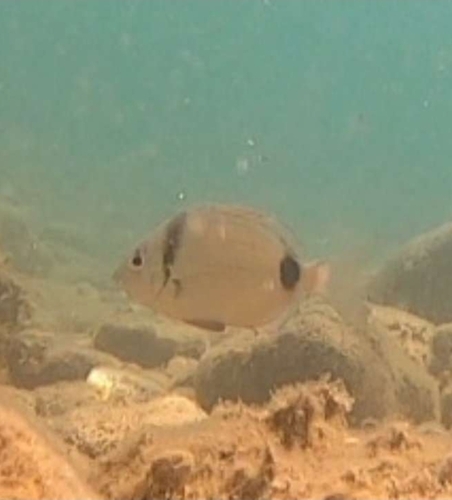
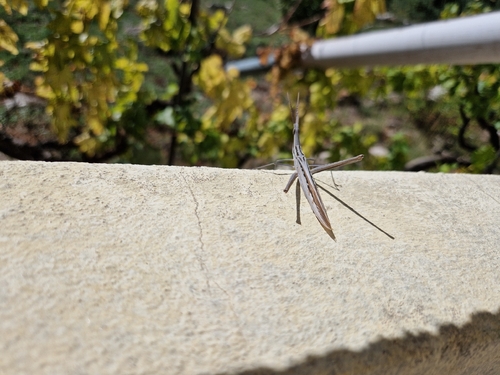
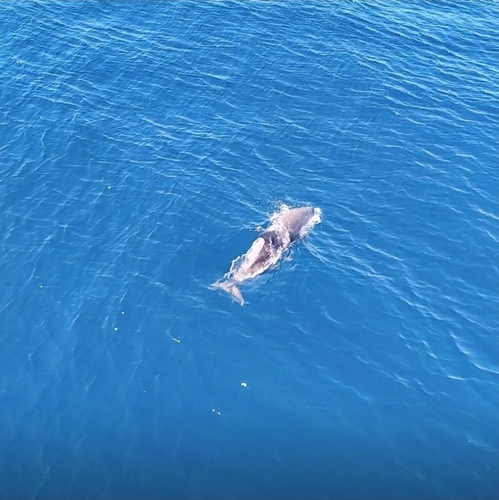
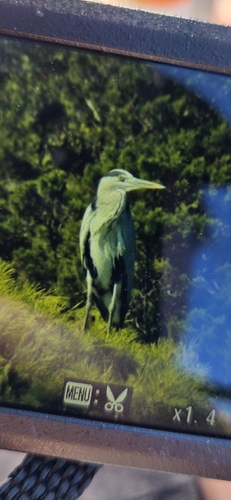
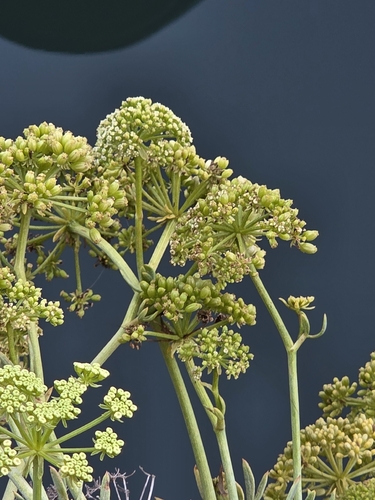

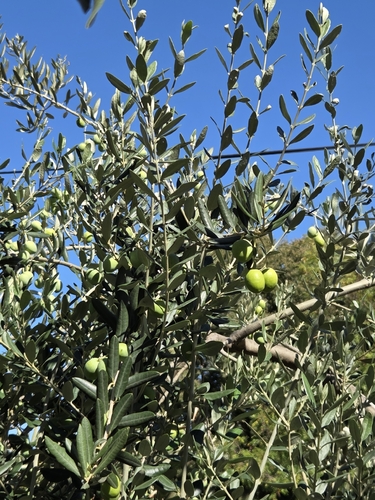
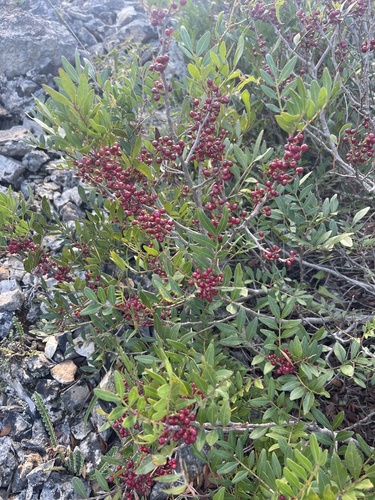
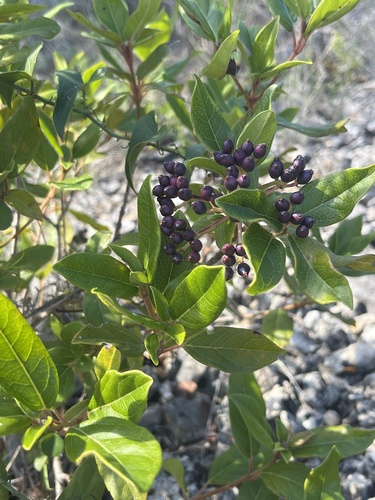
Research-grade observations from iNaturalist (within ~15 mi).
Events
Notable, recurring, and historical events associated with Zadar, sourced from Wikidata.
- Q108368807festival
Source: Wikidata (CC0).
Gallery
Geotagged photos within ~6 miles of Zadar, from Wikimedia Commons contributors.
 0.1 mi
 0.1 mi
 0.2 mi
 0.2 mi
 0.2 mi
 0.2 mi
 0.2 mi
 0.2 mi
 0.2 mi
 0.2 mi
.jpg) 0.2 mi
0.2 mi.jpg) 0.2 mi
0.2 mi.jpg) 0.2 mi
0.2 mi.jpg) 0.2 mi
0.2 mi.jpg) 0.2 mi
0.2 mi.jpg) 0.2 mi
0.2 mi.jpg) 0.2 mi
0.2 mi.jpg) 0.2 mi
0.2 mi.jpg) 0.2 mi
0.2 mi 0.2 mi
 0.2 mi
 0.2 mi
 0.2 mi
 0.2 mi
Photos via Wikimedia Commons — see each image page for license & attribution.
Sources
- • Wikipedia
- • Wikimedia Commons
- • Wikidata
- • Open-Meteo Air Quality (CAMS)
- • USGS Earthquake Catalog (global feed)
- • GBIF (Global Biodiversity Information Facility)
- • iNaturalist
- • Open-Meteo / sunrise-sunset.org
- • Wikipedia Pageviews API
- • Open Library