Browse / Malaysia / Kuala Lumpur / Kuala Lumpur
Kuala Lumpur
Kuala Lumpurcity

Kuala Lumpur
Total population
1,982,112
Founded
1857
Air quality index
Demographic figures from Department of Statistics Malaysia. Overview below cites Wikipedia and may reference a different year.
City facts
Facts from Wikidata (CC0).
Overview
Kuala Lumpur (KL), officially the Federal Territory of Kuala Lumpur, is the capital city and a federal territory of Malaysia. It is the most populous city in the country, covering an area of 243 km2 (94 sq mi) with a population of 2,111,536 as of 2026. Greater Kuala Lumpur, which itself includes the Klang Valley, is an urban agglomeration of 8.81 million people as of 2024. It is among the fastest growing metropolitan regions in Southeast Asia, in terms of both population and economic development.
Read more on WikipediaHistory & geography
History
The official account considers Kuala Lumpur to have been founded by the Malay Chief of Klang, Raja Abdullah, who sent Chinese miners into the region to open tin mines in 1857, although it is unclear who the first settlers were since there were likely settlements at the Gombak-Klang river confluence before that in the 1820s. Chinese miners were known to be involved in tin mining up the Selangor River in the 1840s about north of present-day Kuala Lumpur, and Mandailing Sumatrans led by and Sutan Puasa were also involved in tin mining and trade in the Ulu Klang region before 1860, and Sumatrans may have settled in the upper reaches of Klang River in the first quarter of the 19th century, or possibly earlier. Kuala Lumpur was originally a small hamlet of just a few houses and shops at the confluence of the Sungai Gombak and Sungai Klang (Klang River). Kuala Lumpur became established as a town , The miners landed at Kuala Lumpur and continued on foot to Ampang, where they opened the first mine. Kuala Lumpur was the furthest point up the Klang River to which supplies could conveniently be brought by boat and therefore became a collection and dispersal point serving the tin mines. The town, spurred on by tin-mining, started to develop around Old Market Square (Medan Pasar), with roads radiating out towards Ampang as well as Pudu and Batu (the destinations became the names of these roads: Ampang Road, Pudu Road, and Batu Road), where miners had also begun to settle in, and Petaling and Damansara. The miners formed gangs and the gangs frequently fought in this period, particularly factions of Kuala Lumpur and Kanching, mainly over control of the best tin mines. Leaders of the Chinese community were conferred the title of Kapitan Cina (Chinese headman) by the Malay chief, and…
Geography
The geography of Kuala Lumpur is characterised by the huge Klang Valley, bordered by the Titiwangsa Mountains in the east, several minor ranges in the north and the south, and the Strait of Malacca in the west. Kuala Lumpur is a Malay term that translates to "muddy confluence" and is located at the confluence of the Klang and Gombak rivers which flow into the Selangor River. Located in the centre of Selangor state, Kuala Lumpur was a territory of Selangor State Government. In 1974, Kuala Lumpur was split off from Selangor to form the first Federal Territory governed directly by the Malaysian federal government. Its location in the most developed state on the west coast of peninsular Malaysia, which has a wider stretch of flat land than the east coast, has helped it develop faster than other cities in Malaysia. The municipality covers an area of , with an average elevation of highest point being Bukit Nanas at 94 meters above sea level. Protected by the Titiwangsa Range in the east and Indonesia's Sumatra Island in the west, Kuala Lumpur is sheltered from strong winds and has a tropical rainforest climate (Köppen climate classification Af), hot, humid and sunny, with abundant rainfall, especially during the northeast monsoon season from October to March. Temperatures tend to remain constant. Maximums hover between and sometimes topping , while minimums hover between and have never fallen below . Kuala Lumpur typically receives at least of rain annually; June to August are relatively dry, but even then rainfall typically exceeds a month. Kuala Lumpur is highly prone to severe thunderstorms and lightning strikes. The Klang Valley, including Kuala Lumpur, is one of the places where thunderstorms are most frequently observed on Earth. Floods are frequent in Kuala…
Excerpted from the corresponding Wikipedia article (CC BY-SA).
Geography
Coordinates & boundaries from the US Census TIGER/Line shapefiles.
Climate
10-year averages from ERA5 reanalysis (Open-Meteo).
Air quality
Current readings from Open-Meteo Air Quality API (Copernicus CAMS European reanalysis).
Walkability
Amenities nearby
Wildlife & biodiversity
Most-observed species
- Javan MynaAcridotheres javanicus Cabanis, 1851 · Aves3,439
- Yellow-vented BulbulPycnonotus goiavier (Scopoli, 1786) · Aves3,281
- Asian Glossy StarlingAplonis panayensis (Scopoli, 1786) · Aves3,073
- Zebra DoveGeopelia striata (Linnaeus, 1766) · Aves2,990
- Black-naped OrioleOriolus chinensis Linnaeus, 1766 · Aves2,496
- House CrowCorvus splendens Vieillot, 1817 · Aves2,467
- Spotted DoveSpilopelia chinensis (Scopoli, 1786) · Aves2,306
- White-throated KingfisherHalcyon smyrnensis (Linnaeus, 1758) · Aves2,237
Citizen-science & research observations from the Global Biodiversity Information Facility (GBIF).
Earthquake history
Events from the USGS Earthquake Catalog (global) (FDSN Event Web Service).
Photos
Sights & places nearby
Notable people from here


People born within ~10 km, from Wikidata (CC0). Click any name for their Wikipedia article.
Nearby places in Kuala Lumpur
Geography & sun
Elevation, sunrise/sunset and daylight from Open-Meteo. Solar climatology from NASA POWER.
Nearby airports
Public attention
Pageview totals from the Wikimedia Pageviews API.
Books about Kuala Lumpur
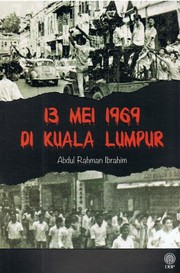


Search results from Open Library.
Recent natural events nearby
Ground air-quality sensors
Recently spotted species
Events
Notable, recurring, and historical events associated with Kuala Lumpur, sourced from Wikidata.
- Jul 31, 2021
- Aug 15, 2017
- Jan 1, 2017
- Aug 1, 2015
- Nov 1, 2011
- Oct 3, 2010
- Aug 29, 2008
- 5th Annual Roundtable Meeting on Sustainable Palm OilNov 20, 2007recurring event edition
- 1st Annual Roundtable Meeting on Sustainable Palm OilAug 21, 2003recurring event edition
- athletics at the 1998 Commonwealth Games – men's pole vaultJan 1, 1998sporting event
Pole vault, men's category at the 1998 Commonwealth Athletics Games
- 12th Malaysia Film FestivalNov 5, 1995award ceremony
Source: Wikidata (CC0).
Gallery
Geotagged photos within ~6 miles of Kuala Lumpur, from Wikimedia Commons contributors.
.jpg) 0 mi
0 mi 0.1 mi
.jpg) 0.1 mi
0.1 mi.jpg) 0.1 mi
0.1 mi.jpg) 0.1 mi
0.1 mi.jpg) 0.1 mi
0.1 mi.jpg) 0.1 mi
0.1 mi.jpg) 0.1 mi
0.1 mi.jpg) 0.1 mi
0.1 mi.jpg) 0.1 mi
0.1 mi.jpg) 0.1 mi
0.1 mi.jpg) 0.1 mi
0.1 mi.jpg) 0.1 mi
0.1 mi.jpg) 0.1 mi
0.1 mi.jpg) 0.1 mi
0.1 mi_-_panoramio.jpg) 0.1 mi
0.1 mi 0.1 mi
.jpg) 0.1 mi
0.1 mi.jpg) 0.1 mi
0.1 mi.jpg) 0.1 mi
0.1 mi.jpg) 0.1 mi
0.1 mi.jpg) 0.1 mi
0.1 mi 0.1 mi
 0.1 mi
Photos via Wikimedia Commons — see each image page for license & attribution.
Sources
- • Wikipedia
- • Open-Meteo (ERA5 reanalysis)
- • Wikimedia Commons
- • Wikidata
- • Open-Meteo Air Quality (CAMS)
- • USGS Earthquake Catalog (global feed)
- • GBIF (Global Biodiversity Information Facility)
- • Open-Meteo / sunrise-sunset.org
- • Wikipedia Pageviews API
- • Open Library