Browse / Norway / Trøndelag / Trondheim
Trondheim
Trøndelagcity

Trondheim
Total population
200,652
Air quality index
Demographic figures from Statistics Norway (SSB). Overview below cites Wikipedia and may reference a different year.
City facts
Facts from Wikidata (CC0).
Overview
Trondheim, historically Kaupangen, Nidaros, and Trondhjem, is a city and municipality in Trøndelag county, Norway. As of 1 January 2026, it had a population of 218,460. Trondheim is the third most populous municipality in Norway, and is the fourth largest urban area. Trondheim lies on the south shore of Trondheim Fjord at the mouth of the Nidelva. Among the significant technology-oriented institutions headquartered in Trondheim are the Norwegian University of Science and Technology (NTNU), the Foundation for Scientific and Industrial Research (SINTEF), the Geological Survey of Norway (NGU), and St. Olavs University Hospital.
Read more on WikipediaHistory & geography
History
Trondheim was named Kaupangen () by Viking King Olav Tryggvason in 997 CE. Shortly after that, it came to be called Nidaros. Initially, it was frequently used as a military retainer (Old Norse: "hird"-man) of King Olav I. It was also frequently used as the king's seat and was Norway's capital until 1217. People have lived in the area for thousands of years, as evidenced by the rock carvings in central Norway, the Nøstvet and Lihult cultures, and the Corded Ware culture. In ancient times, the kings of Norway were hailed in Trondheim at Øretinget, the place for the assembly of all free men by the mouth of the River Nidelva. Harald Fairhair (865–933) was hailed as the king here, as was his son, Haakon I, called 'the Good.' The battle of Kalvskinnet took place in Trondheim in 1179: King Sverre Sigurdsson and his Birkebeiner warriors were victorious against Erling Skakke (a rival to the throne). Some scholars believe that the famous Lewis chessmen, 12th-century chess pieces carved from walrus ivory that were found in the Hebrides and are now at the British Museum, may have been made in Trondheim. From 1152, Trondheim was the seat of the Archbishop of Nidaros for Norway, which operated from the Archbishop's Palace. Due to the introduction of Lutheran Protestantism in 1537, the last archbishop, Olav Engelbrektsson, had to flee from the city to the Netherlands; he died in what today is Lier, Belgium. From the 16th through the 19th centuries, the city was repeatedly ravaged by fires that caused widespread damage since many of its buildings were made of wood. The worst occurred in 1598, 1651, 1681, 1708, 1717 (twice), 1742, 1788, 1841 and 1842. The 1651 fire destroyed 90% of all buildings within the city limits. After the "Horneman Fire" in 1681, there was an almost total…
Geography
Trondheim is situated where the River Nidelva meets Trondheim Fjord with an excellent harbour and sheltered condition. In the Middle Ages the river was deep enough to be navigable by most boats. However, in the mid–17th century, an avalanche of mud and stones made it less navigable, and partly ruined the harbour. The municipality's highest elevation is the Storheia hill, above sea level. At the summer solstice, the sun rises at 03:00 and sets at 23:40, and then stays just below the horizon. Between 23 May and 19 July, when the sky is cloud-free, it remains light enough at night that no artificial lighting is needed outdoors. At the winter solstice, the sun rises at 10:01, stays very low above the horizon (at midday its altitude is slightly more than 3 degrees over the horizon), and sets at 14:31. Trondheim city has an oceanic climate (Cfb) or humid continental climate (Dfb), depending on the winter threshold used (−3°C or 0°C) and the location within the city. Winters are fairly cold and summers are mild. The part of the municipality further away from the fjord has slightly colder winters, while the part close to the fjord has the mildest winters. Trondheim is mostly sheltered from the strong south and southwesterly winds which can occur along the outer seaboard but is more exposed to northwesterly winds. As with the rest of Norway, the weather is dependent on the weather pattern. High pressure over Central Norway or to the east can last for weeks, while Atlantic Lows from the west also can dominate for weeks. Such stuck opposite weather patterns was evident in 2020, when May saw northwesterlies with cold air even bringing some snowfall, while the following June was warm and sunny. Trondheim experiences moderate snowfall from November to March, but mixed with mild…
Excerpted from the corresponding Wikipedia article (CC BY-SA).
Geography
Coordinates & boundaries from the US Census TIGER/Line shapefiles.
Climate
Air quality
Current readings from Open-Meteo Air Quality API (Copernicus CAMS European reanalysis).
Walkability
Amenities nearby
Wildlife & biodiversity
Most-observed species
- Great TitParus major Linnaeus, 1758 · Aves18,787
- Eurasian Blue TitCyanistes caeruleus (Linnaeus, 1758) · Aves17,402
- MallardAnas platyrhynchos Linnaeus, 1758 · Aves17,078
- Hooded CrowCorvus cornix Linnaeus, 1758 · Aves16,929
- Eurasian MagpiePica pica (Linnaeus, 1758) · Aves14,439
- Common GoldeneyeBucephala clangula (Linnaeus, 1758) · Aves14,069
- Mew GullLarus canus Linnaeus, 1758 · Aves13,997
- European GreenfinchChloris chloris (Linnaeus, 1758) · Aves13,830
Citizen-science & research observations from the Global Biodiversity Information Facility (GBIF).
Earthquake history
Most recent
- M 2.7 — 2005-02-2621 km ENE of Sistranda, Norway
- M 2.6 — 2005-02-2619 km NW of Brekstad, Norway
- M 2.5 — 2005-02-2614 km W of Brekstad, Norway
- M 2.5 — 2005-02-2622 km NW of Brekstad, Norway
Events from the USGS Earthquake Catalog (global) (FDSN Event Web Service).
Photos
Sights & places nearby
Notable people from here


People born within ~10 km, from Wikidata (CC0). Click any name for their Wikipedia article.
Nearby places in Trøndelag
- Bratsberg6.2 mi away · pop. 370
- Flakk6.3 mi away
- Ringvål6.7 mi away · pop. 438
- Vikhammer7.2 mi away · pop. 7,713
- Nypan7.4 mi away · pop. 871
- Rye7.7 mi away · pop. 643
- Klett7.8 mi away
- Malvik8.2 mi away
- Tanem8.6 mi away · pop. 1,247
- Spongdal8.8 mi away · pop. 526
- Klæbu9.5 mi away · pop. 3,624
- Vanvikan10.1 mi away · pop. 737
Geography & sun
Elevation, sunrise/sunset and daylight from Open-Meteo. Solar climatology from NASA POWER.
Nearby airports
Public attention
Pageview totals from the Wikimedia Pageviews API.
Books about Trondheim
Search results from Open Library.
Recent natural events nearby
Ground air-quality sensors
Recently spotted species

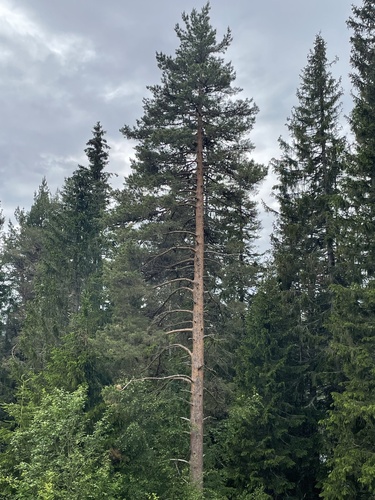
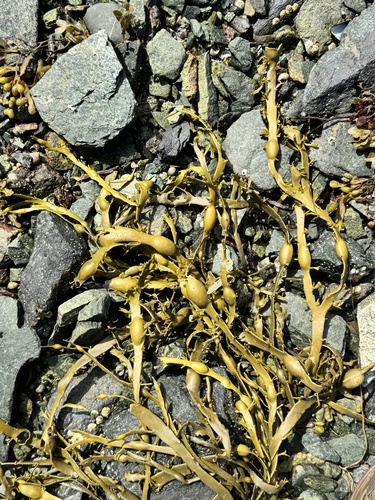






Research-grade observations from iNaturalist (within ~15 mi).
Events
Notable, recurring, and historical events associated with Trondheim, sourced from Wikidata.
- Mar 8, 2025
- Mar 7, 2025
- Mar 6, 2025
- Mar 5, 2025
- Mar 5, 2025
- Mar 4, 2025
- Mar 2, 2025
- Mar 1, 2025
- Mar 1, 2025
- Feb 28, 2025
- FIS Nordic World Ski Championships 2025 – Women's sprintFeb 27, 2025sporting event
- FIS Nordic World Ski Championships 2025 – Women's 5 km mass start/individual normal hillFeb 27, 2025sporting event
- 16th Kanon Award CeremonyMar 5, 2020award ceremony
2020 Norwegian film award ceremony for achievements in film in 2019
- 15th Kanon Award CeremonyMar 7, 2019award ceremony
2019 Norwegian film award ceremony for achievements in film in 2018
- Feb 4, 2017
- 12th Kanon Award CeremonyMar 10, 2016award ceremony
2016 Norwegian film award ceremony for achievements in film in 2015
- 10th Kanon Award CeremonyApr 29, 2014award ceremony
2014 Norwegian film award ceremony for achievements in film in 2013
- 9th Kanon Award CeremonyApr 15, 2013award ceremony
2013 Norwegian film award ceremony for achievements in film in 2012
- 8th Kanon Award CeremonyMar 19, 2012award ceremony
2012 Norwegian film award ceremony for achievements in film in 2011
- 6th Kanon Award CeremonyMar 15, 2010award ceremony
2010 Norwegian film award ceremony for achievements in film in 2009
Source: Wikidata (CC0).
Gallery
Geotagged photos within ~6 miles of Trondheim, from Wikimedia Commons contributors.
.jpg)
_(4202953180).jpg)
.jpg)
.jpg)
_(19776435500).jpg)


.jpg)
_(8134677744).jpg)
_(8134654085).jpg)
_(4165354625).jpg)
_(4165355101).jpg)
_(4137339187).jpg)
_(6005148096).jpg)
.jpg)
.jpg)
_(4133458854).jpg)
_(4114661986).jpg)
.jpg)
.jpg)
.jpg)
.jpeg)
_(46900251865).jpg)
Photos via Wikimedia Commons — see each image page for license & attribution.
Official Identifiers
SSB — Statistics Norway
- Kommunenr
- 5001
- Population (Wikidata)
- 218,460
- Wikidata
- Q1324436
Kommunenummer via Wikidata P2504
Sources
- • Wikipedia
- • Wikimedia Commons
- • Wikidata
- • Open-Meteo Air Quality (CAMS)
- • USGS Earthquake Catalog (global feed)
- • GBIF (Global Biodiversity Information Facility)
- • iNaturalist
- • Open-Meteo / sunrise-sunset.org
- • Wikipedia Pageviews API
- • Open Library
- • Wikidata SPARQL (CC0) — population, area, elevation, inception, head of government, Commons image
- • SSB — Statistics Norway — Kommunenummer via Wikidata P2504