Browse / Poland / Masovia / Płońsk
Płońsk
Masoviatown

Płońsk
Total population
21,800
Demographic figures from Statistics Poland (GUS). Overview below cites Wikipedia and may reference a different year.
City facts
Overview
Płońsk (Polish: [pwɔj̃sk] is a town in central Poland with 21,591 inhabitants. Situated at the Płonka river in the historic region of Mazovia, it is the seat of Płońsk County in the Masovian Voivodeship.
Read more on WikipediaHistory & geography
History
According to archaeological research, the Płońsk stronghold was built in the late 10th century within the early Polish state. Dating back to 1155, is the first historical record confirming the existence of Płońsk. Around the castle a group of inhabitants was formed, most of whom initially worked on the land. As a result of the fragmentation of medieval Piast-ruled Poland, it was part of the duchies of Masovia and Płock, and then it was a royal town of the Polish Crown, administratively located in the Płock Voivodeship in the Greater Poland Province. In 1400, Siemowit IV of Masovia, granted it town rights under Chełmno law, then merchants and craftsmen started to come to the town. Płońsk was located on a trade route connecting Toruń with Brześć. In 1872–1875 astronomer Jan Walery Jędrzejewicz established an astronomical observatory and meteorological station in Płońsk. After his death, the astronomical observatory was moved to Warsaw in 1898. It was a centre of the garment industry. The Jews lived mostly within the city, whilst the Poles were more scattered and tended to live in the countryside. On 16 October 1886 David Ben Gurion was born in Płońsk. Like him, also many other Jewish residents of the city immigrated to Palestine for Zionist reasons, spurred on by the idea of building a Jewish homeland. On 14–17 August 1920, the Poles successfully defended the town during a Soviet invasion. According to the 1921 Polish census, the town had a population of 9,220, 58.1% Polish and 41.9% Jewish. During the joint German-Soviet invasion of Poland, which started World War II in September 1939, Germany invaded the town and the Einsatzgruppe V entered the town to commit various crimes against the populace. Under German occupation the town was annexed directly to Nazi Germany…
Excerpted from the corresponding Wikipedia article (CC BY-SA).
Geography
Coordinates & boundaries from the US Census TIGER/Line shapefiles.
Climate
Air quality
Walkability
Amenities nearby
Wildlife & biodiversity
Most-observed species
- MallardAnas platyrhynchos Linnaeus, 1758 · Aves19
- Common Wood-PigeonColumba palumbus Linnaeus, 1758 · Aves18
- White StorkCiconia ciconia (Linnaeus, 1758) · Aves16
- Ground-elderAegopodium podagraria L. · Magnoliopsida14
- European StarlingSturnus vulgaris Linnaeus, 1758 · Aves14
- Common CraneGrus grus (Linnaeus, 1758) · Aves13
- Barn SwallowHirundo rustica Linnaeus, 1758 · Aves13
- Common ChaffinchFringilla coelebs Linnaeus, 1758 · Aves12
Citizen-science & research observations from the Global Biodiversity Information Facility (GBIF).
Earthquake history
Events from the USGS Earthquake Catalog (global) (FDSN Event Web Service).
Photos
Sights & places nearby
Notable people from here
Geography & sun
Elevation, sunrise/sunset and daylight from Open-Meteo. Solar climatology from NASA POWER.
Nearby airports
Public attention
Pageview totals from the Wikimedia Pageviews API.
Books about Płońsk
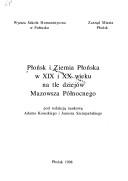
Search results from Open Library.
Recent natural events nearby
Ground air-quality sensors
Recently spotted species
Events
Gallery
Official Identifiers
GUS — Statistics Poland
- SIMC code
- 0930800
- Population (Wikidata)
- 21,800
- Wikidata
- Q270656
SIMC place ID via Wikidata P4046
Sources
- • Wikipedia
- • USGS Earthquake Catalog (global feed)
- • GBIF (Global Biodiversity Information Facility)
- • Open-Meteo / sunrise-sunset.org
- • Wikipedia Pageviews API
- • Open Library
- • GUS — Statistics Poland — SIMC place ID via Wikidata P4046