Browse / United Kingdom / Northern Ireland / Armagh
Armagh
Northern Irelandcity

Armagh
Total population
14,590
Demographic figures from UK Office for National Statistics. Overview below cites Wikipedia and may reference a different year.
City facts
Facts from Wikidata (CC0).
Overview
Armagh is a city and the county town of County Armagh, in Northern Ireland, as well as a civil parish. It is the ecclesiastical capital of Ireland – the seat of the Archbishops of Armagh, the Primates of All Ireland for both the Roman Catholic Church and the Church of Ireland. In ancient times, nearby Navan Fort was a pagan ceremonial site and one of the great royal capitals of Gaelic Ireland. Today, Armagh is home to two cathedrals and the Armagh Observatory, and is known for its Georgian architecture.
Read more on WikipediaHistory & geography
History
Eamhain Mhacha (or Navan Fort), at the western edge of Armagh, was an ancient pagan ritual or ceremonial site. According to Irish mythology it was one of the great royal sites of Gaelic Ireland and the capital of Ulster. It appears to have been largely abandoned after the 1st century. In the 3rd century, a ditch and bank was dug around the top of Cathedral Hill, the heart of what is now Armagh. Its circular shape matches the modern street layout. Evidence suggests that it was a pagan sanctuary and the successor to Navan. Like Navan, it too was named after the goddess Macha: Ard Mhacha, meaning "Macha's height". This name was later anglicised as Ardmagh, which eventually became Armagh. Navan and Armagh were linked by an ancient road which passes over Mullacreevie hill. After Christianity spread to Ireland, the pagan sanctuary was converted into a Christian one, and Armagh became the site of an important church and monastery. According to tradition, Saint Patrick founded his main church there in the year 445, and it eventually became the head church of Ireland. Muirchú writes that a pagan chieftain named Dáire would not let Patrick build a church on the hill of Ard Mhacha, but instead gave him lower ground to the east. One day, Dáire's horses died after grazing on the church land. He told his men to kill Patrick, but was himself struck down with illness. They begged Patrick to heal him, and Patrick's holy water revived both Dáire and his horses. Dáire rewarded Patrick with a great bronze cauldron and gave him the hill of Ard Mhacha to build a church. Dáire has similarities with the Irish god the Dagda. By the 7th century, Armagh had become the site of the most important church, monastery and monastic school in the north of Ireland. The Book of Armagh was produced in…
Excerpted from the corresponding Wikipedia article (CC BY-SA).
Geography
Coordinates & boundaries from the US Census TIGER/Line shapefiles.
Climate
Air quality
Walkability
Amenities nearby
Wildlife & biodiversity
Earthquake history
Photos
Sights & places nearby
Notable people from here


People born within ~10 km, from Wikidata (CC0). Click any name for their Wikipedia article.
Nearby places in Northern Ireland
Geography & sun
Elevation, sunrise/sunset and daylight from Open-Meteo. Solar climatology from NASA POWER.
Nearby airports
Public attention
Pageview totals from the Wikimedia Pageviews API.
Books about Armagh
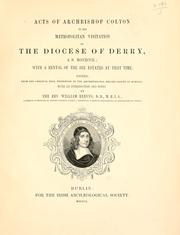
Search results from Open Library.
Recent natural events nearby
Ground air-quality sensors
Recently spotted species
Events
Gallery
Sources
- • Wikipedia
- • Wikidata
- • Open-Meteo / sunrise-sunset.org
- • Wikipedia Pageviews API
- • Open Library
- • Wikidata SPARQL (CC0) — population, area, elevation, inception, head of government, Commons image