Browse / United States / Alaska / Fairbanks
Fairbanks
Alaskacity

Fairbanks
Total population
32,083
Median home value
$268,400
Bachelor's+
Median income
$73,534
Founded
1901
Demographic figures from US Census Bureau · ACS 5-year estimates. Overview below cites Wikipedia and may reference a different year.
City facts
Facts from Wikidata (CC0).
Overview
Fairbanks is a home rule city and the borough seat of the Fairbanks North Star Borough, Alaska, United States. Fairbanks is the largest city in the interior region of Alaska and the second most populous city in the state. The 2020 census put the population of the city proper at 32,515 and the population of the Fairbanks North Star Borough at 95,655, making it the second most populous metropolitan area in Alaska, after Anchorage. The Metropolitan Statistical Area encompasses all of the Fairbanks North Star Borough and is the northernmost metropolitan statistical area in the United States, located 196 miles by road south of the Arctic Circle.
Read more on WikipediaHistory & geography
History
Athabascan peoples have lived on, traveled through, and stewarded the land of the Fairbanks area for thousands of years. Fairbanks continues to benefit from the leadership and influence of people from Athabascan and other Alaska Native communities. An archaeological site excavated on the grounds of the University of Alaska Fairbanks uncovered a Native camp about 3,500 years old, with older remains found at deeper levels. From evidence gathered at the site, archaeologists surmise that Native activities in the area included seasonal hunting and fishing. In addition, archaeological sites on the grounds of nearby Fort Wainwright date back well over 10,000 years. Arrowheads excavated from the University of Alaska Fairbanks site matched similar items found in Asia, providing some of the first evidence that humans arrived in North America via the Bering Strait land bridge in deep antiquity. Teams of gold prospectors soon congregated in and around the newly founded Fairbanks; they built drift mines, dredges, and lode mines in addition to panning and sluicing. After some urging by James Wickersham, who later moved the seat of the Third Division court from Eagle to Fairbanks, the settlement was named after Charles W. Fairbanks, a Republican senator from Indiana and later the twenty-sixth vice president of the United States, serving under Theodore Roosevelt during his second term. In these early years of settlement, the Tanana Valley was an important agricultural center for Alaska until the establishment of the Matanuska Valley Colonization Project and the town of Palmer in 1935. Agricultural activity still occurs today in the Tanana Valley, but mostly to the southeast of Fairbanks in the communities of Salcha and Delta Junction. During the early days of Fairbanks, its…
Geography
Fairbanks is in the central Tanana Valley, straddling the Chena River near its confluence with the Tanana River. Immediately north of the city is a chain of hills that rises gradually until it reaches the White Mountains and the Yukon River. The city's southern border is the Tanana River. South of the river is the Tanana Flats, an area of marsh and bog that stretches for more than until it rises into the Alaska Range, which is visible from Fairbanks on clear days. To the east and west are low valleys separated by ridges of hills up to above sea level. The Tanana Valley is crossed by many low streams and rivers that flow into the Tanana River. In Fairbanks, the Chena River flows southwest until it empties into the Tanana. According to the United States Census Bureau, the city has an area of ; of it is land and of it (2.48%) is water. The city is extremely far north, close to 16 degrees north of the Pacific border between the U.S. and Canada. It is on roughly the same parallel as the northern Swedish city of Skellefteå and Reykjavík, Iceland, just south of the Arctic Circle. Because of this, the white night or "Midnight Sun" phenomenon occurs here around the summer solstice. Due to its warm summers, Fairbanks is south of the arctic tree line. Fairbanks's climate is classified as a humid continental climate bordering on a subarctic climate (Köppen Dfb bordering on Dfc, Trewartha Dclc bordering on Eclc, although some portions of Fairbanks MSA like College firmly classifies as subarctic), with long, severely cold winters and short, warm summers. October through February are the snowiest months, and there is usually additional snow from March to May. On average, the season's first accumulating snowfall and first inch of snow fall on October 1 and 11, respectively;…
Excerpted from the corresponding Wikipedia article (CC BY-SA).
Demographics & economy
Race & ethnicity
Source: US Census Bureau — American Community Survey, 5-year estimates.
Geography
Coordinates & boundaries from the US Census TIGER/Line shapefiles.
Climate
10-year averages from ERA5 reanalysis (Open-Meteo).
Current forecast
Forecast for Fairbanks, AK from NOAA NWS API.
Air quality
Industrial & pollution facilities
Natural hazard risk
Health (adults)
Age-adjusted prevalence estimates from CDC PLACES (latest release).
Walkability
Amenities nearby
Wildlife & biodiversity
Most-observed species
- Black-capped ChickadeePoecile atricapillus (Linnaeus, 1766) · Aves7,307
- Common RavenCorvus corax Linnaeus, 1758 · Aves6,791
- American RobinTurdus migratorius Linnaeus, 1766 · Aves5,876
- Dark-eyed JuncoJunco hyemalis (Linnaeus, 1758) · Aves5,338
- Common RedpollAcanthis flammea (Linnaeus, 1758) · Aves4,651
- MallardAnas platyrhynchos Linnaeus, 1758 · Aves4,567
- White-crowned SparrowZonotrichia leucophrys (J.R.Forster, 1772) · Aves3,995
- American WigeonMareca americana (J.F.Gmelin, 1789) · Aves3,890
Citizen-science & research observations from the Global Biodiversity Information Facility (GBIF).
Schools
Earthquake history
Most recent
- M 2.7 — 2026-07-2725 km N of Four Mile Road, Alaska
- M 3.7 — 2026-07-0260 km SW of Salcha, Alaska
- M 3.1 — 2026-06-266 km ENE of Badger, Alaska
- M 2.6 — 2026-06-1126 km N of Four Mile Road, Alaska
- M 2.5 — 2026-05-193 km S of Salcha, Alaska
- M 2.6 — 2026-05-1911 km W of Four Mile Road, Alaska
Events from the USGS Earthquake Catalog (global) (FDSN Event Web Service).
Photos
Sights & places nearby
Notable people from here


People born within ~10 km, from Wikidata (CC0). Click any name for their Wikipedia article.
Nearby places in Alaska
Geography & sun
Elevation, sunrise/sunset and daylight from Open-Meteo. Solar climatology from NASA POWER.
Nearby airports
Public attention
Pageview totals from the Wikimedia Pageviews API.
Books about Fairbanks

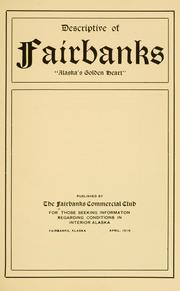


Search results from Open Library.
Recent natural events nearby
- Wildfire Mukluk, Southeast Fairbanks, AlaskaWildfires · 2026-08-17 · 173 mi
Wildfires, storms and other events from NASA EONET (last 12 months, within 250 mi).
Ground air-quality sensors
Recently spotted species
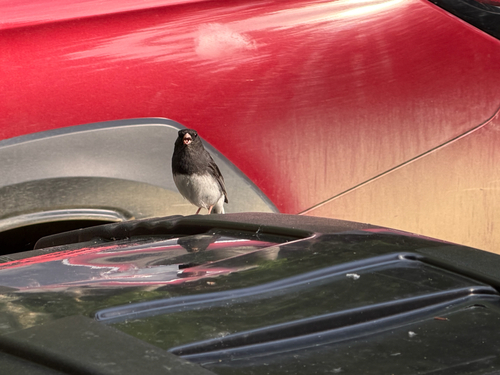
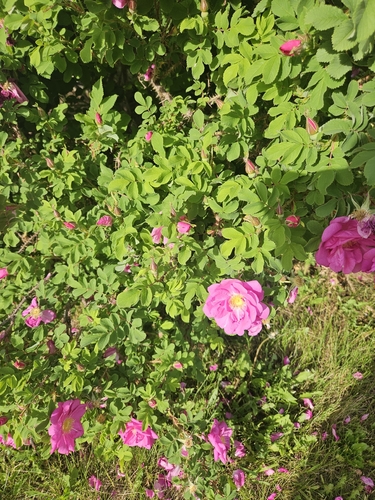
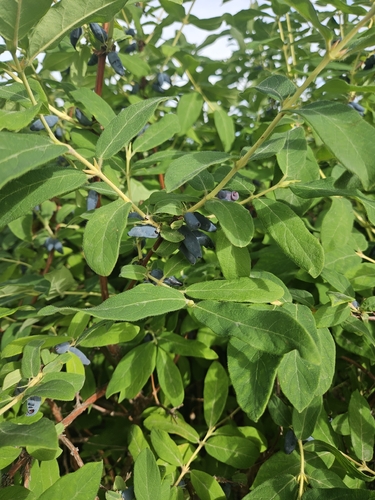
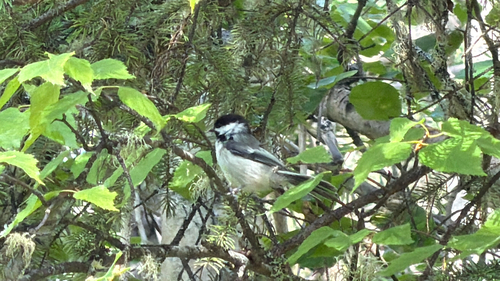
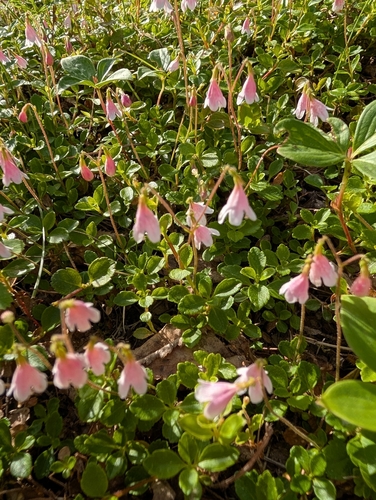
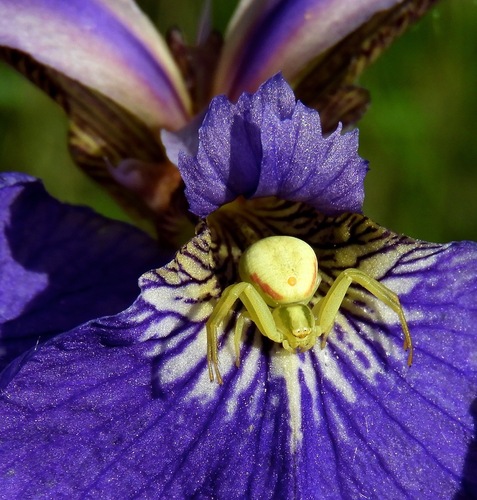
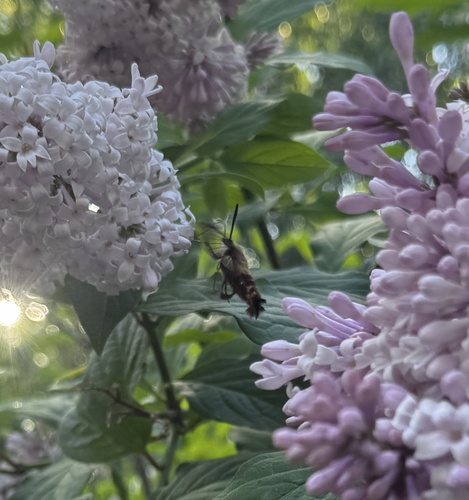
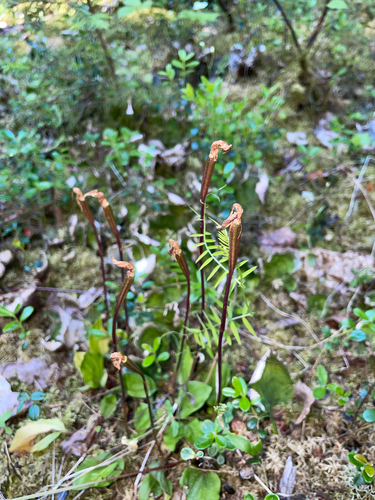
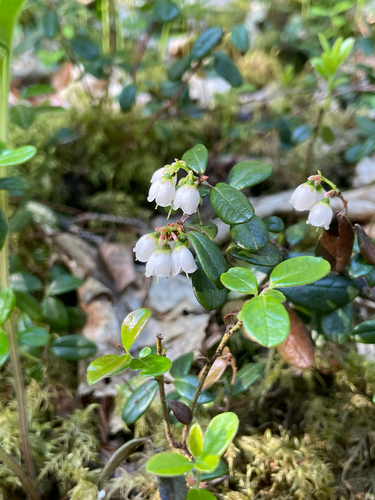
Research-grade observations from iNaturalist (within ~15 mi).
Nearest stream gauge
Live readings from USGS NWIS · measured 2026-08-28 03:15 UTC.
Events
Gallery
Sources
- • Wikipedia
- • US Census Bureau (ACS 5-year estimates)
- • Open-Meteo (ERA5 reanalysis)
- • NOAA National Weather Service
- • Wikidata
- • USGS Earthquake Catalog (global feed)
- • USGS NWIS (water data)
- • GBIF (Global Biodiversity Information Facility)
- • iNaturalist
- • CDC PLACES
- • Open-Meteo / sunrise-sunset.org
- • Wikipedia Pageviews API
- • Open Library
- • NASA EONET