Browse / India / Uttar Pradesh / Lucknow
Lucknow
Uttar Pradeshcity

Lucknow
Total population
4,588,455
Air quality index
Demographic figures from Ministry of Statistics (India). Overview below cites Wikipedia and may reference a different year.
City facts
Facts from Wikidata (CC0).
Overview
Lucknow is a metropolis and the second largest city of the Indian state of Uttar Pradesh where it serves as the capital and the administrative headquarters of the eponymous district and division. The city had a population of 2.8 million according to the 2011 census making it the eleventh most populous city and the twelfth-most populous urban agglomeration of India. It is an important centre of education, commerce, aerospace, finance, pharmaceuticals, information technology, design, culture, tourism, music, and poetry. Lucknow, along with Agra and Varanasi, forms the backbone of the Uttar Pradesh Heritage Arc.
Read more on WikipediaHistory & geography
History
From the sixth to the fourth century BCE, Lucknow was part of the realm of Kosala, one of the 16 Mahajanapadas in the Late Vedic period. From 1350 onwards, Lucknow and parts of the Awadh region were ruled by the Delhi Sultanate, Sharqi Sultanate, Mughal Empire, Nawabs of Awadh, the British East India Company and the British Raj. For about eighty-four years (from 1394 to 1478), Awadh was part of the Sharqi Sultanate of Jaunpur. Emperor Humayun made it a part of the Mughal Empire around 1555. Emperor Jahangir (1569–1627) granted an estate in Awadh to a favoured nobleman, Sheikh Abdul Rahim, who later built Machchi Bhawan on this estate. It later became the seat of power from where his descendants, the Sheikhzadas, controlled the region. The Nawabs of Lucknow acquired the name after the reign of the third Nawab when Lucknow became their capital. The city became North India's cultural capital, and its nawabs, best remembered for their refined and extravagant lifestyles, were patrons of the arts. Under their dominion, music and dance flourished, and construction of numerous monuments took place. Of the monuments standing today, the Bara Imambara, the Chota Imambara, and the Rumi Darwaza are notable examples. One of the Nawab's enduring legacies is the region's syncretic Hindu–Muslim culture that has come to be known as the Ganga-Jamuni Tehzeeb. Until 1719, the subah of Awadh was a province of the Mughal Empire administered by a governor appointed by the emperor. Persian adventurer Saadat Khan, also known as Burhan-ul-Mulk, was appointed Nizam of Awadh in 1722 and established his court in Faizabad, near Lucknow. Many independent kingdoms, such as Awadh, were established as the Mughal Empire disintegrated. The third Nawab, Shuja-ud-Daula (r. 1753–1775), fell out with…
Geography
The Gomti River, Lucknow's chief geographical feature, meanders through the city and divides it into the Trans-Gomti and Cis-Gomti regions. Situated in the middle of the Indus-Gangetic Plain, the city is surrounded by rural towns and villages: the orchard town of Malihabad, Kakori, Mohanlalganj, Gosainganj, Chinhat and Itaunja. To the east lies Barabanki, to the west Unnao, to the south Raebareli, while to the north lie the Sitapur and Hardoi. Lucknow city is located in a seismic zone III. Lucknow stands at an elevation of approximately above sea level. The city had an area of until December 2019, when 88 villages were added to the municipal limits and the area increased to . Bounded on the east by Barabanki, on the west by Unnao, on the south by Raebareli and in the north by Sitapur and Hardoi, Lucknow sits on the northwestern shore of the Gomti River. , there were 110 wards in the city. Morphologically, three clear demarcations exist: The central business district, which is a fully built up area, comprises Hazratganj, Aminabad and Chowk. A middle zone surrounds the inner zone with concrete houses while the outer zone consists of villages. Lucknow has a humid subtropical climate (Köppen Cwa) with cool, dry winters from late November to February and dry, hot summers with sunshine from late March to early June. More than nine-tenths of the annual rainfall occurs from July to October when the city receives an average of from the southwest monsoon winds, although occasionally frontal rainfall from the northeast monsoon may occur in January. In winter the maximum temperature is around and the minimum is in the range. Fog is quite common from mid-December to late January. Occasionally, Lucknow experiences colder winter spells than places like Shimla and Mussoorie,…
Excerpted from the corresponding Wikipedia article (CC BY-SA).
Geography
Coordinates & boundaries from the US Census TIGER/Line shapefiles.
Climate
10-year averages from ERA5 reanalysis (Open-Meteo).
Air quality
Current readings from Open-Meteo Air Quality API (Copernicus CAMS European reanalysis).
Walkability
Amenities nearby
Wildlife & biodiversity
Most-observed species
- Red-whiskered BulbulPycnonotus jocosus (Linnaeus, 1758) · Aves1,630
- House CrowCorvus splendens Vieillot, 1817 · Aves1,529
- Spotted doveSpilopelia chinensis (Scopoli, 1786) · Aves1,509
- Rose-ringed ParakeetPsittacula krameri (Scopoli, 1769) · Aves1,466
- Rock PigeonColumba livia J.F.Gmelin, 1789 · Aves1,409
- Purple SunbirdCinnyris asiaticus (Latham, 1790) · Aves1,315
- Black KiteMilvus migrans (Boddaert, 1783) · Aves1,253
- Common MynaAcridotheres tristis (Linnaeus, 1766) · Aves1,206
Citizen-science & research observations from the Global Biodiversity Information Facility (GBIF).
Earthquake history
Events from the USGS Earthquake Catalog (global) (FDSN Event Web Service).
Photos
Sights & places nearby
Notable people from here


People born within ~10 km, from Wikidata (CC0). Click any name for their Wikipedia article.
Nearby places in Uttar Pradesh
- Kakori9.3 mi away · pop. 16,731
- Amethi14.9 mi away · pop. 11,366
- Malihabad15 mi away · pop. 15,806
- Mohan16.5 mi away
- Barabanki17.2 mi away · pop. 146,831
- Nawab Ganj22.3 mi away
- Bachhrawan27.7 mi away · pop. 15,000
- Fatehpur28.7 mi away · pop. 1,000
- Sandila30.3 mi away · pop. 10,000
- Haidargarh31.1 mi away · pop. 5,000
- Sidhauli31.3 mi away · pop. 5,000
- Ramnagar33.6 mi away · pop. 12,416
Geography & sun
Elevation, sunrise/sunset and daylight from Open-Meteo. Solar climatology from NASA POWER.
Nearby airports
Public attention
Pageview totals from the Wikimedia Pageviews API.
Books about Lucknow
Search results from Open Library.
Recent natural events nearby
Ground air-quality sensors
Recently spotted species
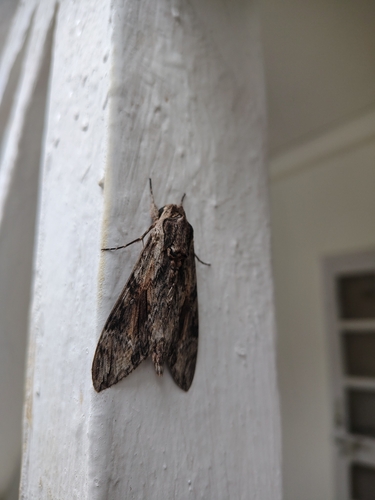
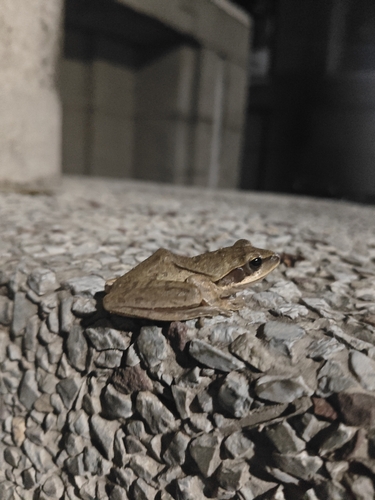
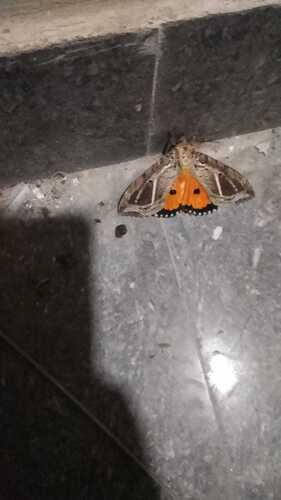
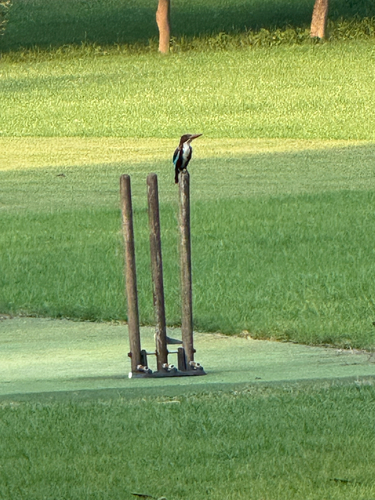
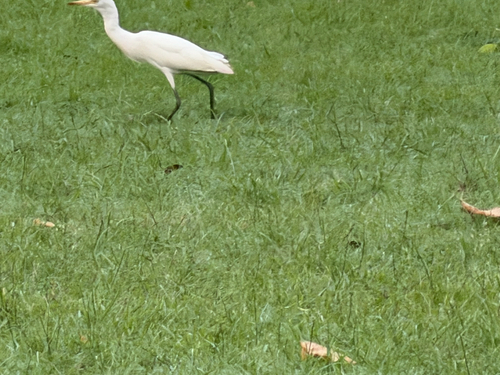
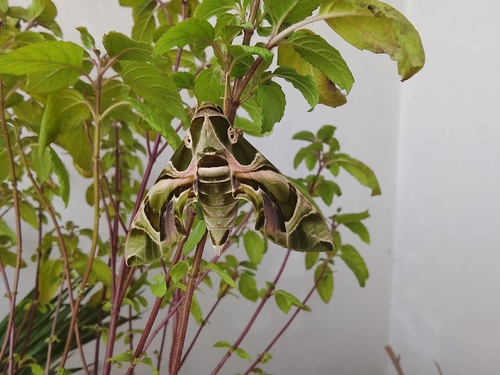
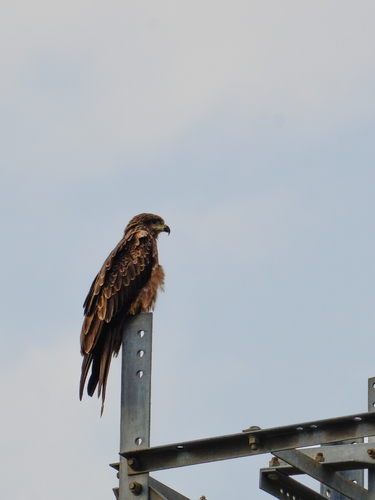
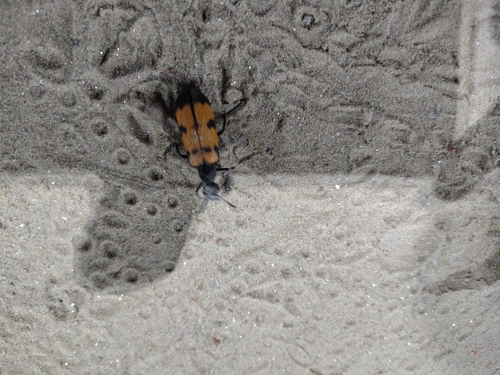
Research-grade observations from iNaturalist (within ~15 mi).
Events
Notable, recurring, and historical events associated with Lucknow, sourced from Wikidata.
Source: Wikidata (CC0).
Gallery
Geotagged photos within ~6 miles of Lucknow, from Wikimedia Commons contributors.
 0 mi
0 mi 0.2 mi
.png) 0.3 mi
0.3 mi 0.3 mi
 0.3 mi
.jpg) 0.3 mi
0.3 mi 0.4 mi
 0.5 mi
 0.6 mi
 0.6 mi
 0.7 mi
 0.7 mi
 0.7 mi
 0.7 mi
 0.7 mi
 0.7 mi
 0.7 mi
 0.8 mi
 0.8 mi
 0.8 mi
 0.8 mi
 0.8 mi
 0.8 mi
 0.8 mi
Photos via Wikimedia Commons — see each image page for license & attribution.
Sources
- • Wikipedia
- • Open-Meteo (ERA5 reanalysis)
- • Wikimedia Commons
- • Wikidata
- • Open-Meteo Air Quality (CAMS)
- • USGS Earthquake Catalog (global feed)
- • GBIF (Global Biodiversity Information Facility)
- • iNaturalist
- • Open-Meteo / sunrise-sunset.org
- • Wikipedia Pageviews API
- • Open Library