Browse / India / Uttar Pradesh / Varanasi
Varanasi
Uttar Pradeshcity

Varanasi
Total population
3,100,000
Demographic figures from Ministry of Statistics (India). Overview below cites Wikipedia and may reference a different year.
City facts
Facts from Wikidata (CC0).
Overview
Varanasi, or Kashi, is a holy city on the Ganges river in northern India that has a central place in the traditions of pilgrimage, death, and mourning in the Hindu world. The city also has a syncretic tradition of Islamic artisanship that underpins its religious tourism. Located in the middle-Ganges valley in the southeastern part of the state of Uttar Pradesh, Varanasi lies on the left bank of the river. It is 692 kilometres (430 mi) to the southeast of India's capital New Delhi and 320 kilometres (200 mi) to the southeast of the state capital, Lucknow. It lies 121 kilometres (75 mi) downstream of Prayagraj, where the confluence with the Yamuna river is another major Hindu pilgrimage site.
Read more on WikipediaHistory & geography
History
According to Hindu scriptures, Varanasi with its Kashi name, was founded by Shiva, one of three principal deities along with Brahma and Vishnu. During a conflict between Brahma and Shiva, one of Brahma's five heads was torn off by Shiva. As was the custom, the victor carried the slain adversary's head in his hand and let it hang down from his hand as an act of ignominy, and a sign of his own bravery. A bridle was also put into the mouth. Shiva thus dishonoured Brahma's head, and kept it with him at all times. When he came to the city of Varanasi in this state, the hanging head of Brahma dropped from Shiva's hand and disappeared in the ground. Varanasi is therefore considered an extremely holy site. The Pandavas, the protagonists of the Hindu epic Mahabharata, are said to have visited the city in search of Shiva to atone for their sins of fratricide and brahmahatya that they had committed during the Kurukshetra War. It is regarded as one of seven holy cities (Sapta Puri) which can provide Moksha; Ayodhya, Mathura, Haridwar, Kashi (Varanasi), Kanchipuram, Avanti, and Dvārakā are the seven cities known as the givers of liberation. The princesses Ambika and Ambalika of Kashi were wed to the Hastinapur ruler Vichitravirya, and they later gave birth to Pandu and Dhritarashtra. Bhima, a son of Pandu, married a Kashi princess Valandhara and their union resulted in the birth of Sarvaga, who later ruled Kashi. Dhritarasthra's eldest son Duryodhana also married a Kashi princess Bhanumati, who later bore him a son Lakshmana Kumara and a daughter Lakṣmaṇā. The Cakkavatti Sīhanāda Sutta text of Buddhism puts forth an idea stating that Varanasi will one day become the fabled kingdom of Ketumati in the time of Maitreya. Excavations in 2014 led to the discovery of artefacts dating…
Geography
Varanasi is located at an elevation of in the centre of the Ganges valley of North India, in the eastern part of the state of Uttar Pradesh. It lies along the left, crescent-shaped bank of the Ganges, averaging between and above the river. The city is the headquarters of Varanasi district. By road, Varanasi is located south-east of New Delhi, south-east of Lucknow, east of Prayagraj, south of Jaunpur and north-east of Mirzapur. The "Varanasi Urban Agglomeration" – an agglomeration of seven urban sub-units – covers an area of . Neighbourhoods of the city include Adampur, Anandbagh, Bachchhaon, Bangali Tola, Bhelpura, Bulanala, Chaitganj, Chaukaghat, Chowk, Dhupchandi, Dumraon, Gandhinagar, Gautam Nagar, Giri Nagar, Gopal Vihar, Guru Nanak Nagar, Jaitpura, Kail Garh, Khanna, Kotwali, Lanka Manduadih, Luxa, Maheshpur, Mahmoorganj, Maulvibagh, Nagwar, Naipokhari, Shivala, Siddhagiribagh, and Sigra. Varanasi is situated between the Ganges' confluences with two rivers: the Varuna and the Assi stream. The distance between the two confluences is around , which serves as a sacred pilgrimage route for Hindus, which culminates at the Sakshi Vinayak Temple. Varanasi experiences a humid subtropical climate (Köppen climate classification Cwa) with large variations between summer and winter temperatures. The dry summer starts in April and lasts until June, followed by the monsoon season from July to October. Summer temperatures range between . Winters in Varanasi see very large diurnal variations, with warm days and cold nights. Cold waves from the Himalayan region cause temperatures to drop across the city from December to February, and temperatures below are not uncommon. The average annual rainfall is . Fog is common in the winter, while hot, dry winds called loo, blow…
Excerpted from the corresponding Wikipedia article (CC BY-SA).
Geography
Coordinates & boundaries from the US Census TIGER/Line shapefiles.
Climate
10-year averages from ERA5 reanalysis (Open-Meteo).
Air quality
Walkability
Amenities nearby
Wildlife & biodiversity
Most-observed species
- Rock PigeonColumba livia J.F.Gmelin, 1789 · Aves640
- Jungle BabblerTurdoides striata (Dumont, 1823) · Aves581
- Common MynaAcridotheres tristis (Linnaeus, 1766) · Aves568
- Eurasian Collared-DoveStreptopelia decaocto (Frivaldszky, 1838) · Aves561
- Rose-ringed ParakeetPsittacula krameri (Scopoli, 1769) · Aves507
- House CrowCorvus splendens Vieillot, 1817 · Aves451
- Red-vented BulbulPycnonotus cafer (Linnaeus, 1766) · Aves398
- Black DrongoDicrurus macrocercus Vieillot, 1817 · Aves377
Citizen-science & research observations from the Global Biodiversity Information Facility (GBIF).
Earthquake history
Events from the USGS Earthquake Catalog (global) (FDSN Event Web Service).
Photos
Sights & places nearby
Notable people from here


People born within ~10 km, from Wikidata (CC0). Click any name for their Wikipedia article.
Nearby places in Uttar Pradesh
- Mughalsarai8.3 mi away · pop. 109,650
- Chunar16.3 mi away · pop. 37,185
- Chandauli17 mi away · pop. 23,000
- Saidpur19.3 mi away · pop. 24,300
- Kachhwa20.3 mi away
- Saiyad Raja22 mi away
- Ahraura22.1 mi away
- Chakia23.9 mi away
- Bhadohi27.6 mi away · pop. 50,000
- Mirzapur30.4 mi away · pop. 234,000
- Mariahu31.3 mi away · pop. 1,000
- Khamaria31.8 mi away
Geography & sun
Elevation, sunrise/sunset and daylight from Open-Meteo. Solar climatology from NASA POWER.
Nearby airports
Public attention
Pageview totals from the Wikimedia Pageviews API.
Books about Varanasi
Search results from Open Library.
Recent natural events nearby
Ground air-quality sensors
Recently spotted species
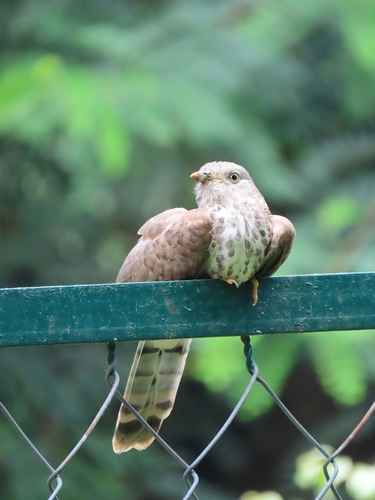
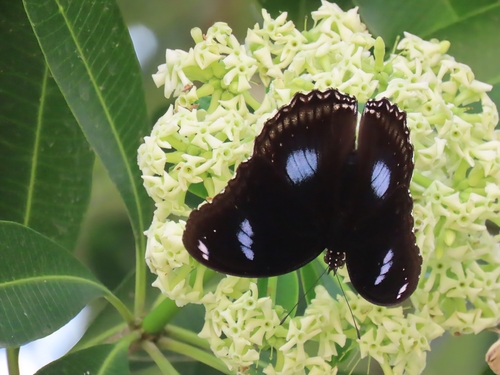
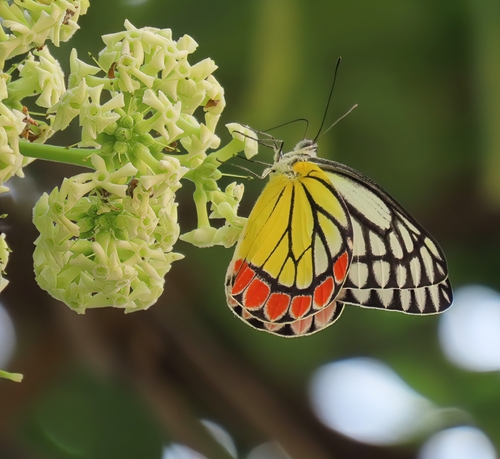
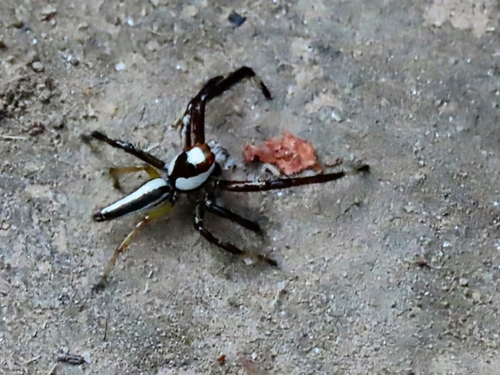
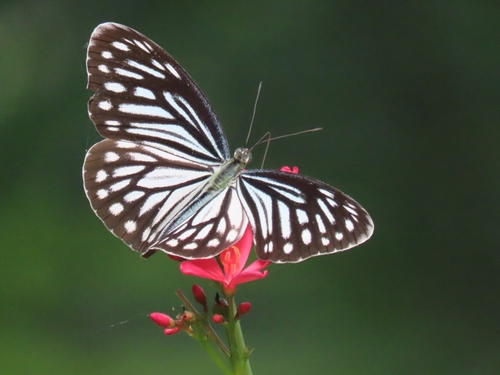
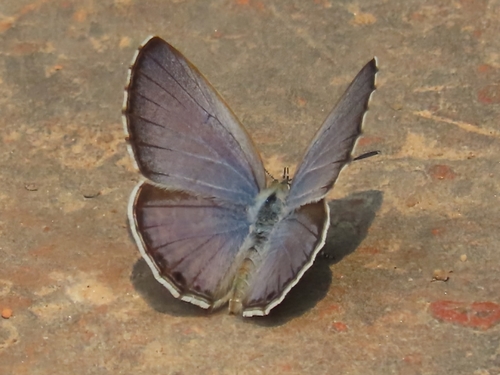
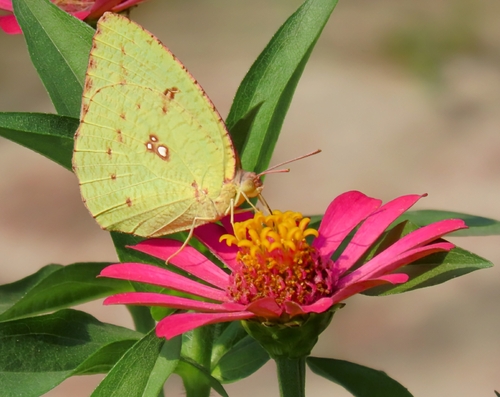
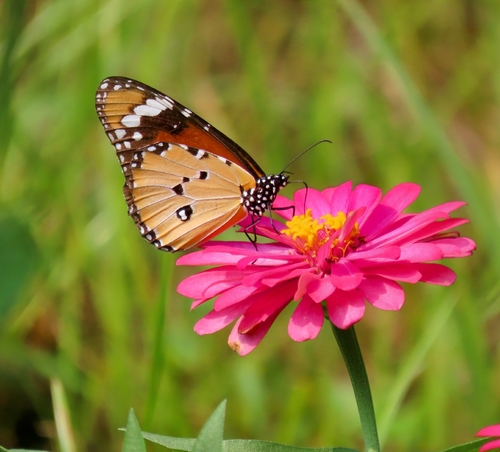
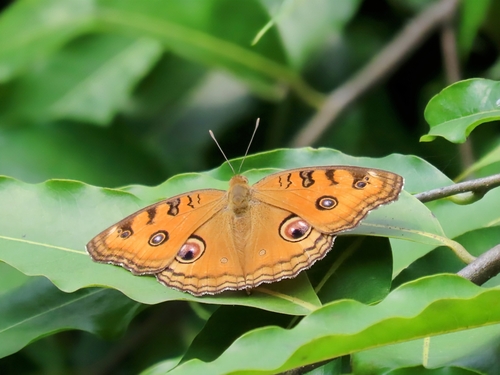
Research-grade observations from iNaturalist (within ~15 mi).
Events
Gallery
Geotagged photos within ~6 miles of Varanasi, from Wikimedia Commons contributors.
.jpg) 0 mi
0 mi 0.2 mi
 0.2 mi
.jpeg) 0.2 mi
0.2 mi_in_varanasi_junction.jpg) 0.4 mi
0.4 mi.jpg) 0.5 mi
0.5 mi.jpg) 0.5 mi
0.5 mi.jpg) 0.5 mi
0.5 mi.jpg) 0.5 mi
0.5 mi.jpg) 0.5 mi
0.5 mi.jpg) 0.5 mi
0.5 mi 0.5 mi
.jpeg) 0.7 mi
0.7 mi_-_Chandrapuri,_Varanasi.jpg) 0.7 mi
0.7 mi 0.7 mi
 0.8 mi
 0.8 mi
.jpg) 0.9 mi
0.9 mi.jpg) 0.9 mi
0.9 mi.jpg) 0.9 mi
0.9 mi.jpg) 0.9 mi
0.9 mi 0.9 mi
 0.9 mi
.jpg) 1 mi
1 miPhotos via Wikimedia Commons — see each image page for license & attribution.
Sources
- • Wikipedia
- • Open-Meteo (ERA5 reanalysis)
- • Wikimedia Commons
- • Wikidata
- • USGS Earthquake Catalog (global feed)
- • GBIF (Global Biodiversity Information Facility)
- • iNaturalist
- • Open-Meteo / sunrise-sunset.org
- • Wikipedia Pageviews API
- • Open Library