Browse / United States / New York / Croton-on-Hudson
Croton-on-Hudson
New Yorkvillage

Croton-on-Hudson
Total population
8,202
Median home value
$712,900
Bachelor's+
Median income
$191,678
Demographic figures from US Census Bureau · ACS 5-year estimates. Overview below cites Wikipedia and may reference a different year.
- Wind Advisory · ModerateWind Advisory issued September 25 at 2:48PM EDT until September 27 at 6:00AM EDT by NWS Upton NY
- Flood Advisory · MinorFlood Advisory issued September 25 at 6:14AM EDT until September 27 at 2:00PM EDT by NWS Upton NY
Source: NOAA National Weather Service.
City facts
Facts from Wikidata (CC0).
Overview
Croton-on-Hudson is a village in Westchester County, New York, United States. The population was 8,327 at the 2020 United States census over 8,070 at the 2010 census. It is located in the town of Cortlandt as part of New York City's northern suburbs. The village was incorporated in 1898.
Read more on WikipediaHistory & geography
History
Humans have lived in the area that would become Croton-on-Hudson since at least 7000 BC. The Kitchawanc tribe, part of the Wappinger Confederacy of the Algonquian peoples, signed a peace treaty with the newly arriving Dutch people at Croton Point in 1645, now commemorated by a plaque in the park there. Stephanus van Cortlandt began acquiring land in the area to build a manor in 1677, the same year he became mayor of New York City. It was granted by royal patent in 1697 as the Manor of Cortlandt, including the area known as Croton Landing where the Croton River meets the Hudson River, where the manor house was built. A 1718 census reported 91 inhabitants, including Dutch settlers and English Quakers. People worked the manor primarily as farmers or millers. In the mid- to late 1800s first the Croton Dam, then the New Croton Dam, and the Croton Aqueduct were built on the Croton River to supply New York City, along with the New York Central Railroad station on the Hudson River. Many Irish, Italian and German immigrants moved to the area to work on those projects, increasing the population dramatically. By 1898, when the Village incorporated, the population was 1,000 people, growing to 1,700 people in the early 1900s. In 1846, work began on a Hudson River rail line from Poughkeepsie to New York City. Clifford Harmon, a realtor, purchased 550 acres of land next to the village of Croton in 1903. He gave part of the land to the New York Central Railroad to build a train station, on the condition that the station would forever be named after him. Today it is called the Croton-Harmon station of the Metro-North Railroad and of Amtrak. In 1906, the station became a major service facility for the railroad. The station expanded even further in 1913, when it became the stop at…
Geography
Croton-on-Hudson is located at (41.204228, -73.886177) on the shores of the Hudson River. The zip codes are 10520 and 10521. According to the United States Census Bureau, the village has a total area of , of which is land and , or 56.06%, is water.
Excerpted from the corresponding Wikipedia article (CC BY-SA).
Demographics & economy
Race & ethnicity
Source: US Census Bureau — American Community Survey, 5-year estimates.
Geography
Coordinates & boundaries from the US Census TIGER/Line shapefiles.
Climate
Current forecast
Forecast for Croton-on-Hudson, NY from NOAA NWS API.
Air quality
Industrial & pollution facilities
Natural hazard risk
Health (adults)
Walkability
Amenities nearby
Wildlife & biodiversity
Schools
Earthquake history
Photos
Sights & places nearby
Notable people from here
Nearby places in New York
Geography & sun
Elevation, sunrise/sunset and daylight from Open-Meteo. Solar climatology from NASA POWER.
Nearby airports
Public attention
Pageview totals from the Wikimedia Pageviews API.
Books about Croton-on-Hudson
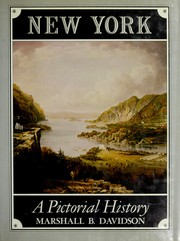

Search results from Open Library.
Recent natural events nearby
Ground air-quality sensors
Recently spotted species
Nearest stream gauge
Events
Gallery
Sources
- • Wikipedia
- • US Census Bureau (ACS 5-year estimates)
- • NOAA National Weather Service
- • Wikidata
- • Open-Meteo / sunrise-sunset.org
- • Wikipedia Pageviews API
- • Open Library