Browse / United Kingdom / England / Newcastle upon Tyne
Newcastle upon Tyne
Englandcity

Newcastle upon Tyne
Total population
809,000
Air quality index
Demographic figures from UK Office for National Statistics. Overview below cites Wikipedia and may reference a different year.
City facts
Sister cities
Facts from Wikidata (CC0).
Overview
Newcastle upon Tyne, or simply Newcastle, is a city and metropolitan borough in Tyne and Wear, England. While the hyphenated form of the name, Newcastle-upon-Tyne, is sometimes seen, correct usage is generally unhyphenated.
Read more on WikipediaHistory & geography
History
The first recorded settlement in what is now Newcastle was Pons Aelius ("Aelian bridge"), a Roman fort and bridge across the River Tyne. It was given the family name of the Roman emperor Hadrian, who founded it in the 2nd century AD. This rare honour suggests Hadrian may have visited the site and instituted the bridge on his tour of Britain. The population of Pons Aelius then is estimated at 2,000. Fragments of Hadrian's Wall are visible in parts of Newcastle, particularly along the West Road. The course of the "Roman Wall" can be traced eastwards to Segedunum, a Roman fort in Wallsend – the "wall's end" – and to the separate supply fort of Arbeia in South Shields, across the river from Hadrian's Wall. The extent of Hadrian's Wall was , spanning the width of Britain; the Wall incorporated the Vallum, a large rearward ditch with parallel mounds, and was built primarily for defence and to prevent the incursion of Pictish tribes from the north, and probably not as a fighting line for a major invasion. However, it seems that the Vallum stopped just west of Newcastle, where its role as a secondary line of defence was performed by the River Tyne. After the Roman departure from Britain, completed in 410, Newcastle became part of the powerful Anglo-Saxon kingdom of Northumbria, and was known throughout this period as (sometimes modernised as Monkchester). Conflicts with the Danes in 876 left the settlements along the River Tyne in ruins. Because of its strategic position, Robert Curthose, son of William the Conqueror, erected a wooden castle there in the year 1080. The castle was rebuilt again in 1172 during the reign of Henry II. Much of the keep which can be seen in the city today dates from this period. to defend it from invaders during the Border war against Scotland.…
Geography
Since 1974, Newcastle has been a part of the metropolitan county of Tyne and Wear in North East England. The city is located on the north-western bank of the River Tyne, approximately south of the border with Scotland. The ground beneath the city is formed from Carboniferous strata of the Middle Pennine Coal Measures Group — a suite of sandstones, mudstones and coal seams which generally dip moderately eastwards. To the west of the city are the Upper Pennine Coal Measures and further west again the sandstones and mudstones of the Stainmore Formation, the local equivalent of the Millstone Grit. In large parts, Newcastle still retains a medieval street layout. Narrow alleys or 'chares', most of which can only be traversed by foot, still exist in abundance, particularly around the riverside. Stairs from the riverside to higher parts of the city centre and the extant Castle Keep, originally recorded in the 14th century, remain intact in places. Close, Sandhill and Quayside contain modern buildings as well as structures dating from the 15th–18th centuries, including Bessie Surtees House, the Cooperage and Lloyds Quayside Bars, Derwentwater House and House of Tides, a restaurant situated at a Grade I-listed 16th century merchant's house at 28–30 Close. The city has an extensive neoclassical centre referred to as Tyneside Classical, largely developed in the 1830s by Richard Grainger and John Dobson. More recently, Newcastle architecture considered to be Tyneside classical has been extensively restored. Broadcaster and writer Stuart Maconie described Newcastle as England's best-looking city and the German-born British scholar of architecture, Nikolaus Pevsner, describes Grey Street as one of the finest streets in England. In 1948, the poet John Betjeman said of Grey…
Excerpted from the corresponding Wikipedia article (CC BY-SA).
Geography
Coordinates & boundaries from the US Census TIGER/Line shapefiles.
Climate
Air quality
Current readings from Open-Meteo Air Quality API (Copernicus CAMS European reanalysis).
Walkability
Amenities nearby
Wildlife & biodiversity
Most-observed species
- Common Wood-PigeonColumba palumbus Linnaeus, 1758 · Aves17,065
- Carrion CrowCorvus corone Linnaeus, 1758 · Aves14,353
- Herring GullLarus argentatus Pontoppidan, 1763 · Aves14,254
- Eurasian MagpiePica pica (Linnaeus, 1758) · Aves13,438
- Eurasian BlackbirdTurdus merula Linnaeus, 1758 · Aves13,405
- European RobinErithacus rubecula (Linnaeus, 1758) · Aves11,876
- Eurasian Blue TitCyanistes caeruleus (Linnaeus, 1758) · Aves11,141
- Western JackdawColoeus monedula (Linnaeus, 1758) · Aves10,640
Citizen-science & research observations from the Global Biodiversity Information Facility (GBIF).
Earthquake history
Most recent
- M 2.8 — 2020-01-231 km NW of Stockton-on-Tees, United Kingdom
- M 3.6 — 2011-01-035 km S of Masham, United Kingdom
- M 2.5 — 2008-05-2812 km WNW of Penrith, United Kingdom
Events from the USGS Earthquake Catalog (global) (FDSN Event Web Service).
Photos
Sights & places nearby
Notable people from here


People born within ~10 km, from Wikidata (CC0). Click any name for their Wikipedia article.
Nearby places in England
Geography & sun
Elevation, sunrise/sunset and daylight from Open-Meteo. Solar climatology from NASA POWER.
Nearby airports
Public attention
Pageview totals from the Wikimedia Pageviews API.
Books about Newcastle upon Tyne


Search results from Open Library.
Recent natural events nearby
Ground air-quality sensors
Recently spotted species

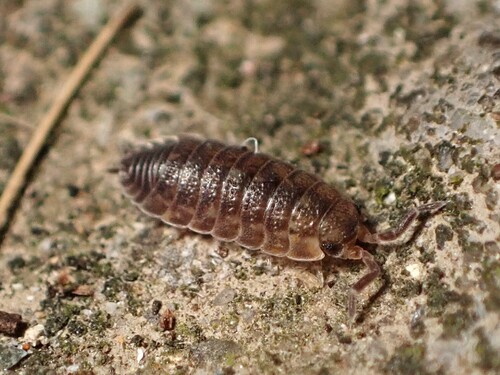
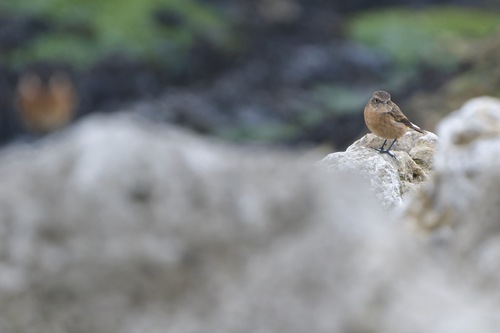

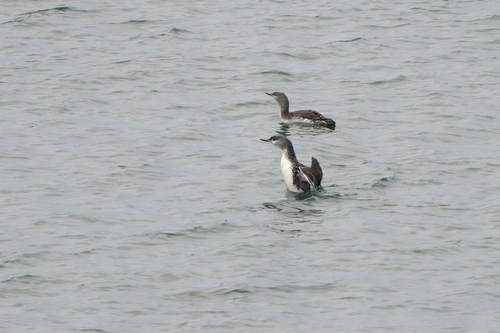
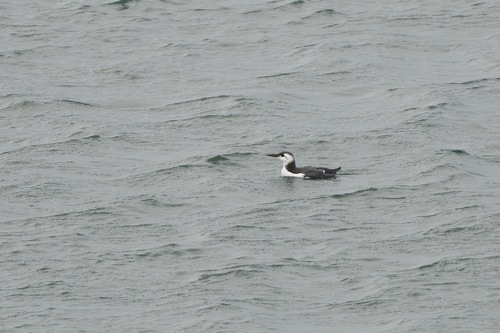
Research-grade observations from iNaturalist (within ~15 mi).
Events
Notable, recurring, and historical events associated with Newcastle upon Tyne, sourced from Wikidata.
- Stockton International Riverside FestivalJan 1, 1988recurring event
Source: Wikidata (CC0).
Gallery
Official Identifiers
ONS — UK Office for National Statistics
- ONS code
- osgb4000000074576165
- Local type
- City
- Region
- North East
api.postcodes.io / OS Open Names
Sources
- • Wikipedia
- • Wikidata
- • Open-Meteo Air Quality (CAMS)
- • USGS Earthquake Catalog (global feed)
- • GBIF (Global Biodiversity Information Facility)
- • iNaturalist
- • Open-Meteo / sunrise-sunset.org
- • Wikipedia Pageviews API
- • Open Library
- • Wikidata SPARQL (CC0) — population, area, elevation, inception, head of government, Commons image
- • ONS / OS Open Names — UK official place gazetteer, via api.postcodes.io (OS code, local type, county/unitary, district/borough, region)
- • ONS — UK Office for National Statistics — api.postcodes.io / OS Open Names