Tamil Nadu / Puducherry · India
Auroville: The Utopian City Built for Human Unity
Founded in 1968 as an experimental township devoted to human unity beyond nationality, religion, and politics, Auroville today houses thousands of residents from dozens of countries around a golden meditation sphere called the Matrimandir.

In the red laterite countryside of southern India, straddling the border of Tamil Nadu and the Union Territory of Puducherry, sits Auroville, a planned township founded in 1968 with an audacious goal: to create a place where people from all nations could live together in peace beyond religion, politics, and nationality. Conceived by Mirra Alfassa, known to followers as 'the Mother,' a spiritual collaborator of philosopher Sri Aurobindo, and designed by French architect Roger Anger, Auroville was inaugurated with soil samples from 124 countries and all Indian states mixed together in a symbolic urn at its founding ceremony. Today the township is home to roughly 3,300 residents from more than 60 countries, drawn to its communal economy, organic farms, and renewable energy projects, all organized around the golden, lotus-petaled Matrimandir, a striking meditation chamber that serves as the spiritual and architectural heart of the community. Endorsed by UNESCO and the Indian government, Auroville remains one of the world's longest-running intentional communities.
A Dream of Human Unity
Auroville's founding concept traces back to the 1930s, when the Mother envisioned an ideal township devoted entirely to the goal of human unity, a place transcending the divisions of nationality, politics, religion, and creed. The plan finally moved forward in the mid-1960s with backing from the Indian government and endorsement from UNESCO, and the city was formally inaugurated on February 28, 1968.
At the inaugural ceremony, young representatives from 124 nations and all Indian states poured soil from their homelands into a lotus-shaped urn, symbolically uniting humanity's diverse origins within the foundation of the new township, a ritual still commemorated today.
Designing an Ideal City
French architect Roger Anger designed Auroville's master plan in the shape of a galaxy, with four zones (residential, industrial, cultural, and international) spiraling outward from a central Peace Area anchored by the Matrimandir. The plan envisioned an eventual population of up to 50,000 residents living in harmony with sustainable agriculture and green technology.
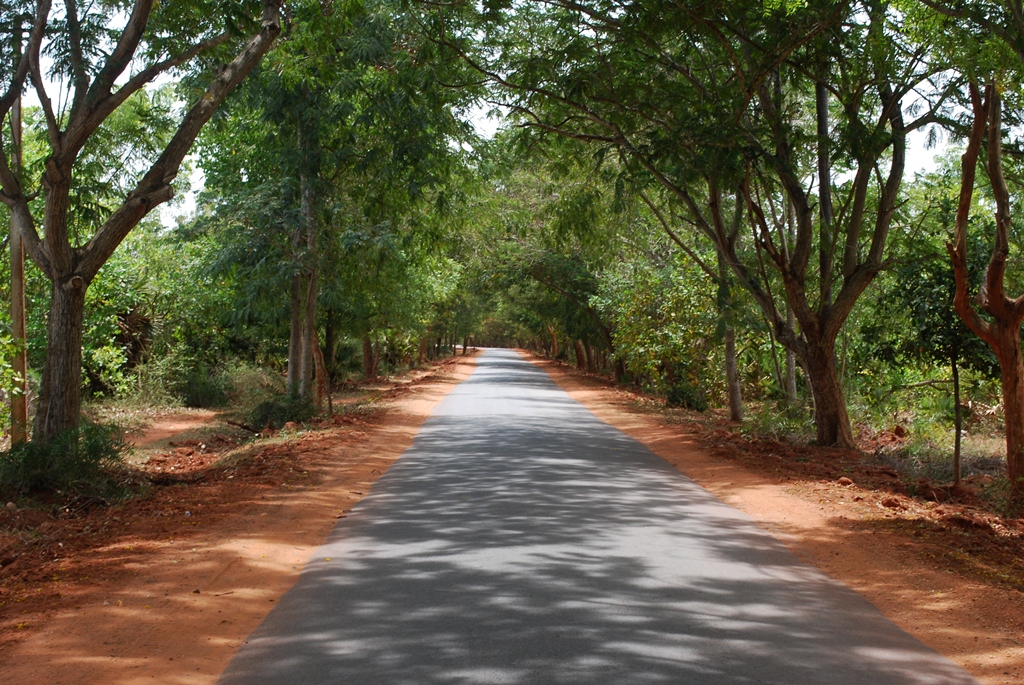
The city was deliberately built on badly eroded, near-barren land, and one of Auroville's most celebrated achievements has been the decades-long ecological restoration of the area, transforming red wasteland into flourishing forest through extensive tree planting and soil regeneration efforts led by early settlers.
The Matrimandir
At Auroville's symbolic and geographic center stands the Matrimandir, a massive golden sphere clad in gold-colored discs, designed as a place of individual, silent concentration rather than religious worship. Construction began in 1971 and took nearly four decades to complete, opening progressively to visitors and residents through the 1990s and 2000s.
Inside, an inner chamber houses one of the largest man-made crystal spheres in the world, illuminated by a beam of natural sunlight directed via an optical system, creating a serene, otherworldly space intended for meditation. The surrounding gardens and reflecting ponds form the ceremonial core of the wider township.
An Ongoing Social Experiment
Auroville today has around 3,300 residents representing over 60 nationalities, living within a unique socioeconomic structure where land is held collectively rather than privately owned by individuals, and residents contribute labor or resources to a shared community fund rather than using conventional currency for many local transactions.
The township has faced real challenges, including tensions with surrounding Tamil villages, governance disputes, and controversies over its master plan's implementation, but it endures as one of the most sustained experiments in intentional communal living anywhere in the world, drawing volunteers, researchers, and spiritual seekers from across the globe.
Fun facts
- Auroville was inaugurated in 1968 with soil from 124 countries and all Indian states mixed into a symbolic founding urn.
- The township's master plan is shaped like a galaxy, spiraling outward from the central Matrimandir.
- It took nearly 40 years, from 1971 into the 2000s, to fully complete construction of the Matrimandir.
- Auroville today has roughly 3,300 residents from more than 60 countries.
- Land within Auroville is held collectively, and residents do not privately own individual plots in the traditional sense.
Gallery



Sources
Other interesting places
View all →


Featured lists
View all lists →


Compare cities, side by side
Choose any 2 cities →


Text on this page is original Terralocate editorial. Background facts compiled from the public sources listed above. Images via Wikimedia Commons under their respective licenses (typically CC BY-SA or public domain).