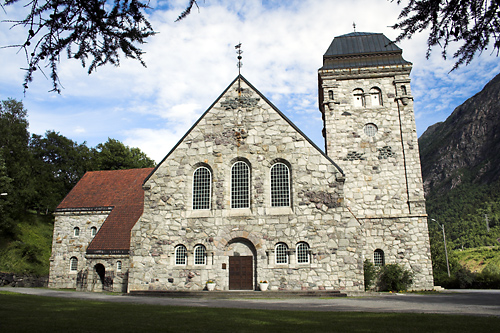
Vestfjorddalen valley · Telemark
Rjukan, Norway: The Town That Built Giant Mirrors to See the Sun
Cut off from direct sunlight for almost six months a year, Rjukan finally solved its century-old problem in 2013 — with three computer-controlled mirrors mounted 450 metres up a mountainside.

Rjukan is a small industrial town of roughly 3,000 people in Telemark county, Norway, tucked into a steep glacial valley between Lake Møsvatn and Lake Tinnsjå. The mountains above it climb to nearly 1,900 metres — high enough, and close enough, that for almost six months of the year the sun never clears the ridgeline. From late September to mid-March, the valley floor where the town sits gets no direct sunlight at all. For most of the 20th century, residents simply lived with it. Then, in 2013, the town pulled off one of the most ambitious low-tech engineering projects in modern Norway.
A town built in the wrong place — on purpose
Rjukan exists because of water. In the early 1900s the industrialist Sam Eyde realised that the 104-metre Rjukan Falls could power a hydroelectric plant big enough to make industrial-scale fertiliser from atmospheric nitrogen. He co-founded Norsk Hydro in 1905 and built the Vemork power station — at the time the largest in the world — on a cliff above the falls. The town of Rjukan rose almost overnight beside it, planned street by street to house the workers.
Eyde knew about the sun problem from the very start. As early as 1913 he sketched the idea of putting mirrors on the mountain to reflect daylight into town. The technology wasn't there. Instead Norsk Hydro built a cable car — the Krossobanen, opened in 1928 — so that residents could ride 886 metres up to a sunlit plateau and at least see the sky.
The Solspeilet: a 100-year-old idea, finally built
The mirror project was revived in 2005 by local artist Martin Andersen, who had moved to Rjukan with a young child and missed the winter sun. After years of fundraising — about NOK 5 million from the municipality, Norsk Hydro, and private donors — three heliostats were finally installed on the mountainside in the autumn of 2013.
Each mirror is 17 square metres of polished aluminium-backed glass, computer-controlled to track the sun across the sky. Mounted 450 metres above town, they bounce a roughly 600-square-metre patch of warm daylight onto Rjukan's central square. The first lighting, on 30 October 2013, was attended by hundreds of residents in deck chairs. The town now keeps a small "sun garden" in the square where the reflected light lands.
A single similar installation already existed — Viganella, a tiny village in the Italian Alps, built one mirror in 2006. Rjukan was the first to do it at town scale.
Heavy water, sabotage, and a UNESCO World Heritage Site
Rjukan's other claim to fame is darker. The same Vemork plant that powered the town was, by the 1930s, the world's leading producer of heavy water (deuterium oxide) — a moderator essential for early nuclear reactor designs. When Germany occupied Norway in 1940, the Nazi atomic-bomb programme took over the plant.
Over four operations between 1942 and 1944, Norwegian commandos trained in Britain and members of the local resistance attacked the heavy-water supply. The most famous was Operation Gunnerside in February 1943, when nine Norwegian saboteurs skied across the Hardangervidda plateau, climbed the cliff face below the plant, and destroyed the electrolysis cells without firing a shot. A year later, a separate team sank the ferry SF Hydro on Lake Tinnsjå as it carried the remaining heavy-water stockpile toward Germany. These operations are widely credited with crippling the Nazi nuclear programme.
In 2015, UNESCO inscribed the wider site — the hydroelectric plants, the company town, the transport infrastructure, and Vemork itself — as the Rjukan–Notodden Industrial Heritage Site. The old Vemork plant is now the Norwegian Industrial Workers' Museum.
Visiting Rjukan today
Rjukan is a 3-hour drive from Oslo. The Krossobanen cable car still runs, lifting visitors above the shadow line to the Gvepseborg viewpoint. From there, marked trails climb to Gaustatoppen (1,883 m), one of the most-visited mountain summits in Norway — on a clear day you can see roughly a sixth of mainland Norway from the top. Vemork and the saboteur trail are open in summer; the museum runs guided tours that follow the 1943 commandos' approach route up the cliff.
In winter, the town becomes a base for ice climbing — the frozen waterfalls in the surrounding valleys are among Europe's best — and the sun mirror keeps the central square lit for a few hours a day from roughly 12:00 to 14:00.
Fun facts
- The original 1913 mirror proposal was sketched by Sam Eyde himself, founder of Norsk Hydro and effectively the founder of Rjukan.
- Rjukan's name comes from the Old Norse word for the local waterfall — Rjúkandi, "the smoking one" — for the spray it threw up year-round.
- The Krossobanen, opened in 1928, was the first cable car in Northern Europe — a workplace perk for Norsk Hydro's employees so they could ride up to the sunlight on weekends.
- When the mirrors light up the square at noon, residents and tourists put on sunglasses — it's the only place in town where you'll need them in January.
Gallery



Sources
Other interesting places
View all →


Featured lists
View all lists →


Keep exploring
See Rjukan on the map
Terralocate is a place encyclopedia covering thousands of towns worldwide. Open Rjukan's page for coordinates, population, nearby places, and an interactive map — or jump into the rest of Norway.
Compare cities, side by side
Choose any 2 cities →


Text on this page is original Terralocate editorial. Background facts compiled from the public sources listed above. Images via Wikimedia Commons under their respective licenses (typically CC BY-SA or public domain).