Garbage City, where a community recycles most of a megacity's waste
Manshiyat Naser, Cairo
The Zabbaleen of Manshiyat Naser have quietly built one of the world's most efficient informal recycling systems, sorting Cairo's trash by hand for generations.

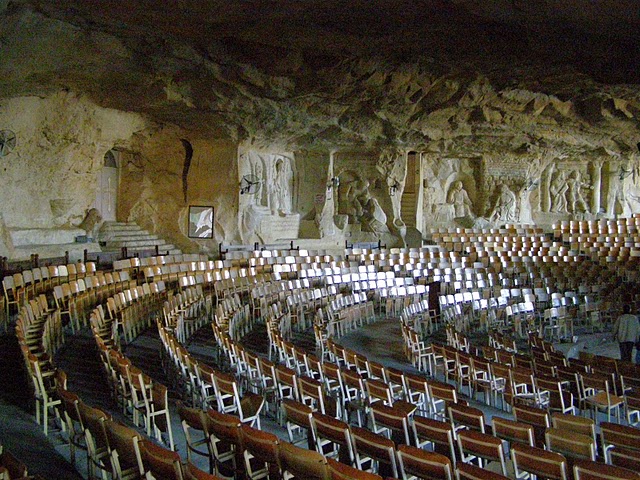
Manshiyat Naser, widely known as Garbage City, is a densely packed neighborhood on the eastern outskirts of Cairo, built into the base of the Mokattam cliffs. It is home to the Zabbaleen, a Coptic Christian community whose name means garbage people in Egyptian Arabic, who have collected and sorted Cairo's household waste since the mid-twentieth century. For decades the Zabbaleen operated entirely informally, using donkey carts and later trucks to collect trash directly from residents, then sorting it by hand in their own homes and workshops, with pigs traditionally used to consume organic waste. Studies have found their system recycles as much as 80 percent of collected garbage, a rate that dramatically exceeds most formal Western recycling programs. The neighborhood is also home to the Cave Church, a massive amphitheater-style cathedral carved into the Mokattam cliffs, one of the largest churches in the Middle East, built into the very rock above the community that lives amid the waste it transforms into a livelihood.
Origins of an Informal Empire
The Zabbaleen trace their trash-collecting trade back to Coptic migrants from Upper Egypt who settled in Cairo in the mid-1900s, gradually taking over waste collection from an earlier group of Muslim traders. Without formal government contracts for most of their history, they built a self-organized system based on door-to-door collection and household-level sorting passed down through families.
Recycling Before It Was a Buzzword
Long before global recycling movements gained traction, Zabbaleen households were separating plastics, metals, paper, and organics by hand, often employing entire families in workshops attached to their homes. Pigs traditionally consumed food waste until a 2009 government cull during the swine flu scare devastated this practice and disrupted the community's waste system.
A Cathedral Carved Into the Cliffs
Rising above the workshops and sorting yards is the Saint Simon Monastery, commonly called the Cave Church, an enormous amphitheater complex carved directly into the Mokattam limestone cliffs. It seats tens of thousands of worshippers and stands as a striking visual contrast to the recycling operations below.
Formalization and Ongoing Challenges
In recent decades, Cairo has attempted to formalize waste management through contracts with multinational companies, threatening the Zabbaleen's traditional livelihood. Community advocates and NGOs have worked to integrate the Zabbaleen into official recycling schemes, arguing their expertise and efficiency should be preserved rather than displaced by less effective corporate systems.
Fun facts
- The Zabbaleen's informal recycling rate has been estimated at up to 80 percent, far above most formal city programs.
- The Cave Church complex carved into the Mokattam cliffs can hold tens of thousands of worshippers.
- A 2009 government pig cull during the swine flu scare removed a key part of the community's organic waste system.
- The name Zabbaleen translates roughly to garbage people in Egyptian Arabic.
- Many Zabbaleen families have operated the same household sorting workshops for three or more generations.
Gallery



Sources
Other interesting places
View all →


Featured lists
View all lists →


Compare cities, side by side
Choose any 2 cities →


Text on this page is original Terralocate editorial. Background facts compiled from the public sources listed above. Images via Wikimedia Commons under their respective licenses (typically CC BY-SA or public domain).