The Soviet city built entirely on stilts in the Caspian Sea
Neft Daşları
A network of oil platforms and causeways rising from the Caspian, once home to thousands of workers, apartment blocks, and even a bakery, all held up on trestles over open water.
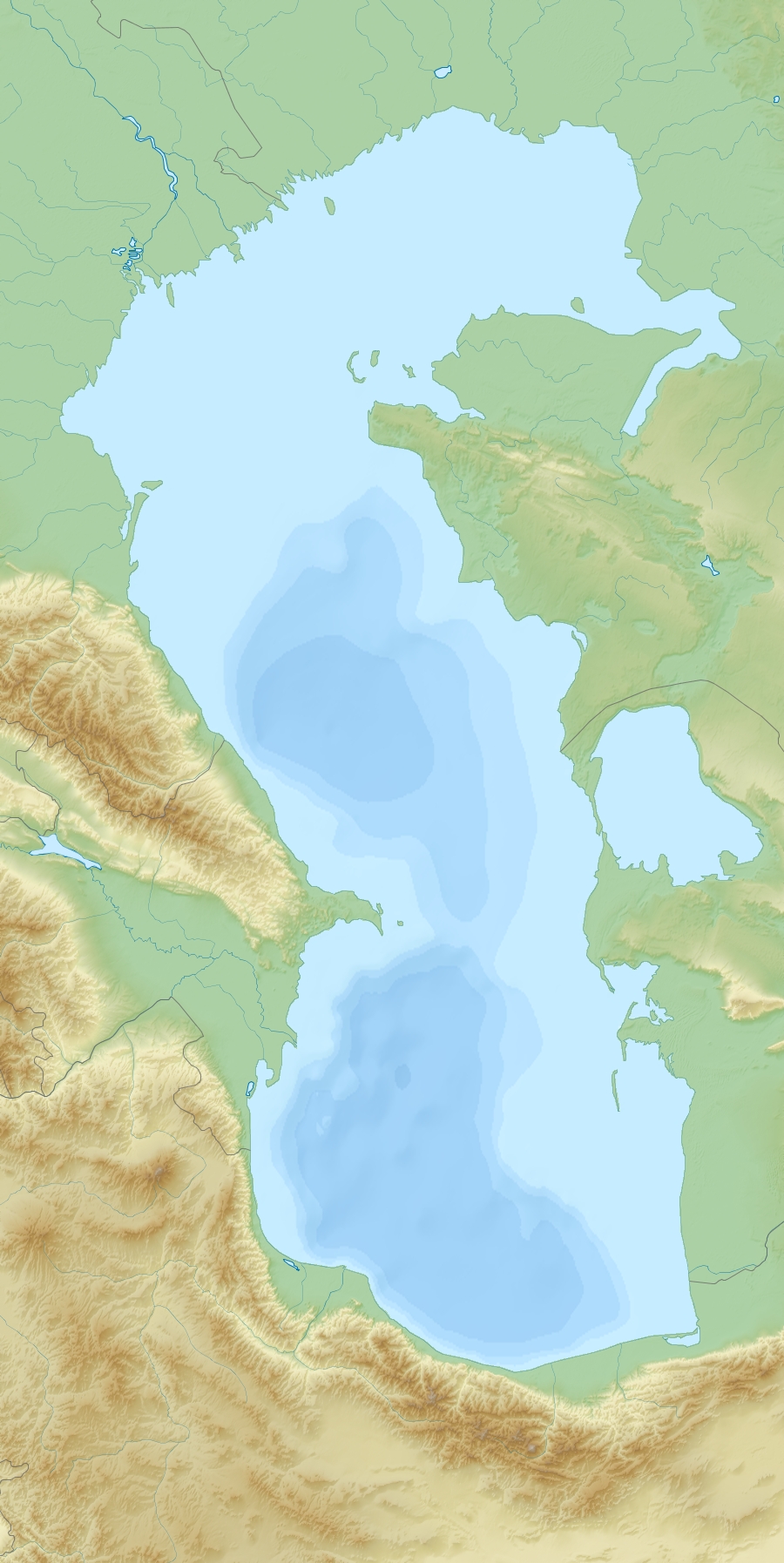
Roughly 100 kilometers off the coast of Baku, in the middle of the Caspian Sea, sits one of the strangest cities on Earth. Neft Daşları, meaning Oil Rocks, is a sprawling settlement of oil derricks, causeways, and apartment buildings built entirely on steel trestles above open water. Founded in 1949 as the Soviet Union raced to exploit undersea oil reserves, it became the world's first offshore oil platform to sustain permanent operations, and it entered the Guinness Book of Records for that achievement. At its peak, thousands of workers lived there for weeks at a time, served by a bakery, a soda factory, a park with actual trees planted in imported soil, and even a nine-story residential building. Decades of storms and neglect have claimed much of the network, with many causeways collapsed into the sea, yet a functioning core remains in use by Azerbaijan's state oil company. It stands as a monument to Soviet industrial ambition, an engineering marvel built to extract oil at any cost, in a place most engineers today would call uninhabitable.
Built From Sunken Ships
The origins of Oil Rocks trace back to a bold and slightly reckless decision by Soviet engineers in the late 1940s. After discovering oil beneath the Caspian seabed near a cluster of rocky outcrops, they needed a way to build platforms far from shore with no existing infrastructure to support them.
Rather than shipping in fresh materials for a foundation, workers scuttled several old ships, deliberately sinking them to create a base upon which the first trestles could be anchored. Steel pilings were driven into the seafloor around these sunken hulls, and wooden and later metal causeways were extended outward, platform by platform, rig by rig.
By the 1950s, this improvised beginning had grown into a proper settlement, and Neft Daşları became a testing ground for offshore drilling techniques that would later spread around the world. Its construction predates the more famous offshore platforms of the Gulf of Mexico and the North Sea, making it a genuine pioneer of an entire industry.
A Whole City on Legs
What made Neft Daşları extraordinary was not just the drilling, but the fact that an entire town grew up around it. At its height in the 1970s, the settlement stretched across more than 300 platforms connected by roughly 200 kilometers of elevated roadways, all suspended above the waves.
Workers lived there in shifts, often two weeks on and two weeks off, in dormitories and apartment blocks perched on the trestles. The settlement had its own bakery producing fresh bread daily, a soda water plant, a small park where soil was hauled in by barge so poplar trees could grow, a hospital, and even a culture club with a movie theater.
Population estimates for the settlement's peak vary, but it is often cited as having supported several thousand residents at once, an astonishing figure for a place with no natural land beneath it. Photographs from the era show laundry hanging between buildings and children's playgrounds bolted to steel decking above open sea.
Decline and Decay
Following the collapse of the Soviet Union, maintenance funding dried up and large sections of the causeway network began to deteriorate. Storms battered the aging steel trestles, and many platforms that once connected to the main complex broke away entirely, leaving isolated rigs stranded like shipwrecks.
Estimates suggest that a substantial portion of the original network, cited in various reports as more than half, has either collapsed or been abandoned since the 1990s. Rusted skeletons of old platforms now jut from the water alongside those still functioning, creating an eerie landscape of industrial ruin mixed with active operations.
Despite the decay, Azerbaijan's state oil company SOCAR has continued limited operations at the site, and a documentary crew who visited found workers still traveling out for shifts. The settlement no longer resembles the bustling town of its Soviet heyday, but it has never been fully decommissioned, making it a living relic rather than a ruin.
An Engineering Legend
Neft Daşları rarely appears in general history books, yet within the oil industry it holds near-mythical status as the birthplace of large-scale offshore drilling. Engineers who worked on later platforms in the North Sea and the Gulf of Mexico have cited the Caspian pioneers' improvisational techniques as foundational lessons in offshore construction.
The site also captured the imagination of photographers and filmmakers drawn to its dystopian, science-fiction appearance, rusted towers rising from gray water, connected by narrow catwalks that seem to defy the sea itself. A 2024 documentary and accompanying reporting by outlets including CNN brought renewed international attention to the site, describing it as a hidden wonder few outsiders ever get permission to visit.
Access remains tightly restricted since it is an active industrial and, at times, sensitive government facility. For most of the world, Neft Daşları exists only in photographs, a place simultaneously legendary and nearly invisible, proof that humans will build almost anywhere in pursuit of resources beneath the sea.
Fun facts
- Neft Daşları was built starting in 1949, using sunken ships as foundations for its first platforms.
- At its peak it had around 300 platforms linked by roughly 200 kilometers of trestle roads over the sea.
- It is recognized as the world's first offshore oil platform to achieve sustained, permanent operation.
- Soil was imported by barge so trees could be planted in a small park on the platforms.
- More than half of the original causeway network has collapsed into the Caspian since Soviet times.
Gallery


Sources
Other interesting places
View all →


Featured lists
View all lists →


Compare cities, side by side
Choose any 2 cities →


Text on this page is original Terralocate editorial. Background facts compiled from the public sources listed above. Images via Wikimedia Commons under their respective licenses (typically CC BY-SA or public domain).