The world's northernmost year-round settlement
Ny-Alesund, Svalbard
A former coal mining town at 78 degrees north now hosts scientists from ten nations studying a rapidly warming Arctic.

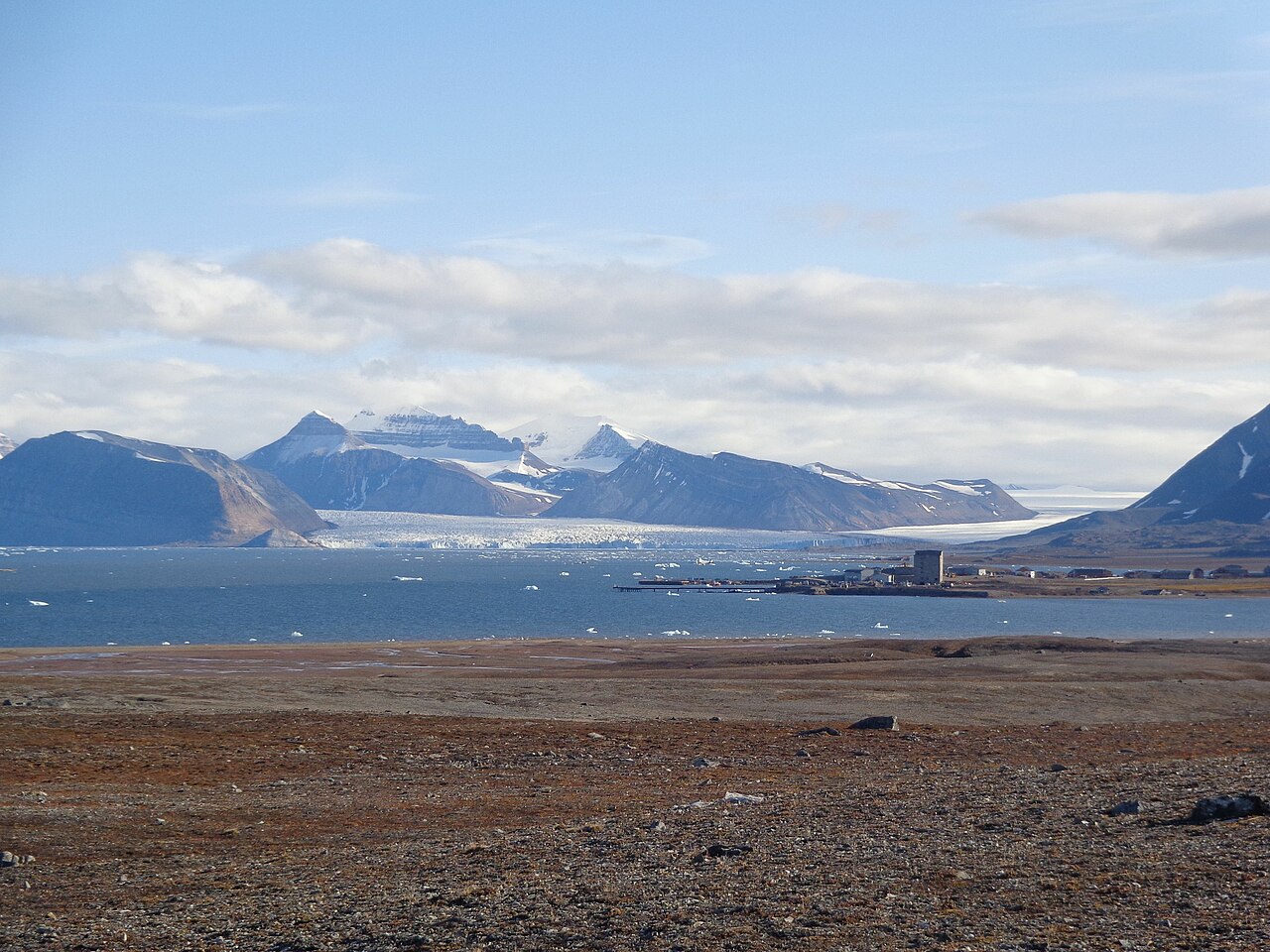
Ny-Alesund sits on the shore of Kongsfjorden on Spitsbergen, the largest island in Norway's Svalbard archipelago, making it one of the northernmost permanently inhabited places on Earth. Founded in 1916 as a coal mining settlement, it was abandoned as a mining town after a fatal explosion in 1962 and reborn as an international research station. Today around 30 to 35 people winter over, swelling to over 100 in summer, representing research institutes from Norway, Germany, France, the UK, Italy, Japan, South Korea, China, India, and the Netherlands. There are no permanent residents in the traditional sense; everyone is there for science or logistics on rotating stints. The settlement retains relics of its mining past, including the old railway used to haul coal, now the world's northernmost railway. Its remoteness and pristine conditions make it a premier site for studying glaciers, atmospheric chemistry, and climate change in real time.
From Coal Town to Climate Lab
Ny-Alesund began life as a company town for the Kings Bay Kull Comp coal mining operation, which operated intermittently for decades despite several deadly accidents. The last disaster, a 1962 explosion that killed 21 miners, ended commercial mining for good and led Norway to convert the settlement into a hub for polar science and diplomacy, later immortalized in Norwegian politics as the 'Kings Bay Affair' that toppled a government.
A Village Without Locals
No one is born, raised, or permanently domiciled in Ny-Alesund. Every inhabitant works for Kings Bay AS, the state-owned company that manages the settlement, or for one of the visiting research stations. Strict environmental rules apply: smoking is banned outdoors due to fire risk in the dry Arctic air, and residents must carry rifles or travel with an armed guide outside town because polar bears roam freely.
Science at the Top of the World
The settlement hosts atmospheric monitoring towers, glacier observatories, and a Zeppelin Observatory perched on a nearby mountain that measures greenhouse gases and pollutants carried by wind from lower latitudes. Because the Arctic warms roughly four times faster than the global average, Ny-Alesund has become a critical early-warning post for climate scientists worldwide.
Life in Perpetual Twilight or Glow
From mid-October to mid-February the sun never rises above the horizon, and from late April to late August it never sets. Residents adapt with blackout curtains, disciplined sleep schedules, and communal meals that substitute for the rhythms lost when day and night blur together for months at a time.
Fun facts
- Ny-Alesund hosts the world's northernmost post office, letting visitors mail postcards stamped from 78 degrees north.
- The 1962 mining disaster's political fallout brought down Norway's government, an event still studied in Norwegian civics classes.
- There are more polar bears in the surrounding region than permanent human staff during the darkest winter months.
- The old narrow-gauge coal railway tracks are preserved as the northernmost railway on Earth, though trains no longer run.
- Scientists there helped detect the first signs of the ozone hole's effects reaching far northern latitudes.
Gallery


Sources
Other interesting places
View all →


Featured lists
View all lists →


Compare cities, side by side
Choose any 2 cities →


Text on this page is original Terralocate editorial. Background facts compiled from the public sources listed above. Images via Wikimedia Commons under their respective licenses (typically CC BY-SA or public domain).