Andalusia · Spain
Setenil de las Bodegas: The Spanish Town Tucked Under a Rock
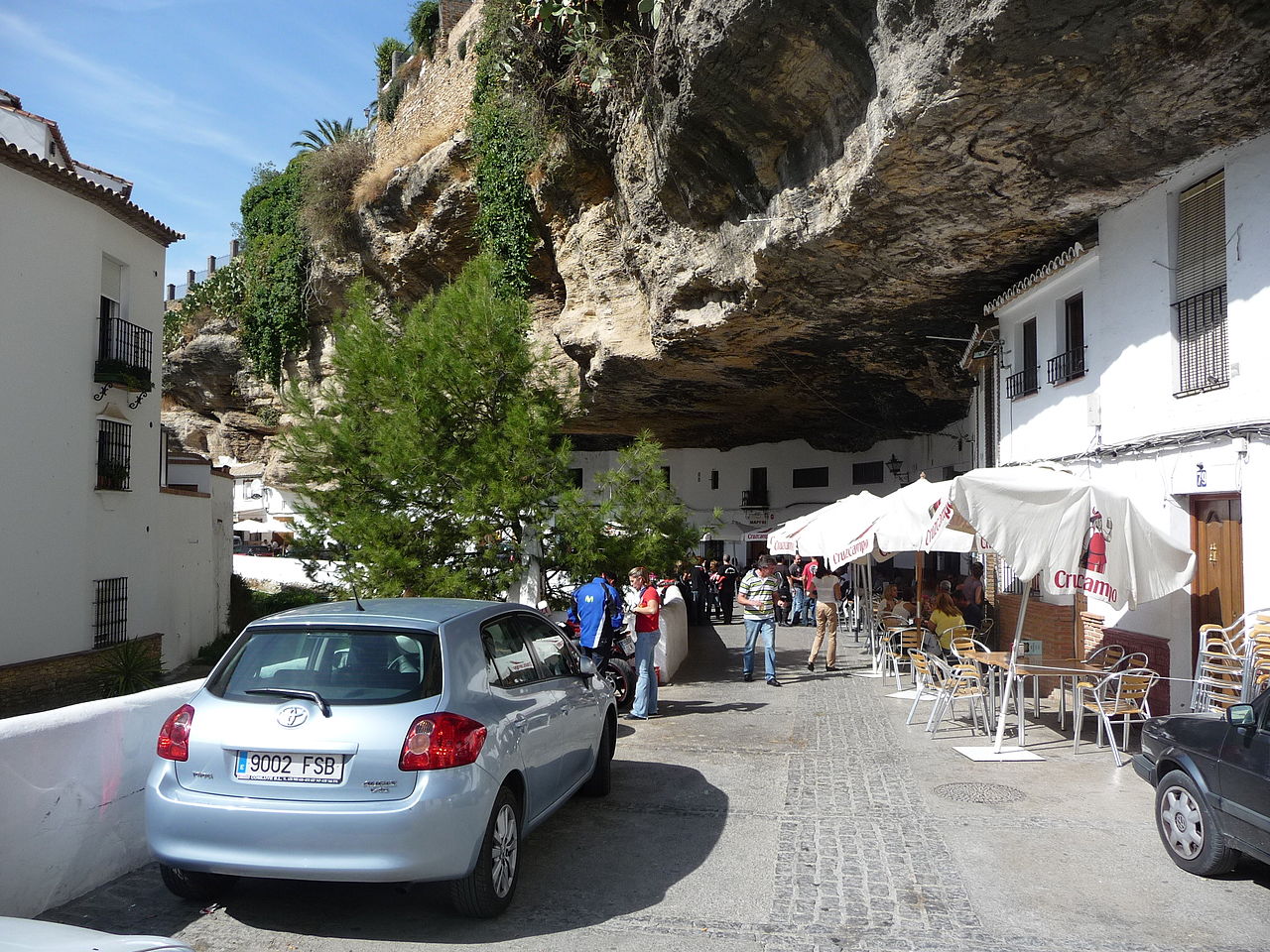
Homes and restaurants in this Andalusian town are built directly into overhanging cliffs, with massive rock ceilings forming the roofs of streets below.

In the hills of Andalusia's Cadiz province, the town of Setenil de las Bodegas seems to grow directly out of solid rock. Carved along the narrow gorge of the Rio Trejo, the settlement built its houses, bars, and restaurants beneath and into massive overhanging cliffs of limestone conglomerate, using the natural rock formations as roofs and rear walls rather than constructing separate structures on top of the terrain. The result is a town where entire streets run beneath a stone ceiling that can hang just a few meters above pedestrians' heads, its whitewashed facades and hanging flower pots contrasting sharply against the dark, weathered rock above. Human habitation of the cliffs dates back to prehistoric times, and the settlement's more recent name references a Moorish fortress and the local wine cellars, bodegas, that once used the naturally cool rock caves for storage.
Living Beneath the Rock
Setenil de las Bodegas is built along a narrow ravine carved by the Rio Trejo, and its most distinctive streets, Calle Cuevas del Sol and Calle Cuevas de la Sombra, meaning Street of the Sun Caves and Street of the Shade Caves, run directly beneath enormous rock overhangs that form natural roofs over the buildings below. In some sections, the overhanging cliff face descends so low that it merges directly with the upper floor of the houses, making it nearly impossible to tell where the natural rock ends and human construction begins.
This architectural approach was practical rather than purely aesthetic: building into the existing cliff overhangs required far less material than constructing freestanding walls and roofs, while also providing natural insulation, keeping interiors cool during Andalusia's scorching summers and relatively warm during winter, a passive climate control system centuries ahead of modern insulated architecture.
From Prehistoric Caves to Moorish Fortress
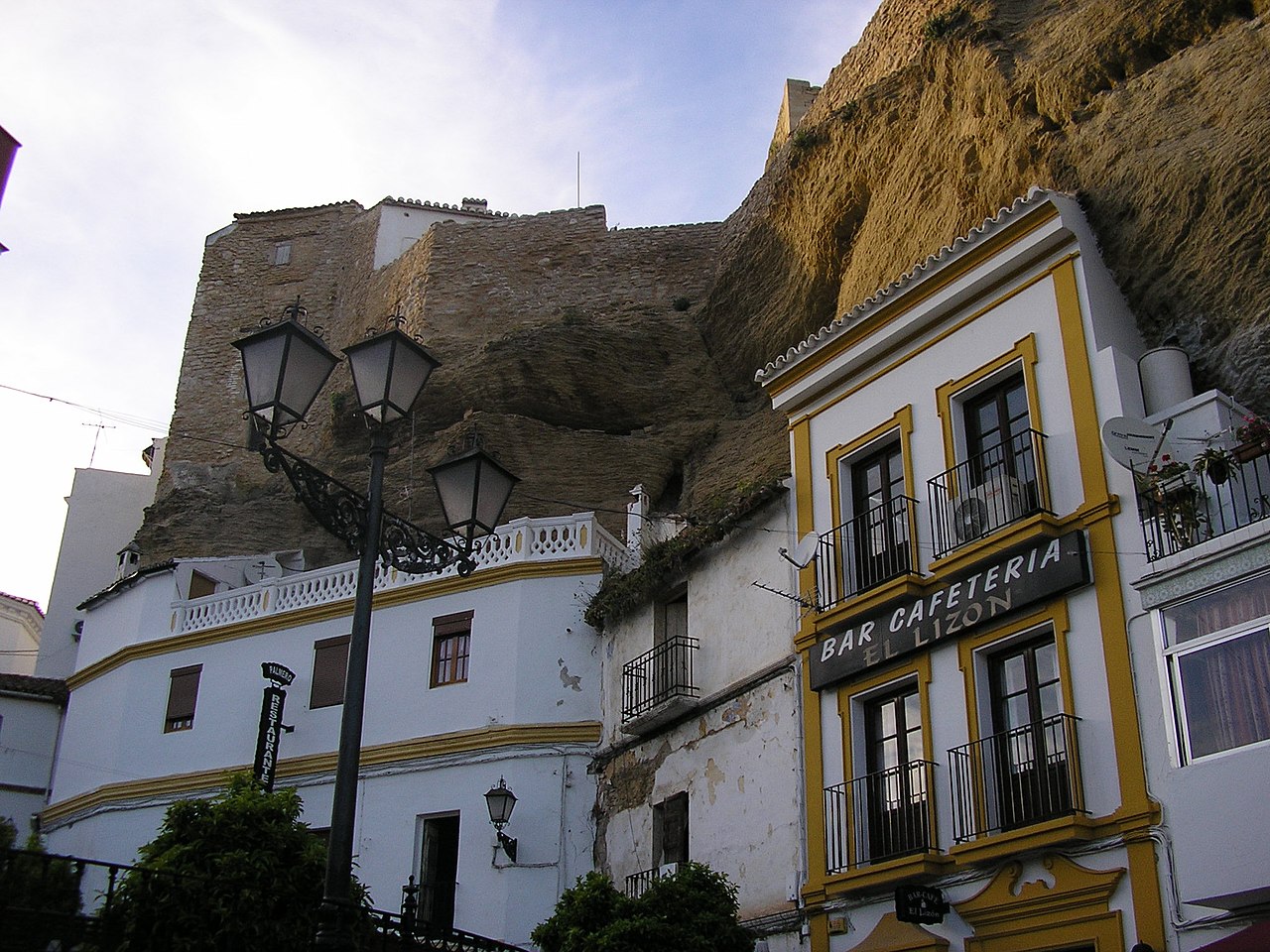
Archaeological evidence suggests the rock overhangs around Setenil were used as shelter by prehistoric peoples, with cave art and artifacts found in the surrounding area indicating human presence dating back thousands of years. The settlement's more documented history begins under Moorish rule, when a fortress, whose remains still overlook the town, was constructed to help defend the region during the centuries of Islamic rule in southern Spain.
The town's name is believed to derive partly from the Latin 'septem nihil,' meaning 'seven times nothing,' a reference to the seven unsuccessful sieges Christian forces reportedly needed before finally capturing the fortress from Moorish defenders in 1484, during the Reconquista campaigns that eventually led to the fall of Granada in 1492. The 'de las Bodegas' portion of the name reflects the town's later tradition of using cool cave spaces as wine cellars, or bodegas, for storing local wine production.
A Town Shaped by Its Terrain
Because so much of Setenil's core is physically inseparable from the surrounding rock, the town has an unusually organic, almost sculptural quality, with irregular building fronts, low doorways, and narrow passageways that follow the natural contours of the cliff rather than a planned street grid. This has made the town a popular subject for photographers and a growing tourist destination in recent decades, drawing visitors curious to walk beneath the massive stone overhangs and eat at restaurants tucked directly into the rock face.
Despite the tourism, Setenil remains a small, functioning Andalusian town with a population of roughly 3,000 people, and much of its economy still involves olive cultivation in the surrounding countryside, a traditional agricultural base that predates the modern tourist trade by centuries and continues alongside it today.
Engineering Challenges of Cave Architecture
Building directly against and beneath massive rock overhangs presents unusual structural challenges rarely encountered in conventional architecture. Local builders historically had to account for water seepage through porous limestone, the risk of small rockfalls from the overhang above, and the difficulty of running plumbing and electrical wiring through solid rock rather than standard wall cavities.
Over generations, these challenges produced a distinct local building tradition, using the rock as a natural, load-bearing rear wall while adding a lighter front facade of brick, stone, or plaster to enclose the living space. Modern preservation efforts in Setenil have focused on maintaining this vernacular building style even as some interiors have been renovated with contemporary amenities, ensuring the town's cave-integrated architecture, believed to be one of the most extensive surviving examples of its kind in Europe, remains intact for future generations.
Fun facts
- Some streets in Setenil run directly beneath rock overhangs that form natural roofs above the buildings.
- The town's name may reference 'seven times nothing,' recalling seven failed sieges before its 1484 capture.
- Local caves were historically used as bodegas, or wine cellars, giving the town its full name.
- Archaeological evidence suggests the surrounding cliffs sheltered prehistoric humans thousands of years ago.
- The town's population today is roughly 3,000, with olive farming still a major local industry.
Gallery


Sources
Other interesting places
View all →


Featured lists
View all lists →


Compare cities, side by side
Choose any 2 cities →


Text on this page is original Terralocate editorial. Background facts compiled from the public sources listed above. Images via Wikimedia Commons under their respective licenses (typically CC BY-SA or public domain).