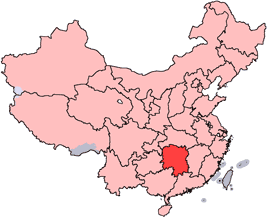
Wulingyuan Scenic Area · Hunan, China
Zhangjiajie: The Real Pillars Behind Avatar's Floating Peaks
Thousands of towering sandstone pillars, some over 200 meters tall, rise from the forests of Wulingyuan, providing the visual inspiration for the floating Hallelujah Mountains of Avatar.
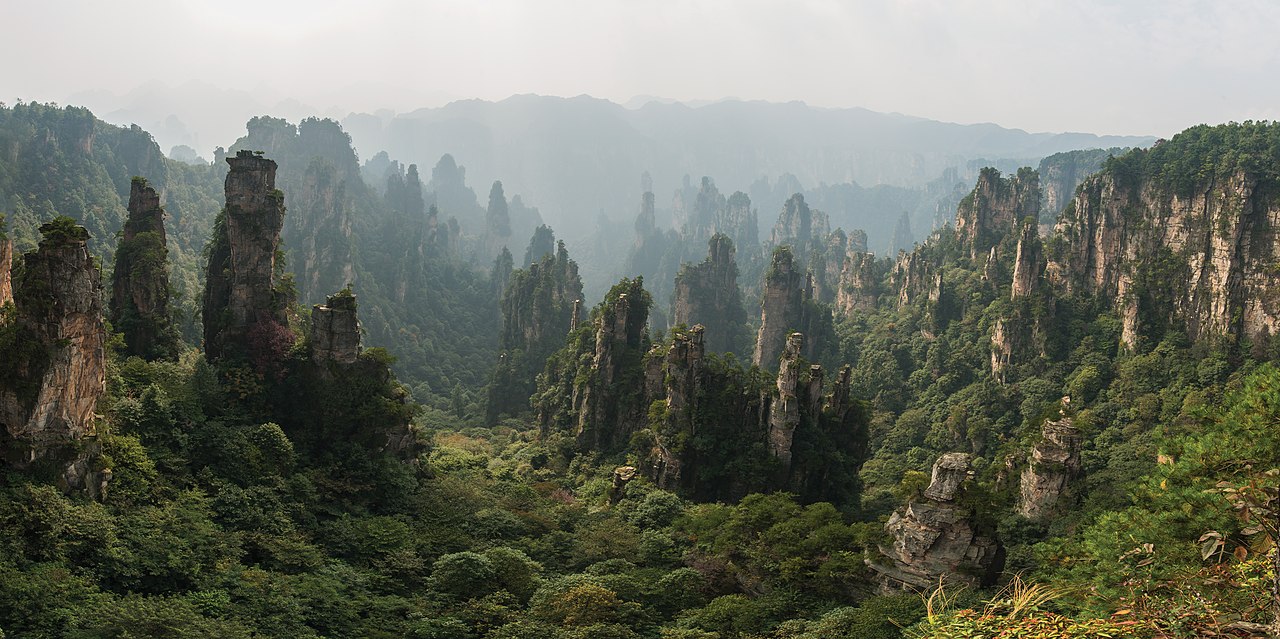
Few landscapes on Earth look as genuinely alien as Wulingyuan, a sprawling scenic area in China's Hunan province where more than 3,000 slender sandstone pillars rise straight out of dense subtropical forest, some reaching heights of over 200 meters. Carved over roughly 380 million years by water, wind, and the relentless expansion of ice within cracks in the quartzite sandstone, the pillars are often shrouded in mist that pools around their bases, creating the illusion that the peaks are floating above the canopy. The park's centerpiece formation became world famous after director James Cameron cited it as inspiration for the gravity-defying Hallelujah Mountains in his 2009 film Avatar, prompting Chinese authorities to rename one prominent 1,080-meter pillar 'Avatar Hallelujah Mountain' in the film's honor.
Three Hundred Million Years in the Making
The pillars of Wulingyuan are formed from quartz sandstone, a hard, silica-rich rock laid down as sediment roughly 380 million years ago when the area lay beneath an ancient sea. Over tens of millions of years, tectonic uplift raised the sandstone layers, and subsequent erosion by rivers, rainfall, and freeze-thaw cycles gradually carved the once-solid plateau into the narrow, closely spaced towers seen today.
Geologists classify this landform as a rare type of erosion feature sometimes called 'quartzite sandstone peak forest,' distinct from the limestone karst formations found elsewhere in southern China. Wulingyuan is considered the type locality for this landform, meaning it is the reference site scientists use to define and study the geological process, a distinction that helped secure its UNESCO World Heritage listing in 1992.
The Avatar Connection
When James Cameron's Avatar premiered in 2009, its floating Hallelujah Mountains, massive rock formations suspended in the sky above the alien world of Pandora, captivated global audiences and sparked immediate comparisons to Zhangjiajie's dramatic pillar landscape, which had appeared in tourism photography and Chinese media for years prior. Reports at the time suggested Cameron's visual effects team drew inspiration partly from photographs of the region, though the extent of direct influence has been debated.
Regardless, Zhangjiajie authorities seized the opportunity, officially renaming the park's Southern Sky Column, a 1,080-meter sandstone pillar, to 'Avatar Hallelujah Mountain' in 2010. The rebranding, combined with a glass-bottomed skywalk and other new attractions built in the area, triggered a dramatic surge in both domestic and international tourism, with visitor numbers climbing into the tens of millions annually in subsequent years.
Bridges and Skywalks in the Sky
In addition to its natural pillars, Zhangjiajie has become known for a series of increasingly dramatic engineering feats built to let visitors experience the landscape from above. The Zhangjiajie Grand Canyon Glass Bridge, opened in 2016, spans 430 meters across a canyon at a height of about 300 meters, and was, at the time of its opening, the longest and highest glass-bottomed bridge in the world.
Nearby, the Bailong Elevator, a glass elevator built into the side of a cliff face, carries visitors 326 meters up a sheer rock wall in under two minutes, offering panoramic views of the pillar forest below. These structures, while controversial among some conservationists who worry about their visual and ecological impact on a protected natural site, have become major draws in their own right, cementing Zhangjiajie's reputation as a place where dramatic geology and equally dramatic infrastructure meet.
A UNESCO-Protected Wilderness
Wulingyuan Scenic and Historic Interest Area, which encompasses Zhangjiajie National Forest Park along with several neighboring nature reserves, was inscribed as a UNESCO World Heritage Site in 1992 for its exceptional natural beauty and unique geological formations. The broader protected area covers nearly 400 square kilometers of forest, gorges, caves, and pillar formations, home to more than 3,000 plant species and numerous rare animals, including the endangered Chinese giant salamander and clouded leopard.
Despite the boom in tourism infrastructure, much of the park remains densely forested and relatively undeveloped, with hiking trails winding between towering pillars draped in vegetation and seasonal mist. Chinese park authorities have implemented visitor caps and zoning restrictions in an effort to balance the economic benefits of tourism against long-term conservation of the fragile sandstone formations and surrounding ecosystem.
Fun facts
- Wulingyuan contains more than 3,000 sandstone pillars, some over 200 meters tall.
- A 1,080-meter pillar was officially renamed 'Avatar Hallelujah Mountain' in 2010.
- The park's glass-bottomed Grand Canyon Bridge spans 430 meters at roughly 300 meters high.
- The Bailong cliff elevator lifts visitors 326 meters up a rock face in under two minutes.
- Wulingyuan was named a UNESCO World Heritage Site in 1992 for its unique quartzite peak-forest geology.
Gallery


Sources
Other interesting places
View all →


Featured lists
View all lists →


Compare cities, side by side
Choose any 2 cities →


Text on this page is original Terralocate editorial. Background facts compiled from the public sources listed above. Images via Wikimedia Commons under their respective licenses (typically CC BY-SA or public domain).