The city that did not officially exist
Zheleznogorsk
A closed Soviet city built to make weapons-grade plutonium was left off maps for decades, and its official crest quietly depicts a bear splitting an atom.

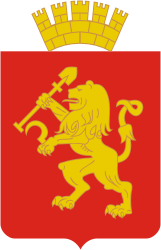
Zheleznogorsk, in Russia's Krasnoyarsk Krai, was built in the 1950s as a top secret Soviet city dedicated to producing weapons-grade plutonium, and for decades it simply did not appear on any public map. Known only by code names like Krasnoyarsk-26, the city was constructed partly underground in granite mountains to withstand nuclear attack, housing a massive plutonium production reactor complex alongside ordinary apartment blocks, schools, and shops for the scientists and workers who lived there. As a closed city, it was surrounded by fences and checkpoints, and residents needed special permits simply to live there, with outsiders barred entirely. Its true population and purpose were state secrets, hidden from both foreign intelligence and the Soviet public alike. The city was only formally added to maps and given its current name after the fall of the Soviet Union. Fittingly for a city built around atomic secrets, its official coat of arms, adopted decades later, depicts a bear splitting an atom with its claws, a wink at its nuclear heritage that residents can now openly celebrate.
Built for the bomb
Zheleznogorsk was established in 1950 under the code name Krasnoyarsk-26 as part of the Soviet nuclear weapons program, specifically to house a plutonium production facility that would supply material for the country's atomic arsenal. Its reactors and reprocessing plants were built deep inside a mountain to protect against attack and to keep the facility hidden from American reconnaissance.
A city that wasn't on any map
For much of the Cold War, Zheleznogorsk existed as a blank space in Soviet cartography. Its residents' mail was routed through Krasnoyarsk addresses, and the city's true location, population, and function were treated as state secrets. Access required special clearance, and unauthorized visitors could face criminal charges, a level of secrecy shared with a handful of other closed nuclear cities scattered across the USSR.
Life inside a closed city
Despite the secrecy, Zheleznogorsk functioned as a genuine, well-resourced town, often better supplied with goods than surrounding open cities, since it needed to keep highly skilled scientists and their families content and discouraged from leaving. It had schools, theaters, and housing built to a higher standard than typical Soviet provincial towns, a common feature of the closed nuclear cities known collectively as ZATOs.
Opening up, slowly
After the Soviet collapse, Zheleznogorsk was gradually declassified and appeared on official maps under its current name in the 1990s, though it remains a restricted access city today, one of dozens of ZATOs still operating in Russia. Its plutonium production reactor was permanently shut down in 2010, but the city continues to host nuclear and satellite industries. Its coat of arms, formally adopted in 2012, proudly displays a silver bear clutching a stylized atom symbol, a public embrace of the secret purpose that once defined the entire town.
Fun facts
- Zheleznogorsk was known only as Krasnoyarsk-26 for most of the Cold War.
- It was left off official maps and its existence was a state secret for decades.
- Its plutonium production reactor operated inside a mountain for protection.
- Its official coat of arms shows a bear splitting an atom with its claws.
- The reactor was finally shut down in 2010 after roughly 50 years of operation.
Gallery

Sources
Other interesting places
View all →


Featured lists
View all lists →


Compare cities, side by side
Choose any 2 cities →


Text on this page is original Terralocate editorial. Background facts compiled from the public sources listed above. Images via Wikimedia Commons under their respective licenses (typically CC BY-SA or public domain).